Moss on a roof can look harmless from the ground, but it has a habit of causing trouble where you cannot see it. As it thickens, it holds moisture against tiles, sheds into gutters and downpipes, and can contribute to blockages that send rainwater towards your walls instead of safely away from the house. Knowing how to remove roof moss safely is less about attacking it with force and more about protecting the roof, the rainwater system and yourself.
For many homeowners, the biggest risk is not the moss itself. It is climbing a ladder or walking on a roof without the right equipment. A fall, cracked tile or damaged gutter can cost far more than arranging a professional clean.
Why roof moss needs dealing with
Moss grows where a roof stays damp, shaded or covered in fallen leaves. North-facing slopes, overhanging trees and older roof surfaces are common problem areas, particularly after a wet Welsh autumn and winter.
A light covering is not always an emergency, but thick moss should not be ignored. It absorbs rainwater and stays wet for longer, which can speed up weathering on some roof materials. When the moss dries, breaks loose and washes down, it collects in gutters, gully outlets and downpipes. That is when a roof-cleaning issue can become a drainage issue.
Blocked gutters can overflow against fascias, soffits and external walls. Over time, that may lead to staining, damp patches, water ingress and damage around the property. Removing moss before it reaches the gutters is practical preventative maintenance, not just a matter of appearance.
How to remove roof moss without damaging tiles
The right method depends on the age, pitch and condition of the roof. A sound tiled roof with a small amount of moss may need a different approach from an older roof with loose tiles, damaged pointing or heavy growth around valleys and gutter edges.
Start with an inspection from the ground
Do not begin by climbing up. Look for obvious slipped, cracked or missing tiles, sagging gutters, damaged downpipes and thick moss deposits at the bottom edge of the roof. Check whether trees are dropping leaves, twigs or shade directly onto the roof.
Binoculars or clear photographs taken from ground level can help you assess the problem without putting yourself at risk. If tiles look loose, the roof is steep, or you cannot safely reach the area from a suitable access point, it is time to call in a professional.
Remove loose debris carefully
Where access is safe and properly controlled, loose moss can be gently removed by hand or with a suitable roof scraper. Work down the slope so debris does not get pushed beneath tiles. The aim is to lift the moss away without prising at tile edges or scraping the surface aggressively.
Avoid using a stiff wire brush. It can damage the protective surface of certain tiles and leave rough areas where moss may establish again. It is also easy to crack brittle or weathered tiles if too much pressure is used.
Anything removed from the roof needs to be cleared from the gutters straight away. Leaving piles of moss in the gutter simply moves the problem. Water cannot reach the downpipe properly, and the next heavy shower can turn that debris into a compact blockage.
Use a suitable moss treatment
After the heavier growth has been removed, a roof-safe biocide treatment can deal with remaining spores and slow regrowth. These treatments are generally applied at low pressure and allowed to work over time. Rain gradually washes away dead growth, so the roof may improve steadily rather than looking completely clean the same day.
Always use a product intended for the roof material and follow the manufacturer’s instructions. Treatments must be kept away from ponds, watercourses and sensitive planting where required. Gutters and downpipes may need to be managed during application so run-off does not cause a problem below.
A professional roof cleaner will assess the roof first and select a method that suits its condition. Soft washing is often appropriate for killing organic growth without the force used in pressure washing.
Do not pressure wash a roof
Pressure washing may seem like the quickest answer, but it is rarely the right one for a tiled roof. High-pressure water can lift or crack tiles, strip surface coatings and force water beneath the roof covering. It can also blast moss directly into gutters and downpipes, creating an immediate blockage.
The damage may not be obvious at first. A roof can look clean but later develop leaks where water has been driven under the tiles or where the tile surface has been weakened. A gentle, controlled clean is slower, but it is far safer for the roof.
Safety comes before a cleaner roof
Roof work carries genuine risks. Ladders need firm, level footing and correct positioning, and they are not a safe working platform for scraping a roof for long periods. Wet moss, damp tiles and loose debris make slipping more likely.
If you are considering tackling a small accessible area yourself, you will need appropriate safety equipment and a clear way to prevent falls. You must also avoid putting weight on fragile materials. Never walk on an asbestos cement roof, and do not disturb suspected asbestos-containing materials. These need specialist advice and handling.
A professional service is often the sensible choice when moss is widespread, the roof is two storeys high, access is limited or there are signs of roof damage. It removes the temptation to take risks for a job that is difficult to do safely from a ladder.
Clear the gutters after moss removal
Roof moss and gutter clearance should be treated as one job. Even a careful clean will release small pieces of moss, grit and debris. If the gutters are already partly blocked, that extra material can stop rainwater from draining completely.
Check that the gutter channels are clear, the outlets flow freely and the downpipes are not blocked at the bends or bottom. Look for water marks on the wall, overflowing corners and vegetation growing from the gutter. These are all signs that water has been sitting where it should not.
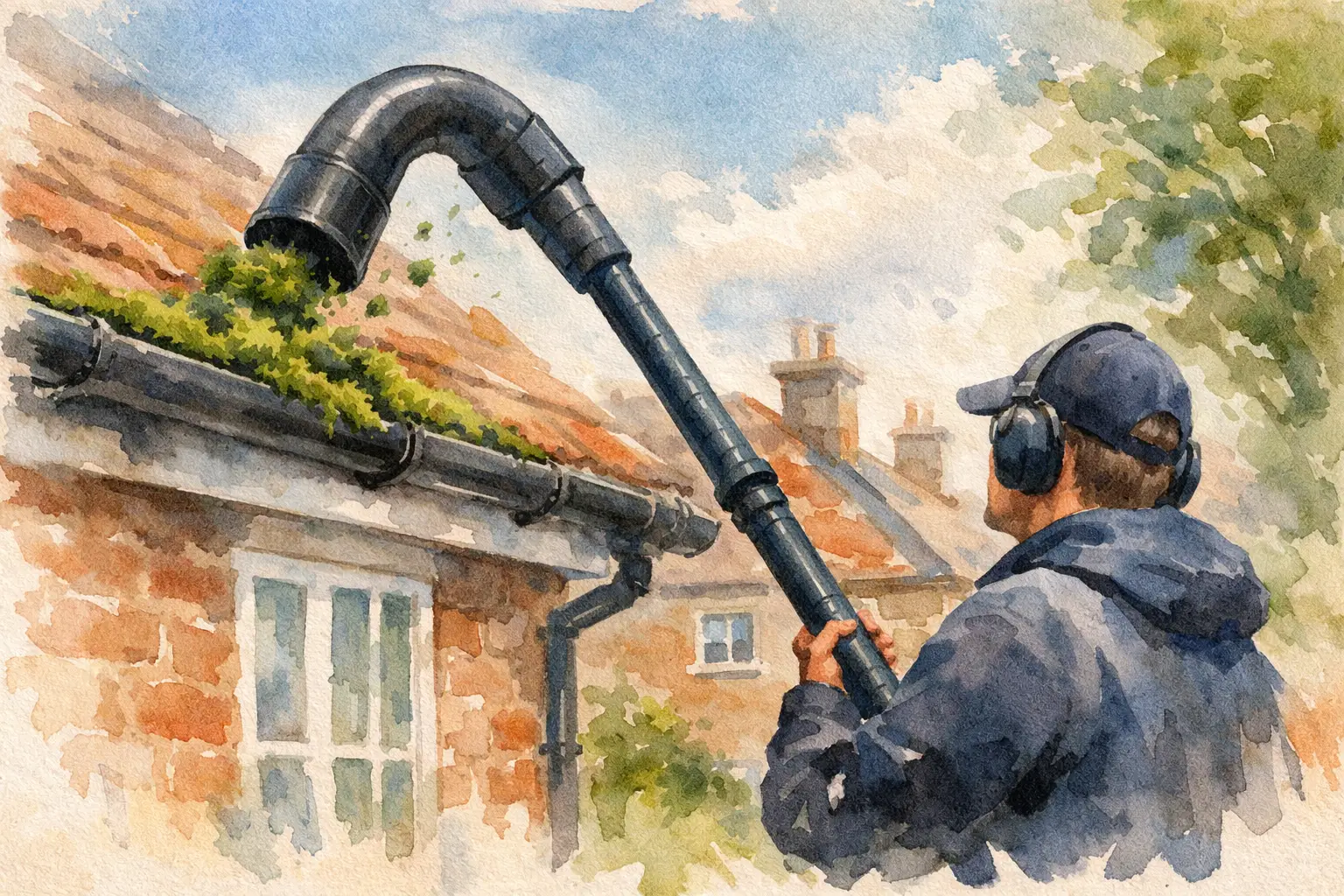
For homeowners in Neath and the surrounding area, McQueen’s Exterior Cleaning can remove roof debris and clear gutters and downpipes using safe, practical methods, including gutter vacuum equipment that avoids unnecessary ladder work. The aim is not only a tidier roofline, but a rainwater system that can cope when the weather turns.
Reduce the chance of moss returning
Moss will eventually return if the conditions that caused it remain unchanged, but you can slow it down. Trim back overhanging branches where appropriate to increase light and reduce leaf fall. Keep gutters clear so water is not backing up along the roof edge, and deal with broken tiles or leaking gutters promptly.
A roof treatment can give longer-lasting protection, although no treatment makes a roof permanently moss-free. Shaded properties and homes close to trees may need more regular attention than open, sunny homes. An annual visual check and periodic professional cleaning is usually more manageable than waiting until the gutters are overflowing.
When to arrange professional roof cleaning
Arrange an inspection if moss is thick enough to form clumps, if debris is continually collecting in the gutters, or if you have noticed overflow during rain. It is also worth acting quickly if there are damp marks indoors, staining below the gutter line or signs that tiles have moved.
The best time to deal with moss is before it becomes a wet-weather problem. A safe inspection, gentle removal and clear gutters give rainwater one simple route: away from your roof and safely into the drainage system.
Leave a Reply