A moss-covered roof can make a home look neglected, but the bigger concern is what is happening beneath it. Moss holds moisture against tiles, can work its way under edges, and often ends up blocking gutters and downpipes. So, can soft washing kill moss? Yes, when the right treatment is used correctly. It is usually a far safer option than blasting a roof with high-pressure water.
Can Soft Washing Kill Moss Without Damaging Tiles?
Soft washing is a low-pressure cleaning method. Rather than relying on force to strip growth away, it uses a suitable cleaning solution to treat moss, algae, lichen and other organic staining. The treatment kills the growth at its roots, allowing it to break down and weather away over time.
That difference matters on a roof. High-pressure washing can dislodge tiles, damage pointing, strip protective surface finishes and force water into places it should not reach. Older roofs, concrete tiles and roofs with existing wear are particularly vulnerable.
A professional soft wash is controlled. The roof is assessed first, loose debris is dealt with carefully, and the treatment is applied at low pressure. Moss may not disappear instantly, especially where it is thick, but the treatment is designed to stop it growing back. The remaining dead material can then release naturally with rain and wind, or be removed gently where appropriate.
Soft washing is not a cure for damaged tiles, failed flashing or a leaking roof. It is a cleaning and preventative maintenance method, not a substitute for roof repairs.
Why Moss on a Roof Is More Than a Cosmetic Problem
Moss thrives in damp, shaded areas. In Neath and across South Wales, frequent rain and mild conditions can make roofs, paths and rendered walls ideal places for organic growth. A little green growth may seem harmless, but leaving it for years can create avoidable problems.
Moss acts like a sponge. It traps water against the roof surface and slows drying after rainfall. As it thickens, it can lift along tile edges and send debris into gutters. Once gutters are full of moss, leaves and silt, rainwater may overflow down walls instead of flowing safely into the downpipe.
That is when a roof-cleaning issue can become a property-protection issue. Overflowing gutters can lead to stained brickwork, damp patches, damaged fascia boards, water ingress and flooding around the base of the property. Treating the roof and keeping the rainwater system clear work best together.
How Professional Moss Soft Washing Works
The safest approach depends on the roof’s condition, tile type, pitch and level of growth. A reliable cleaning service should not treat every roof in exactly the same way.
First, the roof is inspected from a safe position. This helps identify cracked or loose tiles, heavy moss build-up, blocked gutters, overhanging branches and areas where water is already not draining properly. If there are signs of damage, repairs may need attention before cleaning begins.
Next, heavy loose moss may be removed carefully to reduce the amount entering gutters. This is not done by aggressively scraping or pressure washing the tiles. The aim is to clear the bulk of debris while avoiding damage to the roof covering.
A suitable soft-wash treatment is then applied at low pressure. It is left to work on the organic growth rather than being immediately rinsed away. Over the following weeks and months, treated moss and staining gradually fade and release from the surface.
Finally, the gutters and downpipes need checking and clearing. This step is often overlooked. Moss loosened from the roof has to go somewhere, and a blocked gutter can undo the benefit of an otherwise good roof clean.
Soft Washing Versus Pressure Washing a Mossy Roof
Pressure washing can make a roof look cleaner quickly, which is why it can be tempting. But a quick visual result is not always the safest result.
On suitable hard surfaces such as patios and driveways, jet washing can be very effective. Roof tiles are different. Their age, coating, fixings and condition all need consideration. High pressure can remove surface coatings from concrete tiles, weaken old mortar and drive water beneath tiles. It may also scatter moss around the property and leave gutters packed with debris.
Soft washing takes more patience because the final result develops over time. However, it targets the cause of the growth rather than simply tearing visible moss away. For many tiled roofs, that makes it the more sensible choice.
There are exceptions. Some roofs should not be walked on or treated until a roofer has assessed them. Fragile tiles, asbestos-containing materials, significant damage, poor access or severe leaks all require extra care. A professional should be prepared to say when cleaning is not the right first step.
Is DIY Moss Treatment a Good Idea?
For a low-level wall or a small paved area, homeowners may be able to use an appropriate moss treatment safely by following the product instructions. A roof is a different job.
Working at height carries a real risk of falls, particularly on wet, mossy tiles. Ladders are not a safe working platform for roof cleaning, and walking on the roof can crack tiles or put you through a weak area. There is also the risk of using the wrong product, applying it too strongly, or allowing runoff to affect plants, ponds and nearby surfaces.
The cleaning chemical is only one part of the job. Safe access, controlled application, protecting surrounding areas and clearing the gutters afterwards are equally important. If you can see thick moss on the roof, assume there is a fair chance some of it has already reached the gutters.
When Should You Arrange Roof and Gutter Cleaning?
You do not need to wait until moss covers the whole roof. Early attention is usually simpler and less costly than dealing with blocked drainage or damp damage later on.
It is worth arranging an inspection if you notice any of the following:
- Moss collecting in gutters or at the bottom of downpipes
- Green or black staining spreading across roof tiles
- Water overflowing from gutters during rain
- Damp marks on external walls near gutter runs
- Tiles that appear lifted, cracked or uneven
Autumn and spring are sensible times to check the property, as falling leaves and wet weather put added pressure on gutters. Homes beneath trees or in shaded locations may need more frequent maintenance.
Protecting the Whole Rainwater System
A clean roof is only part of the job. Rainwater needs a clear route from the roof edge, through the gutter, down the downpipe and away from the property. If one part of that system is blocked, water can overflow where it should not.
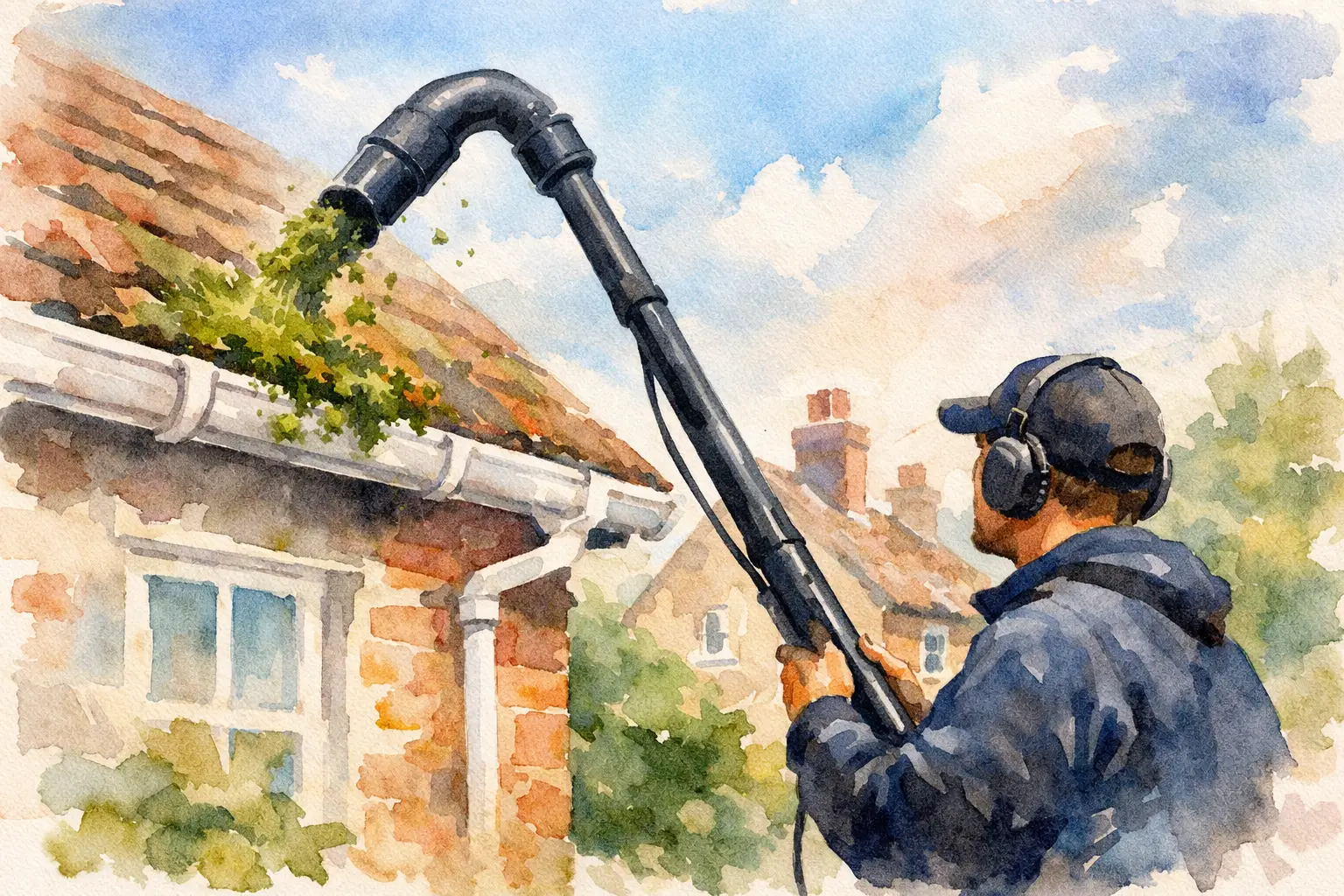
This is why roof moss treatment should be paired with gutter clearance where needed. At McQueen’s Exterior Cleaning, gutter vac equipment allows gutters to be cleared from ground level in many situations, reducing the need for ladders while giving the system a proper check. It is a practical way to deal with debris without taking unnecessary risks.
There is no fixed schedule that suits every home. A clear, sunny roof away from trees may need little attention, while a shaded property with overhanging branches may need regular treatment and gutter clearance. The right plan is based on what is actually building up around your home.
If moss is starting to take hold, deal with it before the next spell of heavy rain sends it into your gutters. A careful soft wash, followed by clear gutters and downpipes, helps keep water moving where it belongs – away from your roof, walls and foundations.
Leave a Reply