
A brown patch on the ceiling after heavy rain is rarely just a decorating problem. It is often a sign that water has been getting where it should not, usually because a gutter, downpipe, roof edge or drain has been neglected. The best ways to prevent damp are usually simple, but they need dealing with before a small blockage becomes water ingress, mould or damaged plaster.
For most homes, preventing damp starts outside. Rainwater should be collected by clear gutters, carried safely down the downpipes and discharged away from the building. When that system fails, water can run down walls, soak into brickwork and find its way into the property.
Start with clear gutters and downpipes
Gutters are easy to overlook because they are above eye level. Leaves, moss, twigs and roof debris build up gradually, particularly after autumn or periods of windy weather. Once a gutter is blocked, rainwater spills over the edge rather than flowing to the downpipe.
That overflow can repeatedly soak the same section of wall. Over time, water may penetrate weak pointing, cracks around window frames or damaged render. It can also saturate the ground beside the property, increasing the chance of moisture reaching lower walls.
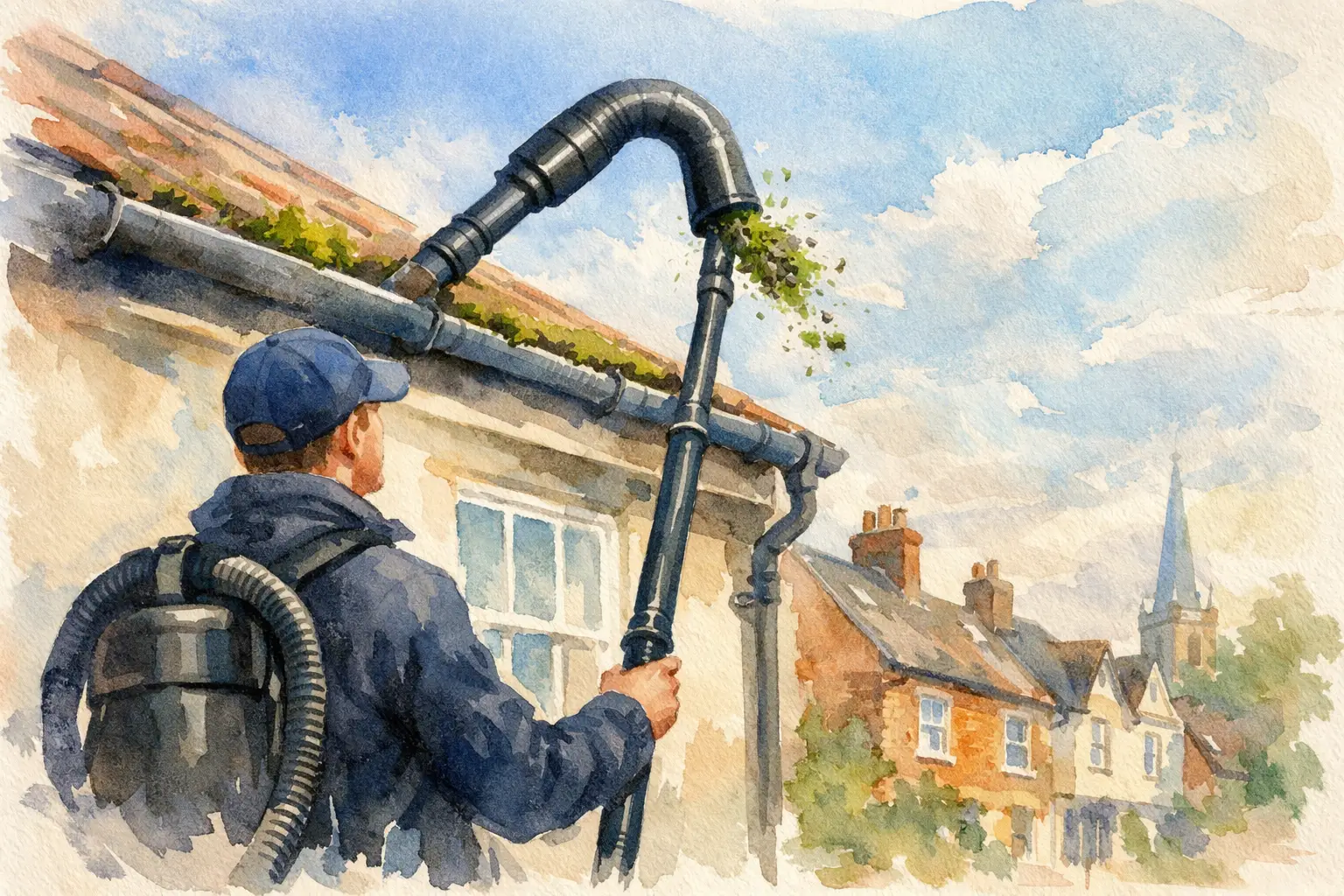
Check your gutters during rain if it is safe to do so, from ground level. Water pouring over the front of a gutter, dripping from joints or running down an external wall needs attention. A professional gutter clearance is the sensible choice where access is difficult or height is involved. A gutter vac system allows debris to be removed and the system inspected without the unnecessary risk of climbing ladders.
As a general rule, gutters should be cleared at least once a year. Homes beneath trees, near woodland, or with mossy roofs may need attention twice a year. Landlords should also include regular gutter checks in their maintenance routine, particularly before winter.
Make sure water is leaving the property
A clear gutter will not solve the problem if the downpipe is blocked, disconnected or discharging in the wrong place. Downpipes should carry water into a working drain or soakaway, not release it beside the foundations.
Look for puddles that linger near external walls after rain. Check that downpipe brackets are secure, joints are not leaking and the pipe has not come loose from the drain connection. If water backs up at the base of a downpipe, there may be a blockage below ground that needs investigating.
Ground levels matter too. Soil, paving and flower beds should sit below the damp-proof course, which is normally visible as a horizontal line in the brickwork. If soil or decorative gravel has been built up too high, it can bridge that barrier and allow moisture to travel into the wall. Lowering the level carefully can make a real difference, but avoid digging around pipes or foundations without proper advice.
Keep roof edges in good order
Roof defects can cause damp long before they become obvious indoors. A cracked tile, loose flashing, damaged verge or failing gutter joint may only let in a small amount of water at first. With repeated rain, that moisture can affect roof timbers, insulation and ceilings.
You do not need to climb onto the roof to spot every issue. From the ground, look for slipped tiles, missing sections, sagging gutters, stains beneath eaves and vegetation growing from the gutter line. Moss does not always mean a roof is leaking, but heavy moss can hold moisture and shed into gutters, increasing the likelihood of blockages.
Roof cleaning and gutter maintenance should be approached with care. Pressure washing a roof without the right method can damage tiles or force water into vulnerable areas. The right approach depends on the roof material, its condition and the amount of organic growth present.
Repair small external defects early
Water takes the easiest route available. Cracked render, failed sealant around windows, damaged pointing and gaps around pipework can all give it a way into the fabric of the building.
Walk around the outside of your home a few times a year, especially after storms. You are looking for cracks, crumbling mortar, peeling paint, green staining, loose sealant and areas that stay dark or wet for longer than the rest of the wall. These are not always proof of a serious damp issue, but they are worth repairing before winter weather makes them worse.
External walls also benefit from being kept clear of climbing plants and dense vegetation. Plants can trap moisture against the wall, hide defects and block gutters with leaves. Leave a sensible gap between shrubs and the property so air can circulate and maintenance remains possible.
Improve ventilation indoors
Not all damp comes from rainwater. Condensation is common in kitchens, bathrooms, bedrooms and poorly ventilated areas. It happens when warm, moisture-heavy air hits a cold surface, such as a window, external wall or uninsulated corner.
Everyday activities produce a surprising amount of moisture. Showering, cooking, drying washing indoors and even breathing overnight all add water vapour to the air. Without good ventilation, that moisture settles on surfaces and can lead to black mould.
Use extractor fans when cooking and bathing, and keep them running for a short time afterwards. Open trickle vents where fitted, and air rooms regularly when weather allows. Dry clothes outdoors where possible, or use a vented tumble dryer correctly. If you use a dehumidifier, treat it as support rather than a cure – the source of excess moisture and poor airflow still needs addressing.
Heat the home consistently where possible
A home that is heated in short bursts can have very cold walls and windows, making condensation more likely. Steady, sensible heating helps keep surfaces warmer and reduces the conditions mould needs to grow.
That does not mean heating an empty house excessively. It means avoiding a cycle where rooms become very cold and damp, then are heated quickly for a few hours. Programme heating around how the household uses the property, and keep internal doors arranged to allow warmth and air to move sensibly.
Insulation can help, but it must be appropriate for the building. Older properties, solid-wall homes and homes with existing moisture issues need careful assessment before insulation work. Adding insulation without resolving leaks, poor ventilation or bridging damp can hide the problem rather than fix it.
Know the warning signs of damp
Early action is cheaper and less disruptive than waiting for visible damage to spread. Keep an eye out for these common warning signs:
- water overflowing from gutters or running down external walls during rain;
- peeling paint, bubbling wallpaper or a persistent musty smell;
- black mould around windows, in corners or behind furniture;
- tide marks, staining or crumbling plaster on lower walls; and
- damp patches that become worse after wet weather.
The timing of the issue offers a useful clue. If a patch worsens after rain, look first at gutters, roof coverings, external walls and drainage. If mould appears mainly in cold rooms or after showers and cooking, condensation and ventilation are more likely to be involved. Some homes have more than one cause, so do not assume every mark needs the same solution.
Do not take unnecessary risks with ladders
Many gutter problems look like a quick job from below, but working at height is where simple maintenance can become dangerous. Uneven ground, wet surfaces, unstable ladders and awkward access around conservatories all increase the risk of a fall.
Professional clearance is particularly worthwhile for two-storey homes, properties with extensions, and gutters packed with wet debris. The job is not just about removing what can be seen from the ground. It should include checking that water can travel through the gutter and downpipe as intended, while identifying obvious leaks, loose sections and potential trouble spots.
For homeowners in Neath and the surrounding area, McQueen’s Exterior Cleaning provides gutter clearance using a specialist gutter vac system, helping to remove the risk and hassle of ladder work while protecting the rainwater system that keeps your home dry.
A dry home is usually the result of regular, ordinary maintenance done at the right time. Keep rainwater moving away from the building, deal with small defects while they are still small, and give moisture somewhere to escape indoors. That practical approach protects more than paintwork – it helps protect the condition and value of your home.
Leave a Reply