A roof covered in moss can make any homeowner worry that something is going wrong. It can also leave you asking, will roof cleaning damage tiles if you try to put it right? The honest answer is that roof cleaning can cause damage when the wrong method is used, but careful professional cleaning is designed to protect the tiles, roofline and guttering while dealing with the growth that causes concern.
The key is not simply getting the roof clean. It is understanding the age and condition of the roof, choosing a suitable method, and making sure loosened debris does not end up blocking the gutters and downpipes.
Will roof cleaning damage tiles when done properly?
Not usually. A sound roof with correctly fitted tiles should not be harmed by an appropriate cleaning method carried out by someone who understands roof surfaces. Problems tend to arise when cleaning is treated as a quick cosmetic job rather than part of proper property maintenance.
Roof tiles are built to withstand rain, wind and changing temperatures. They are not, however, designed for aggressive pressure at close range, heavy foot traffic, or unsuitable chemicals. Older tiles can be more porous and brittle, while cracked, loose or weathered tiles need extra care before any work starts.
A proper roof clean begins with an inspection. This helps identify loose ridge tiles, damaged flashing, failing mortar, broken tiles and areas where moss has lifted or disturbed the roof covering. Cleaning will not fix those faults, but it can be planned around them without making matters worse.
The main ways roof tiles can be damaged
The biggest risk is high-pressure washing. A powerful jet used too closely can force water beneath tiles, strip away surface coatings and dislodge weak or poorly fitted sections. On concrete tiles, it may leave the surface more open to future moss and algae growth. On older clay or slate roofs, the risk can be greater still.
There is also the issue of walking across the roof. Even a good tile can crack if weight is put in the wrong place. A trained operator will avoid unnecessary access, use suitable equipment, and work carefully rather than treating the roof as a surface to be walked over freely.
Harsh or wrongly mixed chemicals can create problems too. The right treatment, applied at the correct strength, can help control organic growth. The wrong product may stain surfaces, affect nearby plants, or cause unwanted runoff into gutters and drains. Careful application and protection of the surrounding area matter just as much as the cleaning itself.
Finally, moss removal can expose existing defects. Moss often grows around cracked tiles, worn pointing and edges where water already sits. Removing it has not caused the issue, but it may make a pre-existing fault easier to see. That is useful information, provided it is explained clearly rather than presented as a surprise.
Why moss and algae should not be ignored
Moss does not automatically mean a roof is failing, but heavy growth is worth dealing with. It holds moisture against the tiles and can spread into overlaps, valleys and roof edges. As it thickens, it sheds onto the gutters below.
That is where a roof problem can quickly become a rainwater problem. Moss, leaves and grit can build up in gutters and downpipes, stopping water from draining as it should. During heavy Welsh rain, blocked gutters can overflow onto fascias, walls and paths. Over time, this can contribute to damp, staining, water ingress and avoidable repair bills.
Cleaning the roof without clearing the gutters is therefore only half a job. Any debris that comes down needs to be removed properly, and the rainwater system should be checked to make sure water can flow away from the property.
The safest roof cleaning approaches
The best method depends on the roof. There is no one-size-fits-all answer, and any contractor who promises to blast every roof clean in an afternoon should raise questions.
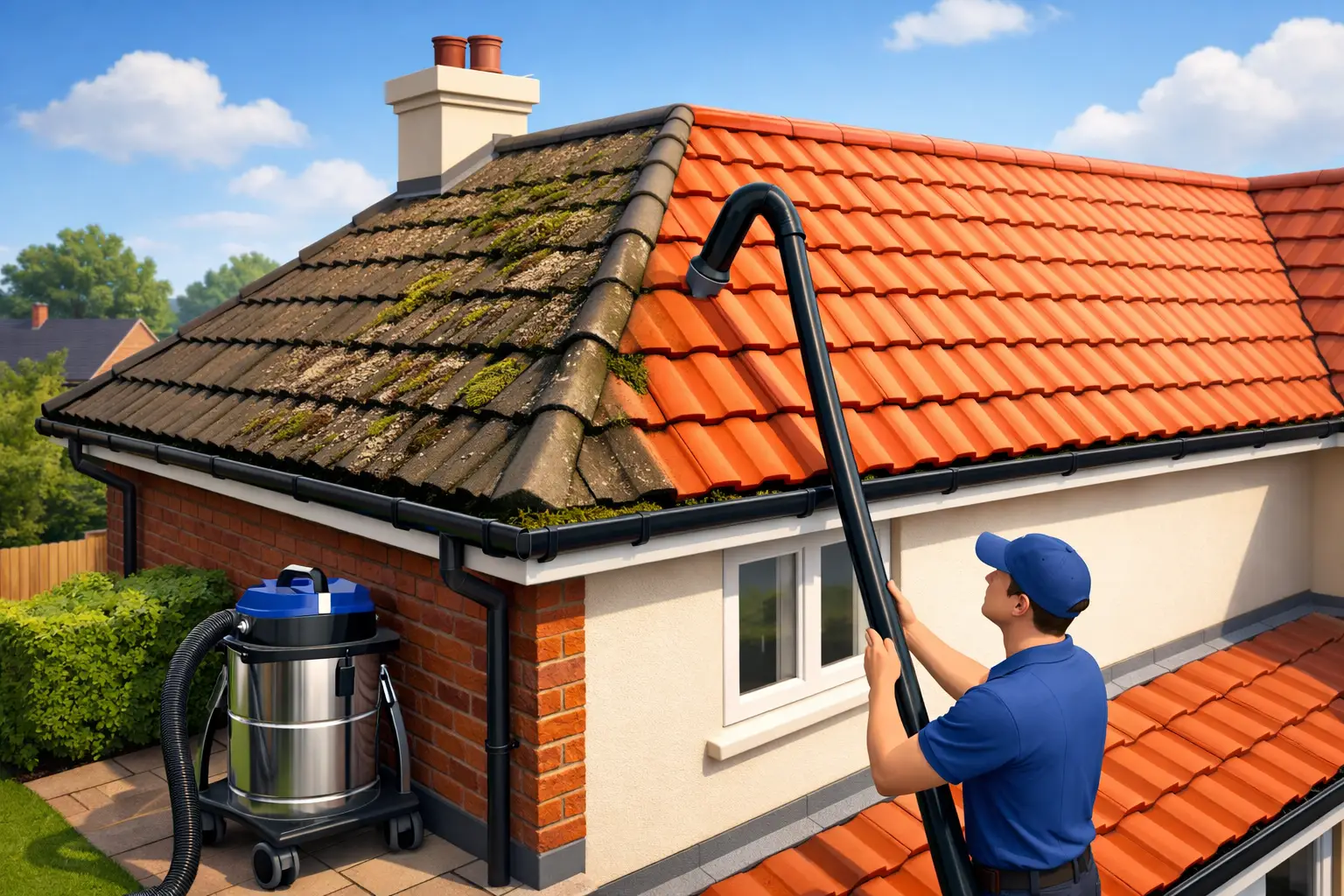
For many tiled roofs, gentle manual moss removal followed by a suitable biocidal treatment is the safest approach. The visible moss is carefully removed, then the treatment works over time to deal with remaining spores, algae and lichen. This does not always produce an instantly bright roof, but it avoids the unnecessary force associated with high-pressure washing.
Soft washing may also be suitable where staining, algae or lichen need treatment. This uses low pressure and a cleaning solution selected for the surface. It should be applied with care, with attention paid to plants, paving, drains and rainwater collection systems.
Low-pressure rinsing can sometimes be used where appropriate, but it is not automatically right for every roof. Roof age, tile type, pitch, condition and previous repairs all affect the decision. A careful professional should explain the plan before starting, including what they will not do if the roof is not suitable.
When pressure washing may be a poor choice
High-pressure cleaning is particularly risky on old, fragile, cracked or heavily weathered tiles. It is also a poor choice where the roof already shows signs of loose fittings, damaged mortar or water ingress. Even on newer concrete tiles, harsh pressure can remove the weathered outer surface and leave the roof looking patchy.
A roof that looks cleaner for a few weeks is not a good result if it has been left more vulnerable to moisture or future growth. The aim should be controlled cleaning and long-term protection, not the fastest possible visual change.
What a careful roof cleaning visit should include
Before work begins, the contractor should assess the roof from a safe position and look at the gutters, downpipes and surrounding access. They should identify obvious damage, explain the recommended cleaning method, and be clear about any limitations.
During the job, care should be taken around tiles, roof edges, conservatories, windows and garden areas. Debris should be controlled rather than allowed to wash into gutters or across the property. Once the roof has been cleaned, the gutters and downpipes need clearing so rainwater has a clear route away.
At McQueen’s Exterior Cleaning, the focus is practical protection rather than making a roof look clean for a photograph. That means considering the condition of the tiles, removing debris from the rainwater system and helping homeowners reduce the risk of overflowing gutters and damp-related issues.
Signs you should arrange an inspection first
If you can see broken or slipped tiles, crumbling mortar, damaged flashing, persistent leaks or a sagging gutter line, arrange an inspection before booking a roof clean. Cleaning around these issues may be possible, but repairs may need to come first.
The same applies if the roof is very old, has delicate slate tiles, or has never been maintained. A cautious assessment is far better than assuming every roof can be cleaned in the same way.
You should also be wary of trying to clean a roof yourself. Aside from the risk of damaging tiles, ladders and wet surfaces are a dangerous combination. The cost of professional help is small compared with a fall, a broken roof tile or water forced into the wrong part of the property.
How often should a roof be cleaned?
There is no fixed timetable for every home. Properties near trees, in shaded areas, or exposed to damp conditions often develop moss more quickly. In Neath, Swansea, Port Talbot and surrounding areas, regular rain and leafy gardens can make gutter and roof maintenance especially worthwhile.
For many homes, checking the roof and gutters annually is sensible, with cleaning arranged when moss becomes established or debris begins collecting at the roof edge. Gutters may need attention more often, particularly after autumn leaf fall. Acting early is usually easier and safer than waiting until water is overflowing down the walls.
A clean roof should never come at the cost of damaged tiles or a blocked gutter. Choose a cautious method, make sure the rainwater system is cleared afterwards, and treat any visible roof faults seriously. That gives your home the best chance of staying dry, protected and ready for the next spell of heavy rain.
Leave a Reply