Moss on a roof can look like a small cosmetic issue, but it rarely stays that way. As it thickens, it holds moisture against the roof surface and sheds clumps into the gutters whenever it rains. Professional roof cleaning removes that build-up safely, helping to protect the tiles, rainwater system and walls below from avoidable damp and water damage.
For homeowners, landlords and occupiers, the main benefit is prevention. A clean roof is easier to inspect, gutters are less likely to fill with moss, and rainwater has a clearer route away from the property. It is practical maintenance that can save a much larger problem later.
Why roof cleaning is about more than appearance
A roof takes the full force of the Welsh weather. Rain, shade, falling leaves and airborne dirt create the right conditions for moss, algae and lichen to grow. North-facing roof slopes and areas beneath overhanging trees are often affected first, although any roof can develop growth over time.
Moss absorbs and retains water. On a pitched roof, that repeated dampness can keep tiles wetter for longer after rainfall. It may also work its way beneath tile edges, particularly where tiles are ageing, loose or already damaged. Cleaning does not repair a faulty roof, but removing heavy organic growth makes it easier to spot defects before water finds its way into the roof space.
The other issue is what happens when the moss comes loose. It does not disappear. It travels down the roof and gathers in the gutters, outlets and downpipes. A gutter that was clear in autumn can become blocked again after a heavy spell of rain if the roof above is shedding debris. Once water cannot drain properly, it can overflow onto fascias, brickwork and paths, or seep into areas where it does not belong.
Signs your roof may need attention
You do not need to climb a ladder to decide whether a roof needs cleaning. In fact, getting onto a roof or leaning ladders against gutters is a risk best avoided. A ground-level check, or a professional inspection, will usually show whether there is a developing problem.
Look out for these common signs:
- Thick green moss along tile edges, in valleys or around chimneys.
- Dark staining or widespread algae, especially on shaded slopes.
- Moss collecting in gutters, on driveways or around downpipe outlets.
- Gutters overflowing in rain despite having been cleared recently.
- Loose-looking tiles or areas where the roof surface appears uneven.
A little surface discolouration does not always mean urgent work is needed. Every roof ages, and some light growth may be largely cosmetic. The decision depends on the amount of moss, the roof material and condition, the surrounding trees, and whether debris is already affecting the gutters. The aim is not to make a roof look artificially new. It is to remove harmful build-up without causing damage.
The right roof cleaning method depends on the roof
There is no one cleaning method that suits every property. Older tiles, fragile slate, damaged pointing and previously repaired areas all need careful consideration. A professional should assess the roof from the ground and, where appropriate, inspect it closely before deciding how to proceed.
For many roofs, manual moss removal followed by a suitable treatment is the sensible approach. The visible moss is carefully cleared, then a treatment may be applied to deal with remaining spores and slow regrowth. The result can improve gradually as weathering lifts dead organic matter over the following weeks and months.
Soft washing can also be appropriate for certain roof surfaces. This uses a low-pressure application rather than forceful water blasting. It is designed to treat biological growth without driving water beneath tiles or stripping protective surfaces.
High-pressure washing is not automatically the best answer. On the wrong roof, too much pressure can dislodge tiles, damage their finish, force water into the roof structure and create a problem that was not there before. It can also send a large volume of moss into the gutters at once. A quick-looking result is not worthwhile if it increases the risk of leaks or costly repairs.
Gutters need clearing after roof cleaning
Roof cleaning and gutter clearance work best together. There is little point removing moss from above if the debris is left sitting in the rainwater system. Gutters need to be cleared, outlets checked and downpipes tested so that water can move freely away from the building.
This is especially important on properties surrounded by trees or with a history of overflowing gutters. Even a small blockage at a downpipe outlet can cause water to back up along the gutter run. In prolonged rain, that overflow can lead to staining, saturated walls, damp patches and damage to timber fascias.
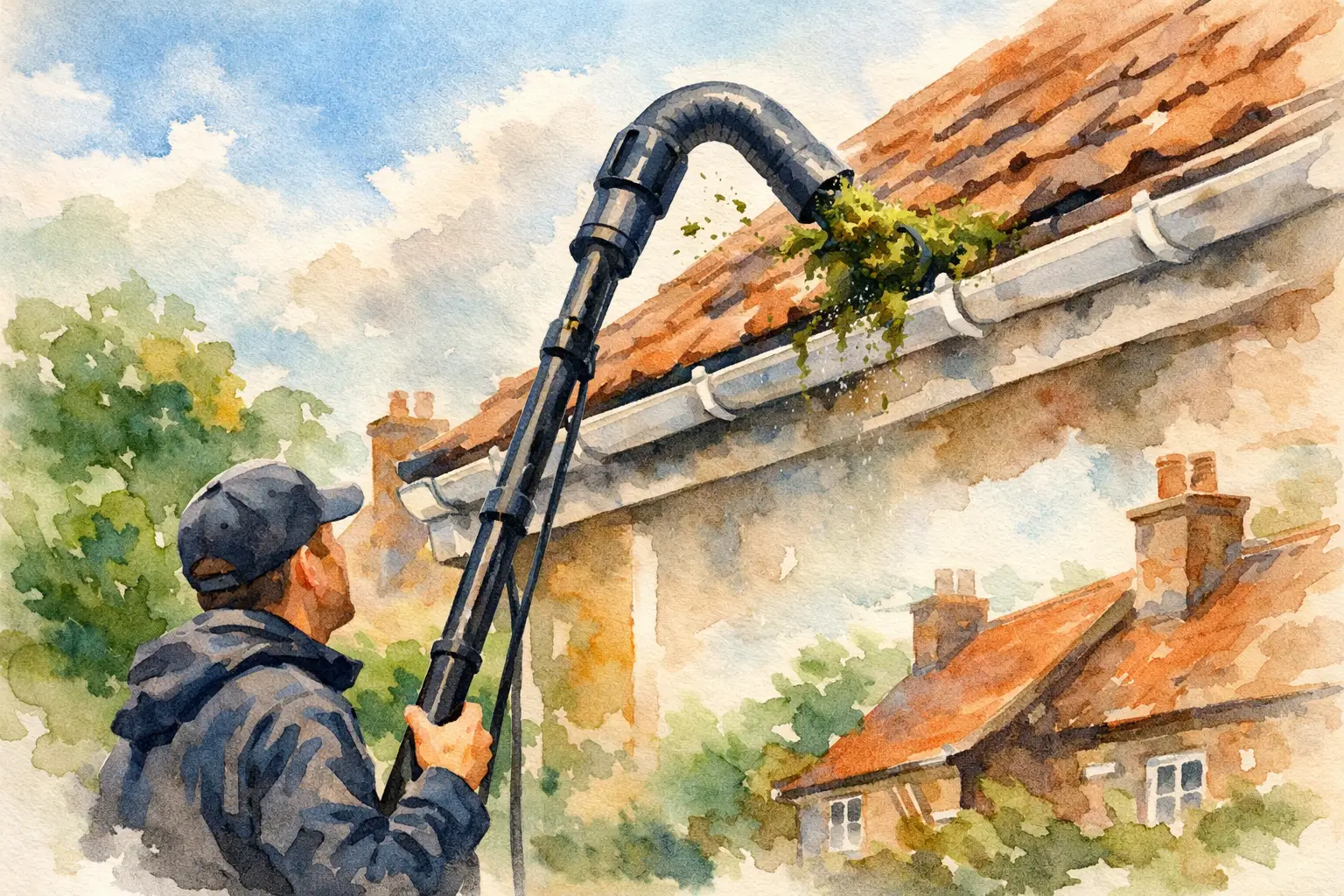
At McQueen’s Exterior Cleaning, gutter clearance can be carried out using a gutter vac system, removing debris without the usual need for ladders. This allows the rainwater system to be cleared efficiently while keeping safety at the centre of the job. A proper check should cover the gutters, downpipes and any obvious areas where debris is likely to return.
How often should a roof be cleaned?
There is no fixed timetable that suits every home. A property in an open, sunny position with little tree cover may need far less attention than a house close to woodland or shaded on one side for most of the day.
As a general guide, it is worth checking the roof and gutters at least once a year, usually after autumn leaf fall or before the wetter months. If moss is already visible, gutters have been overflowing, or there are trees nearby, more regular checks may be sensible. Landlords may also find planned maintenance easier than reacting to a tenant report after a leak or overflow.
The key is to deal with the build-up before it becomes heavy. Leaving moss for years can mean more debris, more moisture and a more involved cleaning job. Early attention is usually simpler, safer and easier on the property.
Why this is not a job for a household ladder
Roof work carries obvious risks, even on a single-storey extension. Wet tiles are slippery, ladders can shift on uneven ground, and gutters are not designed to take a person’s weight. Reaching over from a ladder also makes it difficult to clean thoroughly or see whether water is draining correctly.
There is also the risk of accidental damage. Walking on tiles can crack or loosen them, particularly on older roofs. Using unsuitable chemicals can affect nearby plants, and aggressive equipment can damage surfaces or drive water into vulnerable areas. Professional cleaning is not just about having the right equipment. It is about knowing when to use a gentle method, when to stop, and when a roofing repair needs to be dealt with first.
If tiles are cracked, missing or loose, or if there are signs of a roof leak inside the property, repair should come before cleaning. Clearing moss cannot solve a structural defect. It can, however, make that defect easier to identify and prevent the gutters from adding another source of water trouble.
A cleaner roof supports a drier home
A roof does not need to be spotless to do its job well. What it does need is clear drainage, sound tiles and freedom from heavy organic build-up that traps moisture and blocks gutters. Sensible roof maintenance protects the parts of the property most likely to suffer when rainwater is left with nowhere to go.
If you can see moss from the ground, find it repeatedly in the gutters, or notice water spilling over during rain, it is worth arranging a professional assessment. Taking care of it before the next spell of bad weather is a straightforward way to protect your home and avoid the risk of tackling height work yourself.
Leave a Reply