A patch of moss on a roof can look like a simple cleaning job. A slipped tile, staining in the loft or water running down an internal wall is different. With roof treatment versus replacement, the right choice depends on the condition beneath the surface, not just how the roof looks from the ground.
A well-timed treatment can help a sound roof stay clear, drain properly and last longer. But no cleaning product, coating or quick repair can make failing tiles, rotten battens or a worn-out roof structure safe again. The sensible approach is to deal with the problem early, inspect it properly and spend money on the work that genuinely protects your home.
What Counts as Roof Treatment?
Roof treatment usually means maintenance work carried out to remove or control organic growth and protect the roof covering. It may include manual moss removal, a suitable soft-wash treatment, application of a biocide, clearing valleys and checking the gutters and downpipes below.
Moss, algae and lichen thrive in damp, shaded areas. They can hold moisture against tiles, grow beneath edges and shed into gutters after heavy rain. That debris can block the rainwater system, allowing water to overflow onto walls, fascias and paths. In Neath and the surrounding areas, where wet weather is part of normal life, keeping roofs and gutters clear is practical preventative maintenance.
Treatment is not the same as hiding a problem. A reputable service should assess the roof first, use a method suitable for its material and avoid aggressive pressure that could dislodge tiles or force water where it does not belong. Older, delicate or damaged roofs need particular care.
When Roof Treatment Is the Sensible Option
Treatment is generally worth considering when the roof is structurally sound and the main issue is build-up rather than failure. Tiles or slates should be largely intact, the ridge line should be secure, and there should be no signs of ongoing water ingress inside the property.
A treatment can be a good choice where moss has built up heavily in roof valleys, around chimney stacks or along the lower courses of tiles. Removing it reduces the amount of debris washed into the gutters and can make faults easier to spot. It also improves the appearance of the property without the cost and disruption of a reroof.
It can also make sense after minor repairs have been completed. For example, if a roofer has replaced a few cracked tiles and confirmed the roof is otherwise in good condition, a careful clean and biocide treatment can help keep organic growth under control. The treatment supports the repair. It does not replace it.
Some homeowners consider roof coatings as part of treatment. These are not automatically right for every roof. A coating may be suitable for certain roof types after proper preparation, but it should only be applied to a dry, sound surface. Coating over cracked tiles, trapped moisture or loose pointing can create a bigger problem by concealing the evidence rather than solving it.
Roof Treatment Versus Replacement: The Key Difference
The difference is straightforward. Treatment maintains a roof that still has useful life left. Replacement deals with a roof that can no longer reliably keep water out.
A replacement may involve stripping the existing covering, inspecting the structure underneath, replacing damaged timber where needed, fitting new underlay and battens, then installing new tiles or slates. It is major work, but it gives the roofer access to faults that cannot be seen from outside.
Treatment is normally less disruptive and less expensive in the short term. Replacement is a larger investment, but it can be the safer and better-value decision where defects are widespread. Choosing treatment for a roof that is already failing can mean paying twice: once to clean or coat it, then again when water damage forces a reroof later.
Signs That Replacement May Be Needed
A dirty roof does not always need replacing. Equally, a tidy-looking roof can still have serious defects. Look for the condition of the roof and the property around it, rather than judging by moss alone.
Replacement, or at least a professional roofing inspection, is more likely to be needed if you notice several issues at once:
- Repeated leaks, damp patches or staining in the loft or on upstairs ceilings
- Large numbers of cracked, slipped, missing or visibly worn tiles or slates
- Sagging areas along the roof line, which can point to problems in the supporting structure
- Loose ridge tiles, failing mortar, damaged flashings or worn valleys
- Daylight visible in the loft, damp insulation or signs of rot in roof timbers
- A roof that is near the end of its expected lifespan and needs frequent repairs
One broken tile is often a repair job. A handful of isolated issues may still be repairable. The concern rises when defects are spread across the roof, leaks keep returning or water has reached the timber structure.
If your roof contains asbestos cement sheets or you suspect it might, do not attempt cleaning, scraping or treatment yourself. Disturbing asbestos can release harmful fibres. Specialist advice is needed before any work is carried out.
Why Gutter Clearance Matters to Both Choices
A roof treatment will do little good if the gutters are packed with moss, leaves and grit. Water needs a clear route from the roof edge into the gutters, through the downpipes and safely away from the property.
When gutters overflow, the water often runs back against the fascia and walls. Over time, this can contribute to damp, staining, damaged paintwork and water ingress around vulnerable areas. It can also make a sound roof appear to be leaking when the main issue is blocked drainage.
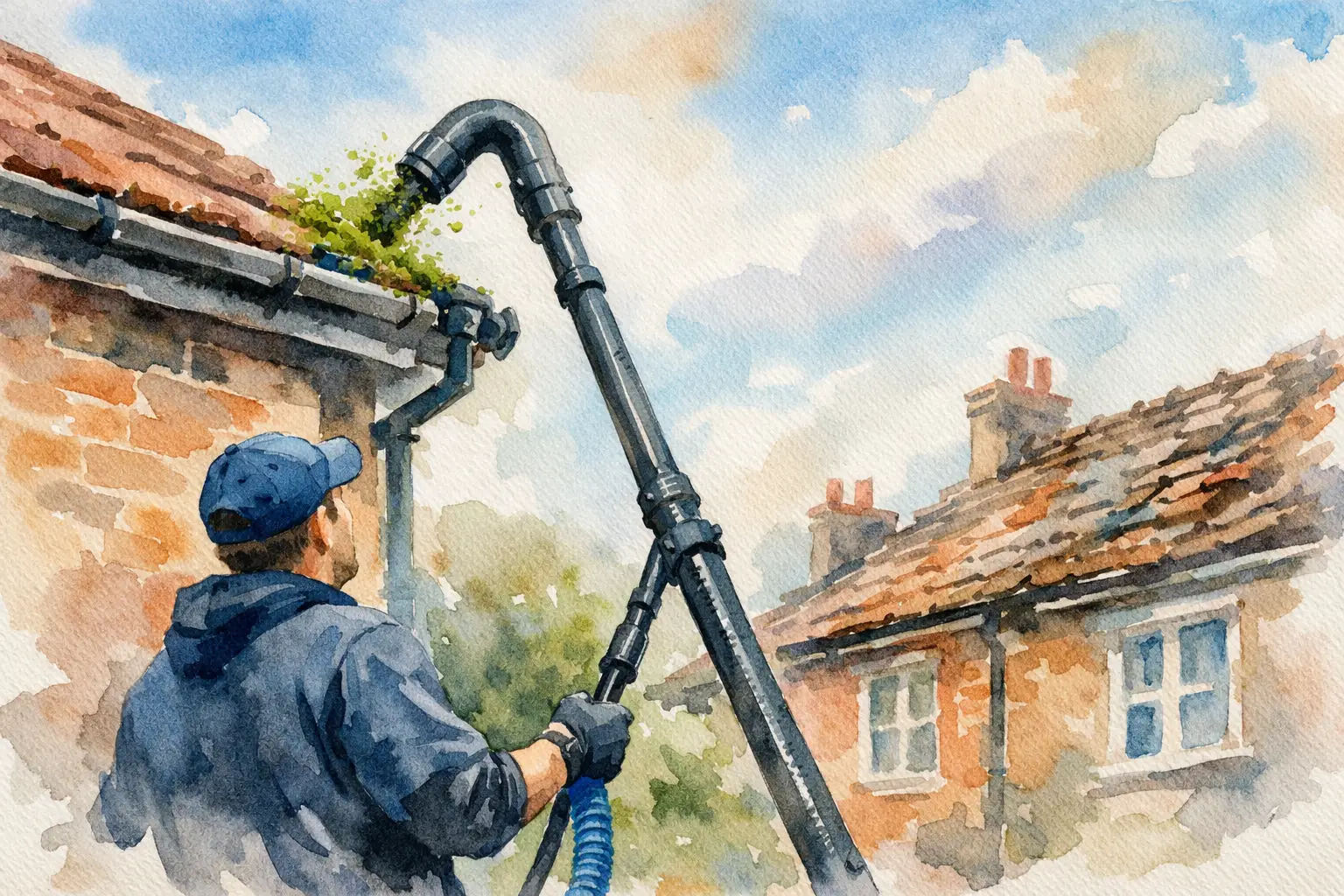
This is why roof maintenance should include the full rainwater system. McQueen’s Exterior Cleaning uses gutter vac equipment to clear gutters and downpipes from ground level where possible, avoiding the unnecessary risk of climbing ladders. Clearing the debris after roof work is particularly important, as loose moss can quickly create a blockage.
Do Not Let Appearance Alone Decide
A roof covered in moss can look neglected, but it may still be fundamentally sound. On the other hand, a recently cleaned roof can look smart while hiding cracked tiles, failing underlay or damaged timber. A proper decision starts with an inspection of accessible areas, including gutters, roof edges, flashings and the loft where safe to do so.
The age of the roof matters, but it is not the only factor. A well-maintained older slate roof may have years of service left. A newer tiled roof may need attention sooner if poor installation, storm damage or blocked drainage has caused trouble. The roof material, previous repairs, exposure to weather and the condition of the structure all affect the answer.
Be wary of anyone who recommends a treatment, coating or replacement without looking closely at the roof. You should be given a clear explanation of what has been found, what can be maintained, what needs repairing and what requires a roofer’s attention.
A Practical Way to Make the Decision
Start by separating maintenance from structural repair. If moss and blocked gutters are the problem, arrange careful roof and gutter cleaning, then keep the system maintained. If there are leaks, damaged coverings or signs of movement, get roofing advice before paying for any cosmetic treatment.
It also helps to think about timing. Treating a sound roof early is usually easier and cheaper than waiting until moss has blocked the gutters and water has caused damage. But when replacement is genuinely needed, delaying it for the sake of a temporary tidy-up can put the rest of the property at risk.
The best outcome is not the cheapest job on the day. It is a roof and rainwater system that direct water away from your home safely, without leaving you to take risks on a ladder or face avoidable repair bills later.
Leave a Reply