Water should leave your roof quickly and travel safely away from the house. When it cannot, it can overflow into brickwork, soak fascias and create damp problems that are far more expensive than routine maintenance. A professional rainwater system inspection service checks the full route water takes around your property, so small faults can be dealt with before the next heavy downpour exposes them.
For many homeowners, the first warning is water spilling over the edge of a gutter during rain. By that stage, there may already be a blockage, a poorly fitted section or a downpipe that is not draining as it should. A proper inspection looks beyond what can be seen from ground level and gives you a clear picture of the condition of your gutters and downpipes.
What a rainwater system inspection service checks
Your rainwater system includes more than the guttering along the roofline. It is the complete set of channels, outlets, downpipes, joints and gullies that carry rain away from the building. If one part is blocked or damaged, water can back up and affect the rest of the system.
An inspection starts by looking for visible signs of overflow, sagging gutter sections, loose brackets, cracks and leaking joints. The gutters are checked for leaves, moss, soil, roof debris and standing water. Organic debris does not simply sit in the gutter. Over time, it forms a heavy sludge that reduces the flow of water and puts extra strain on fittings.
Downpipes also need careful attention. A clear-looking gutter is of little use if the outlet is blocked or the downpipe cannot carry water to the drain. Inspection helps identify whether water is flowing freely, whether joints are secure and whether the bottom of the pipe is discharging where it should.
The ground below matters too. Persistent wet patches near walls, overflowing gullies and water pooling around the base of the house can point to a drainage issue. Gutter clearance may solve the problem, but not always. A thorough service separates a simple debris blockage from a fault that needs repair or further investigation.
Why inspections prevent costly water damage
Rainwater is harmless when it is directed away from the property. It becomes a problem when it repeatedly runs down walls, into roof edges or around foundations. Even a small overflow can cause trouble if it happens every time it rains.
Water running behind a gutter can damage timber fascias and soffits. Overflow against an outside wall can lead to staining, saturated masonry and moisture finding its way indoors. In colder weather, trapped water and damp conditions can worsen existing cracks and weak points.
For landlords, an inspection is a sensible part of looking after the building and reducing avoidable maintenance calls. For homeowners, it offers reassurance that a problem is being dealt with before it turns into peeling paint, mould, damaged plaster or a repair bill that could have been avoided.
There is also the practical issue of storm weather. A system that copes with a light shower may fail during prolonged or heavy rain. Clearing debris and checking flow before autumn and winter gives water the best chance of getting where it needs to go when conditions are at their worst.
Signs your gutters and downpipes need attention
You do not need to climb a ladder to spot every problem. A few checks from the ground can tell you when it is time to arrange professional help. Water overflowing from the gutter edge is the clearest sign, but there are others that are easy to miss.
Look out for dark streaks or green growth on walls beneath the gutter line, drips from joints long after rainfall has stopped, and sections of gutter that appear uneven or bowed. Plants growing from the gutter are a sure sign that dirt and debris have built up over time. You may also notice rainwater missing the downpipe outlet or splashing heavily around the bottom of the property.
Inside, damp patches on upstairs walls or ceilings can have several causes. Roof defects, flashing and internal plumbing may all need consideration. However, blocked gutters and overflowing rainwater systems are common contributors, especially where the damp appears near an external wall. An inspection is a sensible first step because it identifies obvious external water-management issues without guesswork.
Inspection and clearance work best together
Inspection identifies what is wrong. Clearance removes the debris that is stopping the system from doing its job. In most cases, the best outcome comes from combining both rather than treating either one as a separate task.
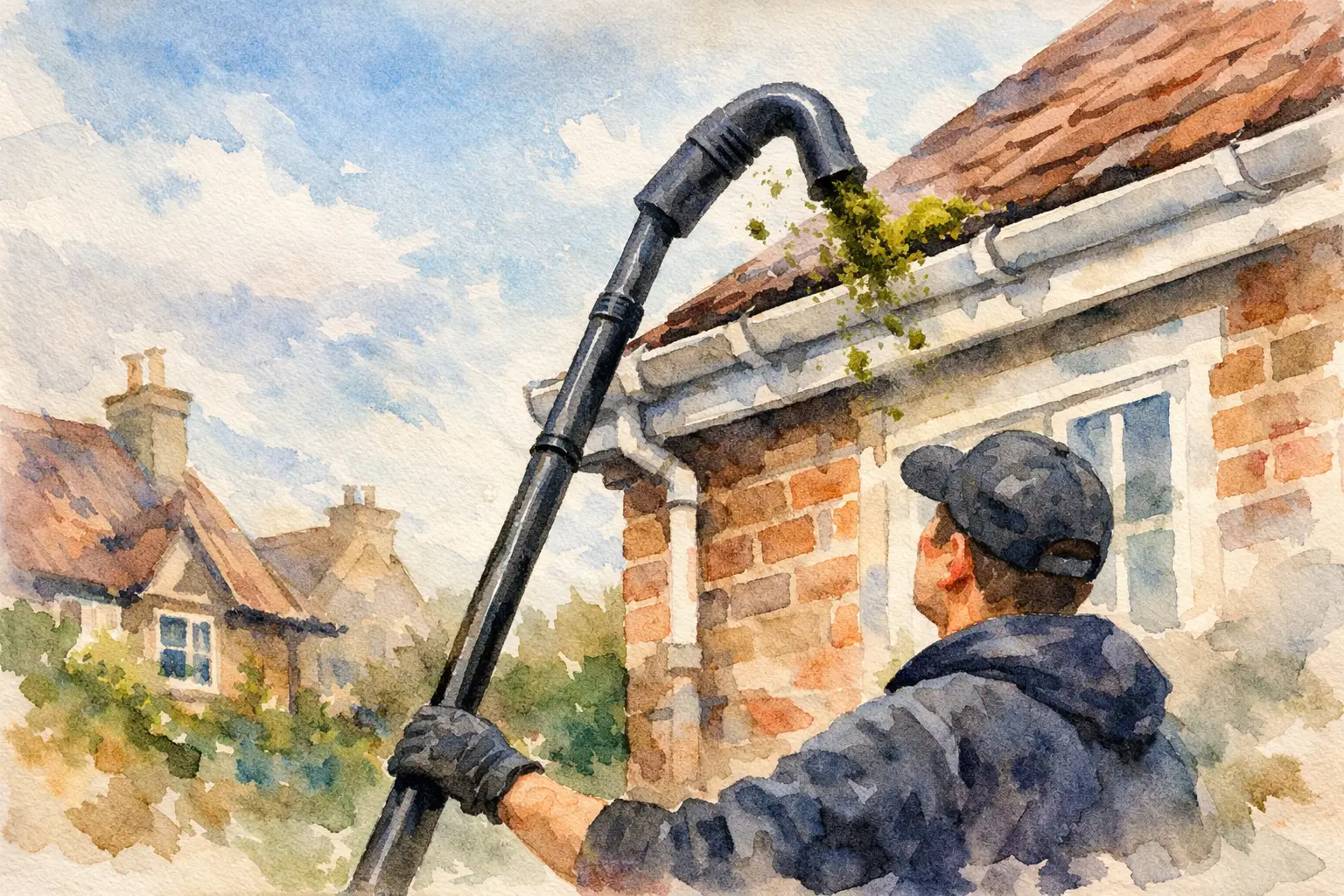
At McQueen’s Exterior Cleaning, gutter vac equipment allows gutters to be cleared efficiently from the ground, without the unnecessary risk of climbing ladders. This is particularly useful where access is awkward or where homeowners do not want anyone walking on the roof. The aim is straightforward: remove the build-up, check the condition of the system and make sure you understand any issues that need attention.
Not every property needs the same level of work. A bungalow beneath several mature trees is likely to collect leaves and moss more quickly than a newer house in an open area. A property with a flat roof, conservatory gutters or several roof valleys may also need more regular checks because debris collects in these areas.
Where gutters are damaged, poorly aligned or leaking at joints, cleaning alone will not fix the fault. A reliable inspection should make that clear. There is no benefit in pretending every issue can be solved by removing leaves. Knowing the difference helps you plan the right next step and avoids paying for repeat call-outs.
How often should a rainwater system be inspected?
For most homes, an annual inspection and clearance is a sensible baseline. Many households choose autumn, before leaf fall and winter rain put the system under pressure, or spring, when winter debris has had time to settle.
Twice-yearly attention is often better for homes surrounded by trees, properties with heavy moss growth on the roof, or buildings that have a history of overflowing gutters. If you have recently had roof work done, it is also worth checking the gutters afterwards. Small pieces of mortar, tile debris and other materials can quickly block an outlet.
A visual check after a period of strong wind or heavy rain is worthwhile. You are not looking to carry out repairs yourself. Simply look for an obvious overflow, a fallen downpipe, loose section or water running where it should not. If you spot one, arrange an inspection rather than taking risks with a ladder.
Why ladder safety should never be an afterthought
Gutter work can look simple from the ground, but ladders bring real risk. Uneven paving, wet surfaces, soft ground and overreaching can all turn a quick job into an accident. There is also the danger of damaging gutters by leaning a ladder directly against them.
Trying to clear a blockage from a window or reaching across a conservatory roof is no safer. It may dislodge debris, but it rarely confirms whether the whole gutter run and downpipe are clear. Professional equipment and a planned approach are safer and more likely to solve the actual problem.
Protect the parts of your home rainwater reaches
Gutters are easy to ignore because they are out of sight. Unfortunately, the damage caused by neglected gutters is often very visible once water has been allowed to overflow for too long. A routine inspection gives you practical information, removes avoidable worry and helps keep rainwater away from the walls, roofline and ground around your home.
If your gutters have not been checked recently, or you have seen overflow during rain, do not wait for damp to become the warning sign. A straightforward inspection and clearance can be one of the simplest ways to protect your property before the weather makes the problem harder to ignore.
Leave a Reply