
Water spilling over the edge of a gutter during a downpour is not something to ignore. It may look like a small nuisance, but repeated overflow can soak brickwork, saturate the ground around your foundations and leave damp patches inside. Knowing how to stop rainwater overflow starts with finding out where the water is being held back and where it should be going instead.
For most homes, the cause is straightforward: leaves, moss and roof debris have built up in the gutter or downpipe. Sometimes the system is clear but too small, damaged or draining towards a problem area. Acting early is far cheaper and safer than waiting for water ingress, rot or a flooded entranceway.
Start by finding where the overflow begins
Do not assume every overflow comes from the same fault. If water pours over the front edge of the gutter, there is usually a blockage or a section of gutter that is not draining correctly. If it runs down the wall from a joint, the gutter may be loose, cracked or misaligned. Water backing up near the top of a downpipe points to a blockage lower down.
The next time it rains, look from ground level if it is safe to do so. You are looking for the first place water escapes. Avoid climbing a ladder in wet or windy weather. A ladder on uneven ground, with wet hands and gutters full of debris, is an unnecessary risk for a job that can be inspected and cleared professionally from the ground.
Pay attention to these common signs between downpours too:
- Plants, moss or visible leaves sitting in the gutter
- Staining on walls below gutter joints or outlets
- Drips from the soffits or fascia boards
- Damp smells, mould or peeling paint on upper internal walls
- Puddles that form beside the house after rain
A little staining may be old, but fresh marks, recurring puddles or water that continues to drip after rainfall deserve attention.
Clear gutters and downpipes properly
Blocked gutters are the main reason rainwater overflows. Trees shed more than leaves. Moss from the roof, twigs, seed pods and the grit from ageing roof materials can all collect in the channel. Once debris reaches the downpipe outlet, it traps more material and turns into a dense blockage.
Removing only what you can see near the top is not always enough. The gutter needs clearing along its full length, including corners and outlets, and the downpipe needs checking for a free flow. A gutter can look clean from below while a compacted blockage sits just inside the outlet.
For smaller, single-storey areas, some homeowners choose to clear accessible debris themselves in dry, calm conditions. If you do, use stable equipment, keep someone nearby and do not overreach. Never lean a ladder against a plastic gutter, and never work close to overhead cables.
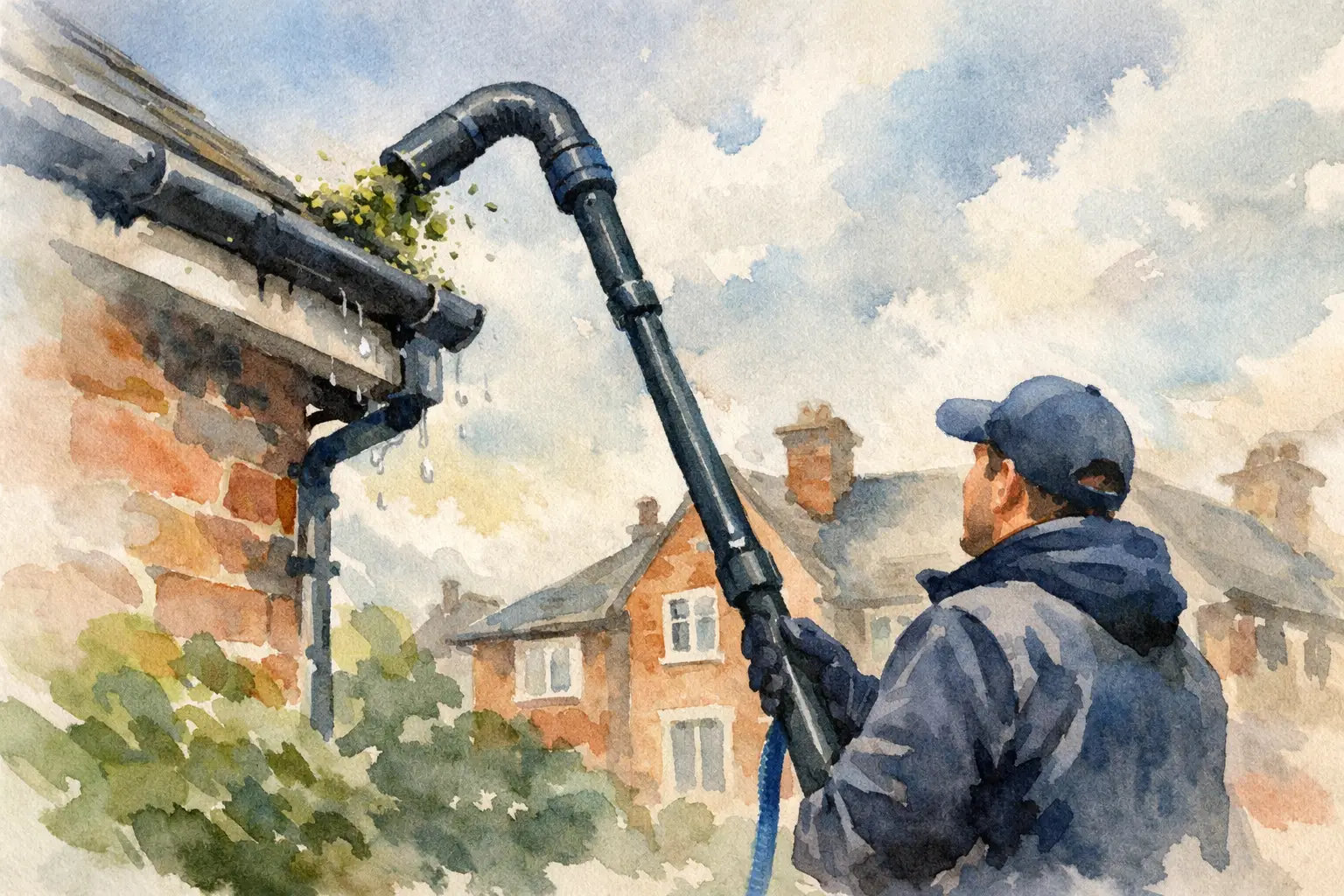
For most properties, professional gutter vacuum clearance is the safer option. It removes organic debris from gutters at ground level and avoids the need to climb ladders. At McQueen’s Exterior Cleaning, the system is used alongside inspection so that hidden build-up and obvious faults are not missed.
How to stop rainwater overflow when gutters are clear
If the gutters have been cleared but still overflow, the issue may be the fall. Gutters need a slight slope towards the downpipe. When brackets sag, come loose or have been fitted poorly, water sits in the middle rather than travelling to the outlet. In heavy rain, that standing water soon spills over.
From ground level, look for a gutter run that visibly dips or holds water long after rain has stopped. You may also notice water flowing away from the downpipe instead of towards it. This is a repair job rather than a cleaning job. Brackets may need resetting, sections may need realigning, or worn joints may need replacing.
Check the condition of joints and end caps as well. A leaking seal can send a steady stream of water down the wall, even if the main gutter is otherwise working. Small leaks become more damaging over time because they repeatedly wet the same patch of masonry, timber or render.
Roof valleys are another area worth checking. A valley collects rainwater from two roof slopes, so it carries a high volume during a storm. If moss or leaves build up there, water can overshoot the gutter entirely. This may look like a gutter problem from the ground, but the obstruction is higher up on the roof.
Make sure water can leave the downpipe
A clear gutter is only half the job. Rainwater must be able to travel down the pipe and away from the property. Downpipes often block at bends, at the shoe near ground level or where they enter a drain.
If the downpipe outlet drains into a gully, lift the grate only if it is safe and easy to do so, then remove visible leaves and silt. A gully full of mud cannot take water away quickly, so it backs up towards the downpipe. If it is buried, broken or repeatedly overflowing, it may need further investigation rather than a quick surface clear.
Some homes discharge into a water butt. These are useful, but the butt must have an overflow route. Once it is full, water needs to go into a suitable drain or soakaway, not pool against the wall. Check that the diverter is fitted correctly and that the overflow hose has not come loose or become blocked.
Where water drains onto the ground, make sure it is directed away from the house. Soil and paving should fall gently away from external walls. If water collects against the building, it can eventually find weak points in mortar, render, air bricks or door thresholds.
Consider capacity during very heavy rain
Not every overflow means poor maintenance. Short, intense storms can exceed the capacity of an older or undersized gutter system, particularly on large roof areas or conservatory extensions. If the gutters are clean, correctly aligned and still spill over only in the heaviest downpours, capacity may be the issue.
Larger gutters, additional downpipes or improved drainage can help, but the right answer depends on the roof layout and where the water can safely discharge. Adding a downpipe without a proper outlet simply moves the problem to ground level.
It is also worth looking at changes around the property. A new roof covering, extension, blocked gully, paved driveway or raised flower bed can alter how rainwater behaves. What worked ten years ago may no longer be enough.
Prevent overflow before the next wet spell
Gutter maintenance is preventative work. Waiting until water is running down the wall usually means the blockage has been building for some time. For many homes, a professional clearance once a year is sensible. Properties near trees, beneath overhanging branches, or with heavy moss growth may need attention twice a year, commonly after autumn leaf fall and again before wetter winter weather.
Trimming back branches can reduce the amount of debris falling onto the roof, although it will not stop moss or wind-blown material. Gutter guards can help in certain situations, but they are not a cure-all. Fine debris can sit on top of a guard, and some designs make future cleaning more difficult. They work best when matched to the property and still checked regularly.
Do not forget the less obvious runs of guttering. Garages, porches, extensions and rear elevations are often out of sight, which is exactly why blockages there can grow unnoticed. A full inspection should cover every rainwater route, not just the section visible from the front drive.
When to call for professional help
Call for a professional inspection if water is entering the property, gutters are high or difficult to reach, a downpipe is badly blocked, or you can see loose guttering and damaged fascias. It is also sensible to get help if you have tried clearing debris but the same overflow returns quickly. There may be a drainage issue, a roof valley blockage or a gutter alignment fault behind it.
Rainwater should move cleanly from roof to gutter, downpipe and drain without touching the walls of your home. Keeping that simple route clear is one of the most practical ways to protect your property through the wet Welsh weather – and it means one less thing to worry about when the next heavy shower arrives.
Leave a Reply