
A damp patch on an upstairs wall is rarely just an indoor problem. Very often, the cause starts outside: a blocked gutter overflowing onto brickwork, a downpipe sending water against the house, or rainwater pooling where it should drain away. Knowing how to reduce damp risk means dealing with water before it gets the chance to soak into the building.
For homeowners and landlords, prevention is usually far cheaper and less disruptive than repairing stained plaster, rotten timber or mould-damaged rooms. The good news is that most exterior causes can be spotted early and managed with regular, sensible maintenance.
Start with the gutters and downpipes
Your gutters are there to collect roof water and direct it safely away from the property. When leaves, moss, twigs and roof debris build up, water cannot flow as it should. Instead, it spills over the gutter edge, runs down walls and can find its way into cracks, joints and cavities.
This is particularly common after autumn leaf fall, but moss from a roof can create a problem at any time of year. A gutter may look clear from ground level while a compacted blockage sits around an outlet or bend in the downpipe.
Check for obvious signs after heavy rain. Water pouring over the front of the gutter, dark vertical marks on external walls, dripping from joints, or gutters that appear to sag can all point to a blockage or poor flow. Also look at where the downpipe discharges. Water should enter a working drain or be directed well away from the foundations, not empty onto paving beside the wall.
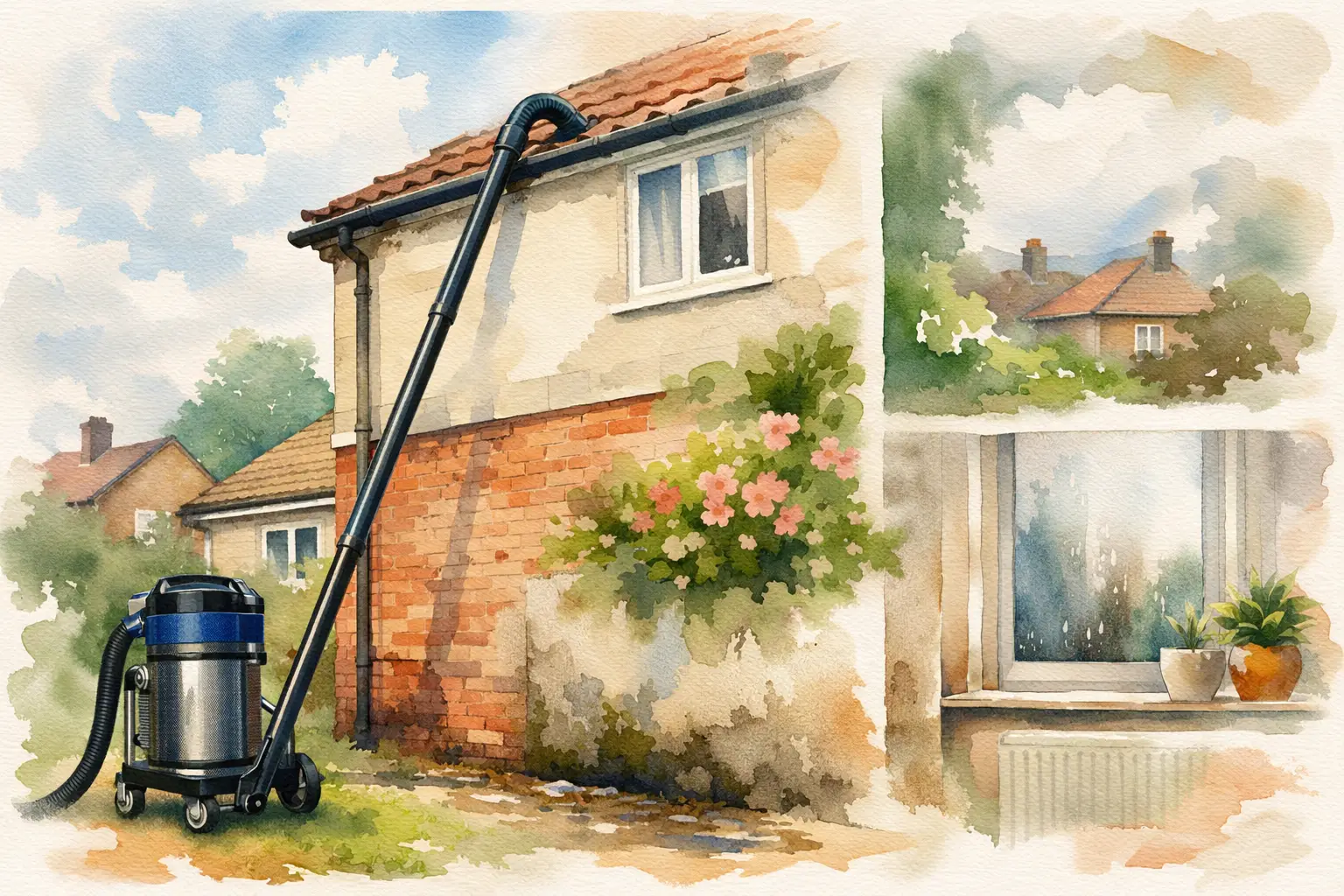
Clearing gutters is not a job worth risking a fall for. Ladders, wet surfaces and uneven ground are a poor combination. A professional gutter vac system allows gutters and downpipes to be cleared from ground level, with the system inspected properly rather than guessed at from below.
Keep roof debris from returning
Gutter clearance works best when the source of the debris is considered too. Overhanging branches shed leaves, seeds and small twigs directly into gutters. Mossy roofs release clumps that can block outlets surprisingly quickly, especially during prolonged rain.
You do not always need major tree work or roof treatment. Sometimes, trimming back a branch that hangs over the roofline and arranging regular clearance is enough. If moss growth is heavy, a suitable roof cleaning approach may help reduce the amount washing into the rainwater system. The right option depends on the roof material, its condition and how accessible it is. Harsh cleaning methods can damage some roof surfaces, so this is not an area for a one-size-fits-all approach.
Check where rainwater goes at ground level
A clear gutter does not solve much if the water has nowhere safe to go. Ground-level drainage deserves the same attention as the roofline.
During rainfall, watch whether water gathers near external walls, door thresholds, air bricks or patios. Puddles that remain long after the rain has stopped can indicate blocked gullies, damaged drainage or ground that slopes towards the house. Over time, repeated saturation can affect brickwork and increase the chance of moisture getting indoors.
Keep gullies and drain covers clear of leaves, silt and garden waste. If a gully repeatedly backs up, smells unpleasant or overflows, it may need more than a surface clear-out. A drainage issue should be investigated before it causes regular flooding around the property.
Patios, paths and driveways can also contribute to damp problems. A surface that has been built too high against the wall can bridge the damp-proof course, allowing moisture to bypass the protection designed into the building. Soil, bark and piled-up leaves can do the same. Keep external ground levels below the damp-proof course where possible, and avoid storing items tightly against the house where they trap moisture and stop the wall drying out.
Look after walls, joints and openings
Rainwater can exploit small faults in external surfaces. Cracked render, missing pointing, damaged sealant around windows, and loose flashing may all let water into areas where it should not be. These faults do not always cause an immediate leak, but repeated wet weather can gradually make them worse.
Walk around the property a few times a year and look for changes. Pay attention to staining beneath gutters, crumbling mortar, gaps around pipework, peeling paint and green growth on shaded walls. These are not proof of damp on their own, but they are useful warning signs that water may be lingering where it should not.
External walls need time to dry after rain. Thick climbing plants, stacked garden furniture and dense vegetation pressed against the building can reduce airflow and keep surfaces damp for longer. Leave a sensible gap where you can, particularly around air bricks and low-level vents.
Ventilation still matters inside
Not all damp comes from outside. Condensation is common in bathrooms, kitchens, bedrooms and homes where clothes are dried indoors. It happens when warm moist air meets a cold surface, often showing up as water on windows, black mould in corners or a musty smell behind furniture.
The answer is not simply to turn up the heating. A steady background temperature can help, but ventilation is equally important. Use extractor fans when cooking or showering, keep trickle vents open if your windows have them, and air rooms regularly. Avoid drying washing on radiators where possible. If it cannot be avoided, use a well-ventilated room and keep the door closed to stop moisture travelling through the house.
It is worth separating condensation from water ingress because the fixes are different. If a patch gets worse after rain, or appears near a chimney breast, window, ceiling edge or external wall, an exterior fault may be involved. If mould appears mainly in cold corners, behind wardrobes and around windows during winter, condensation is more likely. Some homes have both issues, which is why a proper look at the whole property matters.
How to reduce damp risk with a simple routine
The most reliable approach is regular checks rather than waiting for a visible leak. Spring and late autumn are useful times to inspect the exterior, with an extra check after severe weather or heavy leaf fall. Older properties, homes near trees and rental properties that may stand empty for periods often need closer attention.
A practical routine includes keeping gutters and downpipes clear, checking that gullies take water away freely, watching for overflow during rain, and dealing with small defects before they become larger repairs. Inside, keep an eye on condensation, ventilation and any changes to walls or ceilings.
There is a balance to strike. You do not need to panic over every mark on a wall or clean gutters every few weeks without reason. But leaving overflowing gutters until water has already entered the property is a false economy. Regular preventative work gives you a chance to act while the solution is still straightforward.
When to bring in a professional
Call in help when gutters are high, access is awkward, water is overflowing, or you cannot tell whether a downpipe is draining correctly. It is also sensible to get a professional opinion if damp marks return after internal decorating, if rainwater is visibly running down walls, or if gutters have not been cleared for several years.
For homeowners in Neath and the surrounding area, McQueen’s Exterior Cleaning can clear gutters and organic debris using ground-based gutter vac equipment, helping remove the ladder risk from the job. A proper clearance and inspection can show whether the issue is simply a blockage or whether further repair work is needed.
A dry, well-protected home is usually the result of small jobs done at the right time. Pay attention to where rainwater lands, where it flows, and whether it gets safely away from the building. That simple habit can prevent a great deal of avoidable damage.
Leave a Reply