
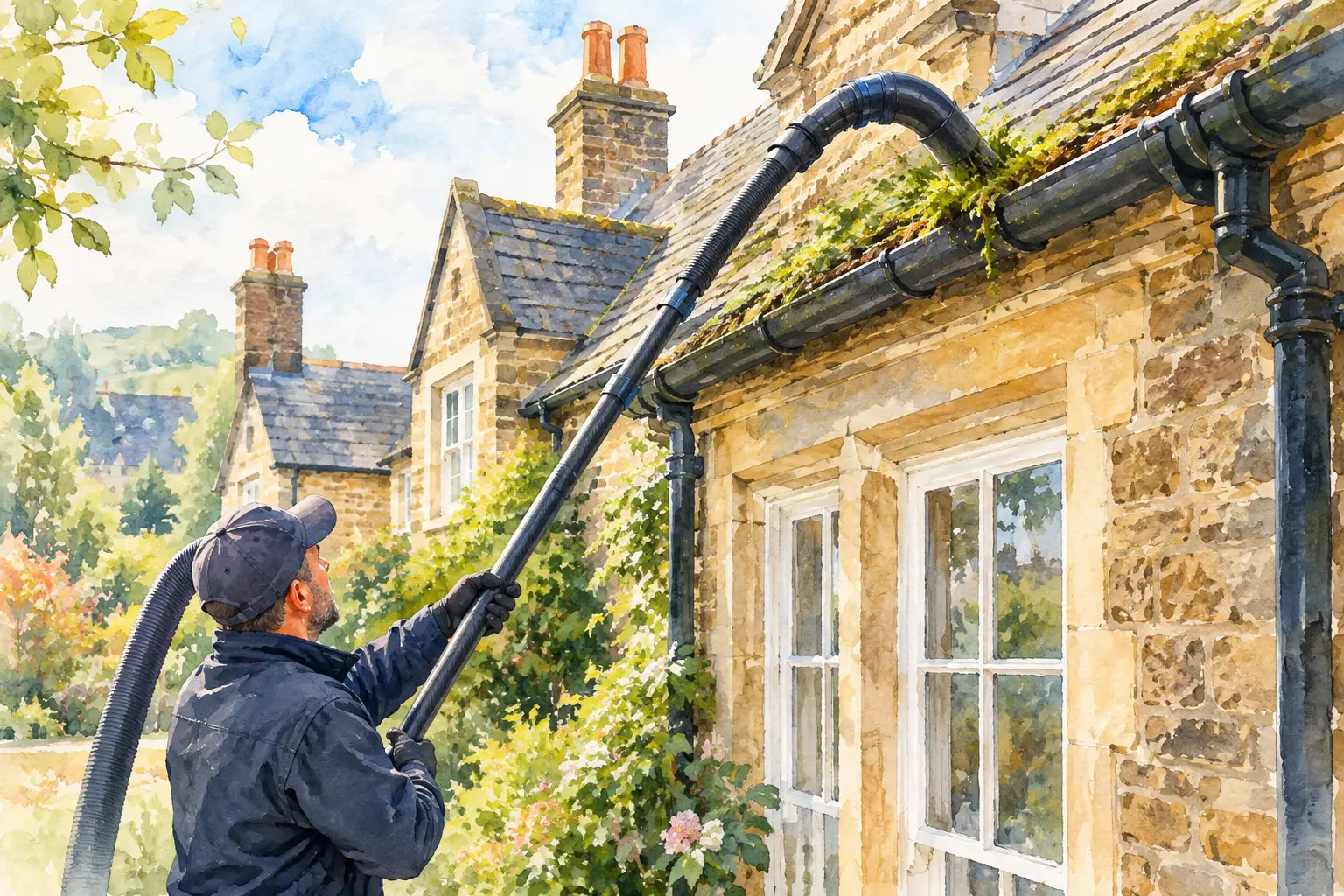
An older home can cope with a great deal of Welsh weather, but it cannot cope with rainwater being sent into the wrong places. Gutter maintenance for older homes is not just about removing leaves. It is about keeping water away from brickwork, timber, foundations and the roofline before a small blockage turns into damp, staining or a costly repair.
Older properties often have details that need more care than newer builds. The guttering may be original cast iron, the roof may have aged tiles or slate, and the walls may be more vulnerable to moisture. A clear, working rainwater system is one of the simplest ways to protect all of it.
Why older homes need closer attention
Gutters do a straightforward job: they collect rainwater from the roof and carry it safely down the downpipes. When they are blocked, overflowing water runs down external walls, behind fascias and around windows. On a newer home, that may cause a visible stain. On an older property, repeated wetting can feed damp problems that take far longer to put right.
Ageing mortar, porous brick, timber fascias and older render can all suffer when water is allowed to overflow for weeks or months. In colder weather, trapped water can freeze and expand. That puts extra strain on gutter joints, brackets and already tired materials.
The issue is not always a dramatic blockage. A gutter may look clear from ground level but still hold compacted moss, roof grit and silt at the outlet. Water then moves slowly, spills during heavy rain and finds its way where it should not.
Warning signs your gutters need clearing
You do not need to climb a ladder to spot every problem. A quick look from the ground during or shortly after rain can tell you a lot. Keep an eye out for these signs:
- Water pouring over the front or back edge of the gutter rather than into the downpipe.
- Dark damp patches, green growth or dirty streaks below the roofline.
- Gutter sections that sag, pull away from the fascia or have visible leaking joints.
- Plants, moss or debris growing from the guttering.
- Puddles forming near walls, air bricks or the base of a downpipe.
Damp patches indoors near an external wall or ceiling can also be a warning, although the cause is not always the gutter. It needs checking properly rather than assuming the worst. A blocked downpipe, damaged roof tile, failed seal or external crack can all allow water in.
The particular risks of gutter maintenance for older homes
Older properties are not all the same. A Victorian terrace, stone cottage and 1930s semi can each have different gutter arrangements and materials. That is why a quick clear-out without looking at the wider system can miss the real issue.
Older gutter materials need a careful approach
Cast-iron gutters are common on period homes and can last for decades when maintained. They are heavy, however, and a loose bracket or corroded joint needs attention before it fails. Harsh treatment can damage old coatings and expose metal to rust.
Plastic guttering fitted to an older house can also become brittle over time, especially where it has been exposed to sun and frost. Forcing compacted debris out by hand or leaning a ladder against it can crack a section or loosen a joint.
The aim is to remove debris without putting unnecessary pressure on the gutter, brackets or roof edge. A professional gutter vac system allows clearing from ground level in many situations, reducing the risks that come with ladders and fragile roofline materials.
Moss is more than an untidy roof problem
Moss sheds from roofs steadily, particularly after wet spells and strong winds. It collects in gutters, holds moisture and creates a dense blockage around outlets. Older roofs may produce more moss and grit because tiles, slates and mortar have weathered over many years.
It is tempting to wait until the gutter is visibly full. By then, the downpipe may already be restricted. Regular clearance is usually cheaper and far less disruptive than dealing with water damage after an overflow.
Downpipes can block out of sight
A clear gutter is only half the job. If the downpipe is blocked, rainwater has nowhere to go. Debris often builds up at the top bend, at the shoe near ground level or where the downpipe enters a drain.
During an inspection, it makes sense to check that water has a clear route through the whole system. Where safe and suitable, testing the flow can reveal a partial blockage before the next heavy downpour does it for you.
How often should an older property have its gutters cleared?
For many homes, a gutter clearance once or twice a year is sensible. Autumn is an obvious time because falling leaves quickly fill gutters, while a spring check clears winter debris and identifies damage caused by storms or frost.
Some properties need more frequent attention. If your home sits beneath trees, has a mossy roof, receives wind-driven debris or has shallow gutters, a three- or four-month check may be worthwhile. Coastal and exposed areas can also collect more windblown material.
It depends on what is landing on the roof, not simply the age of the property. A well-kept older home with little tree cover may need less frequent clearance than a newer house surrounded by mature trees. The key is not leaving the system unchecked until overflowing water makes the decision for you.
Safe checks you can make from ground level
Homeowners can do a few sensible checks without taking risks. Walk around the property after rain and look for spills, drips, sagging and marks on walls. Check that downpipes appear secure and that water is not pooling at their base.
You can also look for debris around the outlet of a downpipe and make sure nearby drains are not covered by leaves. Avoid pushing rods or tools deep into a downpipe unless you know what is causing the blockage. A badly placed tool can compact debris, damage old pipework or dislodge a joint.
Do not climb a ladder to inspect a gutter unless you have the right equipment, stable ground and confidence working at height. Older properties often have uneven paths, soft ground, awkward extensions and ageing roofline materials. The risk of a fall is not worth saving a small amount on a clearance.
What a proper gutter clearance should cover
A worthwhile service is more than scooping out visible leaves. The gutters should be cleared of organic debris and sediment, with attention paid to outlets and downpipes. The system should then be inspected for obvious faults such as loose joints, sagging runs, split sections or overflow marks.
Cleaning the outside of the gutter can improve appearance, but it does not solve a blockage inside. Equally, clearing debris will not repair a damaged bracket or cracked pipe. These are separate jobs, and being clear about the difference helps homeowners make the right decision.
For older homes, an inspection should also consider the condition of fascias, soffits and nearby brickwork. Water staining can show where the gutter has been overflowing, while soft timber or peeling paint may suggest the problem has been present for longer than expected.
When to arrange professional help
Call for help when gutters are overflowing, downpipes are blocked, sections are loose, or you can see damp staining beneath the roofline. It is also sensible to arrange a clearance before the wettest part of the year if the property has not been checked recently.
McQueen’s Exterior Cleaning uses gutter vacuum equipment to remove debris from gutters and downpipes without relying on ladders for routine clearance. That means a safer approach around older homes, along with a clear view of what is causing the problem.
A dry wall starts at the roof. Keeping gutters clear, secure and flowing properly gives an older home the best chance of standing up to the next spell of heavy rain.
Leave a Reply