Water pouring over a gutter in heavy rain is easy to notice. A downpipe that is partly blocked, leaking behind a wall, or draining too slowly is often not. This downpipe inspection guide explains what to look for from ground level, when a simple check is enough, and when it is safer to call in a professional.
A working downpipe carries rainwater away from the roof and deposits it safely into a drain or soakaway. When it fails, water can run down brickwork, collect around the base of the property, soak into walls, and contribute to damp. The cost of a routine inspection is usually far less than dealing with water ingress, damaged render, rotten fascias, or a flooded entrance.
Why downpipe inspections matter
Downpipes deal with more than rainwater. Leaves, moss, roof grit, twigs and general organic debris wash from the gutters into the pipe. Over time, this material can settle at bends, joins and the gully at ground level. The pipe may still pass a small amount of water, which can make the problem easy to miss until a proper downpour arrives.
In South Wales, frequent rain means a small restriction can become a bigger issue quickly. If water cannot leave the roofline fast enough, it backs up in the gutter and spills over the nearest edge. That overflow may look like a gutter problem, but the obstruction can be lower down in the downpipe or underground drain.
Regular checks give you the chance to deal with debris before water takes an unwanted route through or around your home. They also help identify loose brackets, cracked pipework and joints that have pulled apart during bad weather.
A safe downpipe inspection guide from ground level
There is no need to climb a ladder to carry out a basic visual check. In fact, for most homeowners, staying on the ground is the sensible option. Use binoculars if needed, inspect when the weather is dry, and keep clear of slippery paths or uneven ground.
Start at the top of the pipe where it joins the gutter outlet. Look for staining beneath the outlet, water marks on the wall, or a visible gap at the joint. These signs can mean water is escaping before it enters the downpipe properly.
Follow the pipe down the wall. Check that it is straight, secure and firmly held by its brackets. A pipe that bows away from the wall, rattles in the wind or has missing clips may eventually separate at a joint. Plastic pipework can become brittle with age, while metal components may corrode, particularly around fixings.
At the bottom, inspect the gully or drain connection. Leaves and moss often build up around this point, stopping water from entering freely. If the gully is full of standing water on a dry day, or the grate is packed with debris, it needs attention. Do not push your hand into a drain where there may be sharp objects or hidden obstructions.
Signs your downpipe may be blocked or damaged
Some faults are obvious, while others only show themselves after rainfall. Watch for these warning signs around the property:
- Water overflowing from gutters even though the gutter channel looks relatively clear.
- A downpipe that drips from a joint or sprays water against the wall during rain.
- Green staining, algae or dark marks on brickwork beneath gutter level.
- Puddles forming near the base of the downpipe or close to external walls.
- Damp patches, peeling paint or a musty smell on the inside wall nearest the pipe.
- A gurgling sound, very slow drainage or water rising from the gully during a shower.
One sign does not always confirm a blocked downpipe. For example, overflow can happen when a gutter is poorly aligned, undersized for a large roof area, or overwhelmed by exceptional rainfall. However, repeated overflow in ordinary wet weather deserves a proper inspection.
Check the system during rainfall, without taking risks
A short spell of steady rain is useful because it shows how the system performs under real conditions. You can watch from a safe doorway or stand well back from the building. Do not inspect from a ladder in wet weather and do not lean out of upstairs windows.
Look first at the gutter outlet. Water should flow into the downpipe rather than pool at the top. Then watch the joints and bends. A properly functioning pipe should carry water down without leaks, bulging or obvious backing up.
Finally, check the ground-level outlet. Water should move away through the gully rather than overflow onto the path, patio or wall. If the system only struggles in very heavy rain, it may need additional capacity or a review of the drainage arrangement. If it struggles in regular rain, debris is the more likely cause.
Where blockages usually form
Most blockages occur at a change in direction. This includes the gutter outlet, offsets around eaves, bends in the pipe, and the shoe or bend at the bottom. Debris can also gather where a downpipe enters a drain, especially if the gully grate has not been cleared for some time.
Homes close to trees tend to need more frequent checks. Moss from older roofs can be just as troublesome as leaves because it holds water, breaks into small pieces and compacts inside pipework. After roof cleaning or a period of strong winds, it is worth checking gutters and downpipes again, as loosened material may have moved into the system.
What you can deal with yourself
Light debris around an accessible gully can often be removed with gloves, provided you can do so from the ground without reaching into the drain. Sweeping leaves away from the base of the pipe and keeping gullies clear is a useful part of routine exterior maintenance.
Be cautious about using a garden hose to force a blockage through a downpipe. It can work on loose debris, but it can also cause water to back up into gutters or escape through a weak joint. Avoid forcing rods into plastic pipework, as aggressive pressure can crack fittings, dislodge joints or push the blockage further into the underground drainage.
If there is a visible leak at a low-level joint, the fitting may simply need reseating or replacing. But where pipework is high up, repeatedly overflowing, or connected to a blocked drain, the safer choice is professional help.
When to book a professional inspection
Arrange a professional inspection if you can see overflow from height, persistent staining on walls, loose guttering, cracked downpipes, or water collecting near the foundations. Landlords should also act promptly when tenants report damp near an external wall, as rainwater defects can be mistaken for an internal condensation issue.
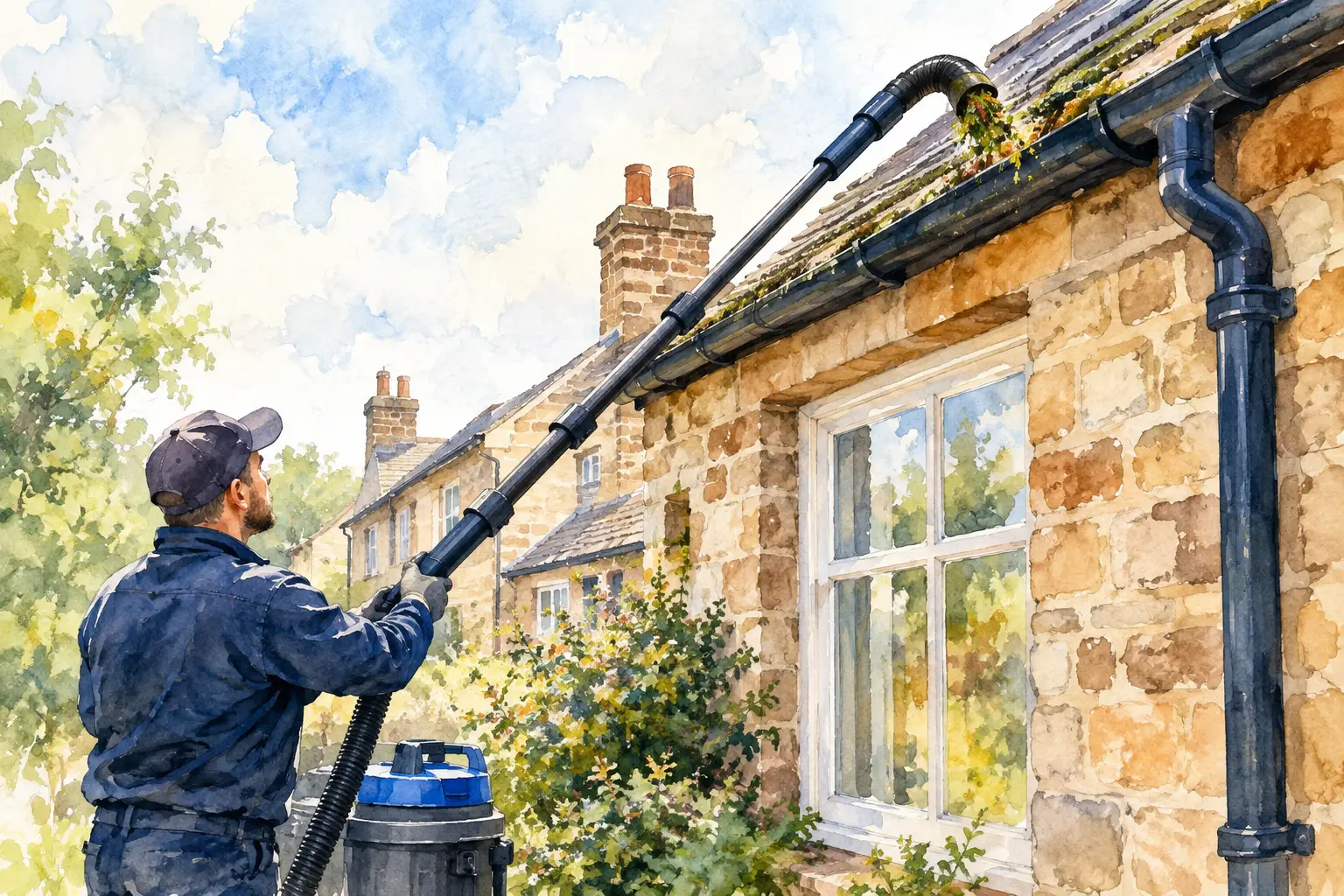
A specialist gutter and downpipe service can inspect the full rainwater route, remove organic debris and check that water is leaving the property as it should. At McQueen’s Exterior Cleaning, gutter vac equipment allows high-level gutters and downpipes to be cleared without the unnecessary risk of ladder work around your home.
An inspection is particularly worthwhile before the wetter months, after autumn leaf fall, and following storms. For many properties, an annual check is enough. Homes beneath trees, properties with mossy roofs, or buildings that have had previous overflow problems may benefit from checks twice a year.
Do not overlook the drain below
A clear downpipe is only useful if the water has somewhere to go. If the pipe enters a gully that drains slowly, the issue may be below ground rather than in the pipe itself. Signs include water sitting in the gully long after rain has stopped, unpleasant smells, or water rising back towards the surface.
Gutter clearance will remove debris from the roofline, but a blocked underground drain may need separate drainage work. Knowing where the restriction is prevents you from paying for the wrong solution and helps protect the area around the property from repeated flooding.
A downpipe does a quiet job until it stops doing it. A quick ground-level check after heavy rain, combined with regular professional clearance where needed, is a practical way to keep water away from the walls, paths and foundations that matter most.
Leave a Reply