
A damp patch on a bedroom wall can begin with leaves sitting in a gutter months earlier. That is why damp prevention for landlords is not only about extractor fans, heating or asking tenants to open windows. It starts with keeping rainwater moving safely away from the building.
For landlords, a blocked gutter is a small maintenance issue that can quickly become a costly repair, a tenant complaint or an avoidable dispute. Overflowing water can soak brickwork, run behind fascias, flood at ground level and find its way into places it should never reach. Regular checks and gutter clearance are a practical way to reduce that risk.
Why gutters matter for damp prevention for landlords
Gutters collect rainwater from the roof and direct it into downpipes. When the system is clear and correctly positioned, water is carried away from walls, windows, doors and foundations. When it is blocked, water spills over the edge or backs up beneath the roofline.
In Neath and across South Wales, regular rain and falling leaves make neglected gutters a common cause of exterior water problems. Moss from roofs, twigs, silt and general organic debris all build up over time. A gutter may look acceptable from the ground while holding a blockage around a downpipe outlet or at a corner joint.
The result is not always an immediate leak. Water can repeatedly run down the same section of wall, saturate external masonry and worsen weak mortar, cracked render or failed seals around windows. Over time, that moisture can show internally as staining, peeling paint, mould or a cold, damp-feeling wall.
Know the difference between condensation and water ingress
Not every damp report is caused by the gutters. Condensation is common in occupied homes, particularly where there is limited ventilation, clothes are dried indoors or rooms are not heated evenly. It often appears as mould around windows, in corners and behind furniture.
Water ingress is different. It is moisture getting into the building from outside. Signs may include a damp patch that worsens after heavy rain, staining high on an external wall, drips near a window or ceiling, and visible overflow from gutters. A blocked downpipe, broken gutter joint or overflowing hopper can all contribute.
The distinction matters because the right fix depends on the cause. Asking a tenant to ventilate more will not solve rainwater pouring down an external wall. Equally, clearing a gutter will not fix condensation caused by poor airflow. A sensible landlord investigates rather than assuming.
The outside checks that prevent bigger problems
A regular visual check from ground level can reveal a lot. Look during or soon after rain if possible. Water spilling over the gutter edge, a downpipe that appears not to discharge, green staining on walls and persistent puddles close to the property all deserve attention.
Pay close attention to sections above entrances, bay windows, extensions and low roofs. These are often where water collects or where a small overflow causes visible damage. Also check that downpipes discharge into a working drain or gully, rather than onto the ground beside the wall. A clear gutter is only useful if the water has somewhere to go.
There are several warning signs worth acting on promptly:
- Gutters overflowing or water running down the face of the building
- Plants, moss or visible debris growing from the gutter line
- Damp staining on walls or ceilings after rainfall
- Loose brackets, sagging gutters, leaking joints or detached downpipes
- Standing water around gullies, doorways or the base of external walls
A small repair is normally far cheaper than allowing a recurring water problem to affect plaster, timber, insulation or decoration inside a rented property.
Set a realistic maintenance routine
Most rental properties benefit from gutter clearance at least once a year. For homes close to mature trees, properties with mossy roofs, or buildings exposed to wind and driving rain, twice-yearly checks are often the safer option. Autumn is an obvious time after leaf fall, but a spring check is useful for clearing winter debris and checking for damage.
There is no single schedule that suits every property. A modern house with little tree cover may need less attention than an older terrace with difficult gutter runs, overhanging branches and several roof levels. The key is to base the routine on the property, not wait until a tenant reports an overflow.
Keep a simple record of inspections, clearance work and any repairs. This helps you plan future maintenance and provides a clear history if a damp issue is later reported. Photographs before and after work are useful too, particularly where gutters are difficult to see from the ground.
Do not leave tenants to deal with high-level maintenance
Tenants can reasonably report a leak, damp patch or overflowing gutter as soon as they spot it. They can also help by keeping air bricks, gullies and outdoor drains clear of rubbish at ground level where this is safe to do. But clearing gutters and downpipes at height is not a job to push onto an occupier.
Ladders, uneven ground and wet surfaces create obvious risks. For landlords managing several properties, it also makes little sense to wait for a problem and then attempt a hurried fix in poor weather. A planned professional visit is safer, easier to document and less disruptive for tenants.
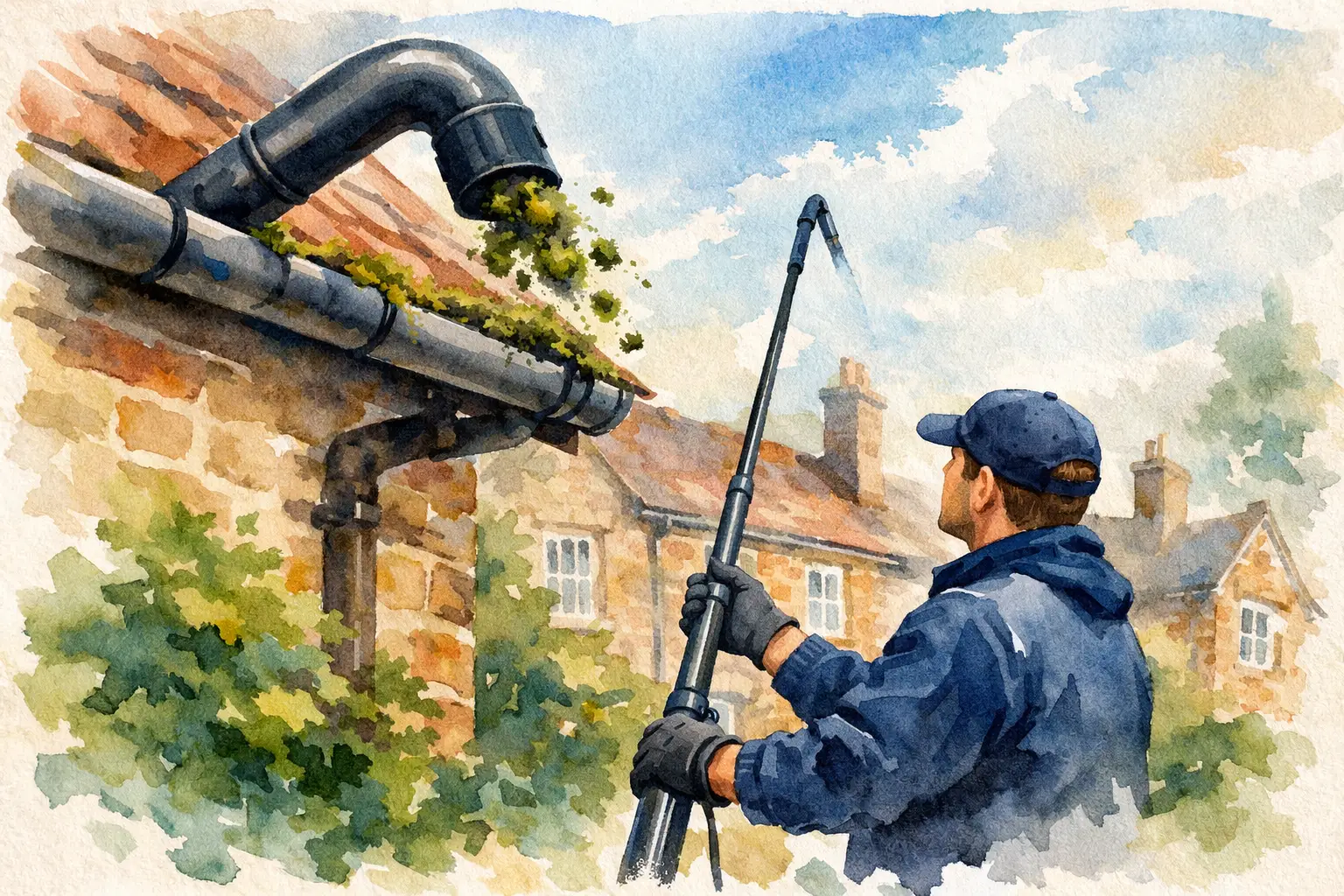
Using a gutter vac system allows gutters to be cleared from ground level in many situations, avoiding unnecessary ladder work. The system removes leaves, moss and built-up debris while allowing the rainwater route to be inspected properly. Where a fault is visible, such as a loose joint or damaged bracket, it can be identified before the next period of heavy rain makes it worse.
Look beyond the gutter when damp keeps returning
If a wall remains damp after the rainwater system has been cleared, the property may need a wider external inspection. Check roof tiles and flashing, cracked render, pointing, window seals and the condition of external drainage. Water often follows the easiest route, and more than one minor defect can combine to create a larger issue.
Ground levels are another consideration. Soil, paving or gravel should not bridge the damp-proof course or hold water against the wall. Overflowing gutters can make this problem worse by repeatedly soaking the area below. Improving drainage may be necessary, but it should be based on what is actually happening on site.
Inside the property, make sure tenants know how and when to report concerns. A brief report after heavy rainfall, with a photograph if possible, can help establish whether the issue is likely to be external water ingress or condensation. Prompt reporting gives you a much better chance of stopping damage while it is still limited.
Protect the property before the weather does the damage
Damp prevention is rarely about one dramatic repair. More often, it is the routine work that prevents the expensive call-out: clearing a blocked outlet, checking a downpipe, repairing a leaking joint and making sure rainwater is directed away from the building.
For landlords, that routine protects more than the brickwork. It helps keep tenants comfortable, reduces disruption between lets and avoids the frustration of discovering that a preventable outside problem has become an inside repair. If your gutters have not been checked recently, arranging clearance before the next sustained spell of rain is a sensible place to start.
Leave a Reply