
A short, heavy downpour can test a home’s drainage more than a full day of steady rain. That is why changing rainfall drainage risks deserve attention before water starts spilling over the guttering. When rain arrives harder, more often, or after long dry spells, small blockages and overlooked faults can quickly turn into flooding, damp and expensive repairs.
For homeowners, landlords and occupiers, the practical question is simple: can rainwater get safely away from the roof and property? Gutters, downpipes, gullies and drains are easy to ignore when they are working. When they are not, the signs can appear inside the home as well as outside it.
Why changing rainfall patterns put homes under pressure
Rainfall is not only about how much water falls over a month or year. It is also about the intensity of each shower. A gutter that copes with normal rain may overflow when a sudden burst sends a large volume of water off the roof at once.
This does not mean every heavy shower will cause damage. A clear, correctly fitted rainwater system should manage ordinary wet weather. Problems begin when its capacity is reduced by moss, leaves, silt, loose roofing material or a partially blocked downpipe. Water has nowhere to go, so it finds the easiest route – over the edge of the gutter, down an external wall, into a roofline or towards the base of the property.
Long dry periods can cause trouble too. Debris can build up unnoticed in dry gutters, then compact when the rain returns. Soil around the property may become hard and less able to absorb a sudden volume of water. If ground drains are already slow or blocked, water can pool around patios, paths and doorways.
The drainage risks that start at roof level
A roof sheds a surprising amount of water. During a heavy shower, every square metre contributes to the flow entering the gutter. The guttering and downpipes need to collect that water, carry it down and discharge it away from the building without restriction.
A blockage does not need to be complete to create a problem. A layer of wet leaves or moss narrows the channel and slows the flow. Water can back up behind it, particularly at corners and outlets. If the blockage is in a downpipe, the gutter above may fill like a trough and overflow along its length.
Overflowing water repeatedly soaking brickwork can lead to staining, algae growth and moisture penetrating weak pointing or cracks. It can also affect fascia boards, soffits and timber roof edges. Left for long enough, this damp exposure may result in rot and deterioration that costs far more than routine gutter clearance.
Water running down the wrong place
Look out for water sheeting down walls during rain, or a regular drip from one point after the shower has stopped. These are not cosmetic issues to put off until summer. They are useful warning signs that water is not following its intended route.
Other signs include sagging gutters, joints that leak, vegetation growing from guttering, damp patches on upstairs ceilings, peeling paint near window frames and puddles forming next to external walls. One symptom does not always confirm the cause, but it is enough reason to inspect the rainwater system properly.
Changing rainfall drainage risks around the property
Roof drainage is only one part of the picture. Water that leaves a downpipe still needs somewhere suitable to go. Depending on the property, it may feed into a drain, a soakaway or another approved surface-water route. If that point is blocked, damaged or overwhelmed, water can back up and collect where it should not.
Driveways, paving and patios can make this worse if water falls towards the house rather than away from it. Debris in gullies is another common issue. Leaves, mud and garden waste quickly build up beneath grates, especially after windy weather. A clear gutter does not fully protect the property if the gully below cannot take the water away.
Homes on slopes, properties with large roof areas and older buildings deserve particular attention. So do houses close to mature trees. There is more leaf fall to manage, and fine debris can gather in awkward places that cannot be checked safely from ground level.
What homeowners can safely check
There are useful checks you can make without climbing ladders or walking on a roof. The safest time is after rain has stopped, when surfaces are less slippery and you can see where water has travelled.
Walk around the property and look for obvious overflow marks beneath gutters, damp staining on walls and standing water around drain covers. Check whether downpipes appear loose, cracked or disconnected. If a downpipe outlet is visible, look for a build-up of leaves and silt around it.
You can also watch the system from a safe position during a normal shower. Water spilling over a gutter or shooting from a joint needs attention. Do not be tempted to lean a ladder against guttering, reach out from an upstairs window or clear debris by hand at height. Falls from ladders happen quickly, and wet ground makes the risk greater.
Professional clearance is preventative maintenance
Gutter cleaning is often treated as a job for when a blockage becomes obvious. In practice, it works best as preventative maintenance. Clearing organic debris before the wetter months allows water to move freely when it matters most.
A proper service should do more than remove what can be seen from the ground. It should clear gutters and downpipes, identify heavy build-up, check for signs of poor flow and flag visible defects such as leaking joints or damaged sections. It cannot repair every underlying problem, but it can reveal issues before repeated overflow causes wider damage.
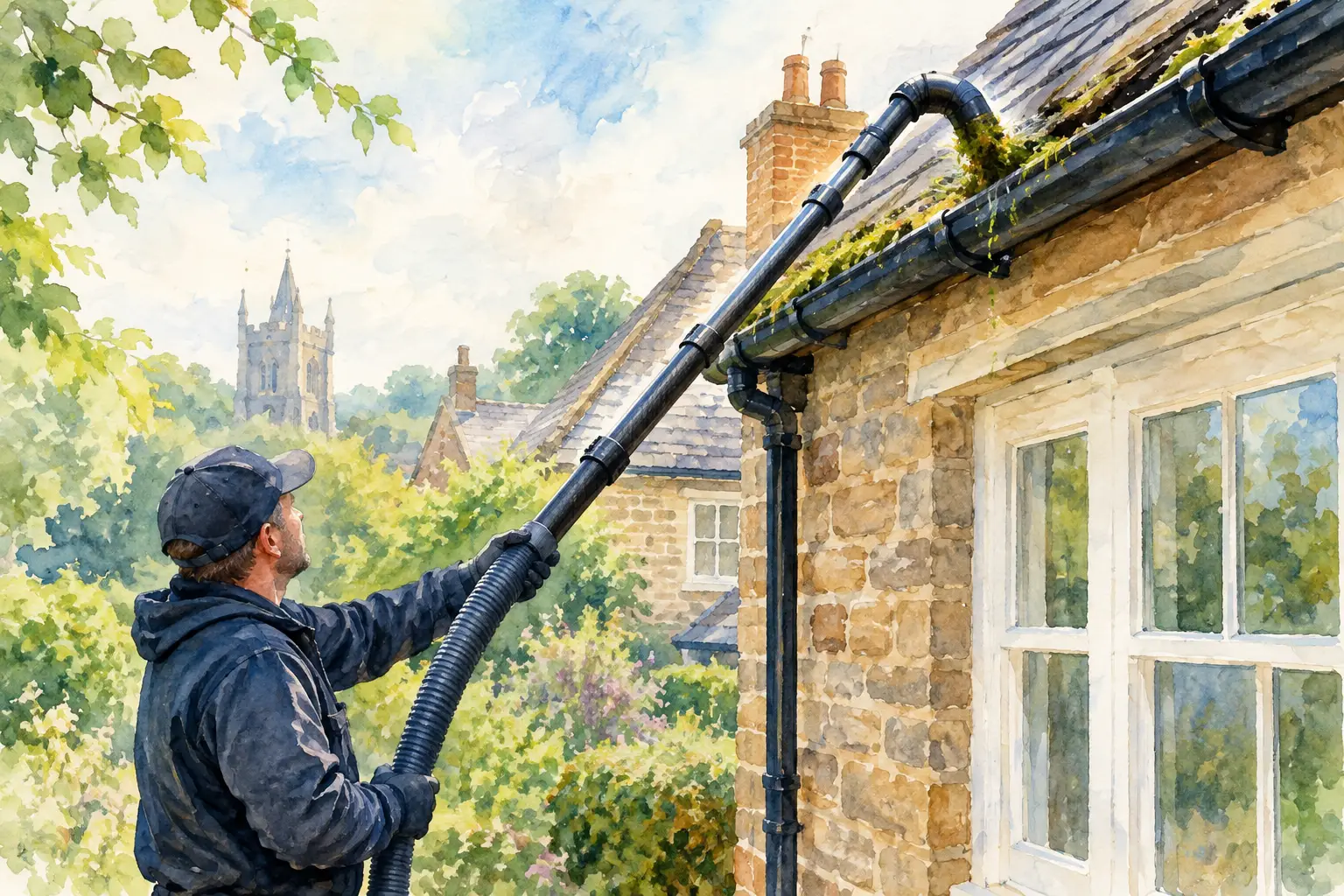
At McQueen’s Exterior Cleaning, gutter vac equipment allows gutters to be cleared from ground level in many situations. That reduces the need for ladders while still removing the moss, leaves and debris that restrict water flow. It is a practical approach for households that want the job done safely without taking unnecessary risks themselves.
How often should gutters be cleared?
There is no single schedule that suits every home. Many properties benefit from clearance once or twice a year, commonly in late autumn after leaf fall and again before periods of wetter weather. A home beneath overhanging trees, near wooded ground or with mossy roof tiles may need more frequent checks.
Recent weather also matters. After storms, high winds or a spell of heavy rainfall, it is sensible to look for overflow, fallen debris and damaged gutter sections. Acting early is usually easier than waiting until a damp patch appears indoors.
Do not overlook the roof and surrounding surfaces
Moss washed from a roof can enter gutters in large quantities. As it holds moisture, it becomes heavy and forms a dense blockage at outlets and downpipes. Roof cleaning is not always necessary, and it should never be carried out in a way that damages tiles or forces debris into the drainage system. However, where moss build-up is severe, dealing with the source can reduce repeated gutter blockages.
The same principle applies to patios, driveways and paths. Silt, algae and leaf debris can stop surface water reaching drainage channels. Regular exterior cleaning helps keep these areas safer underfoot while making it easier to spot cracks, poor falls and pooling water.
Act before the next downpour
Rain cannot be controlled, but the condition of the drainage around your home can. If you have noticed overflowing gutters, water running down walls, blocked gullies or persistent puddles, do not wait for another heavy shower to test the problem. A safe inspection and timely clearance can protect the parts of your property that rainwater is most likely to affect.
Leave a Reply