
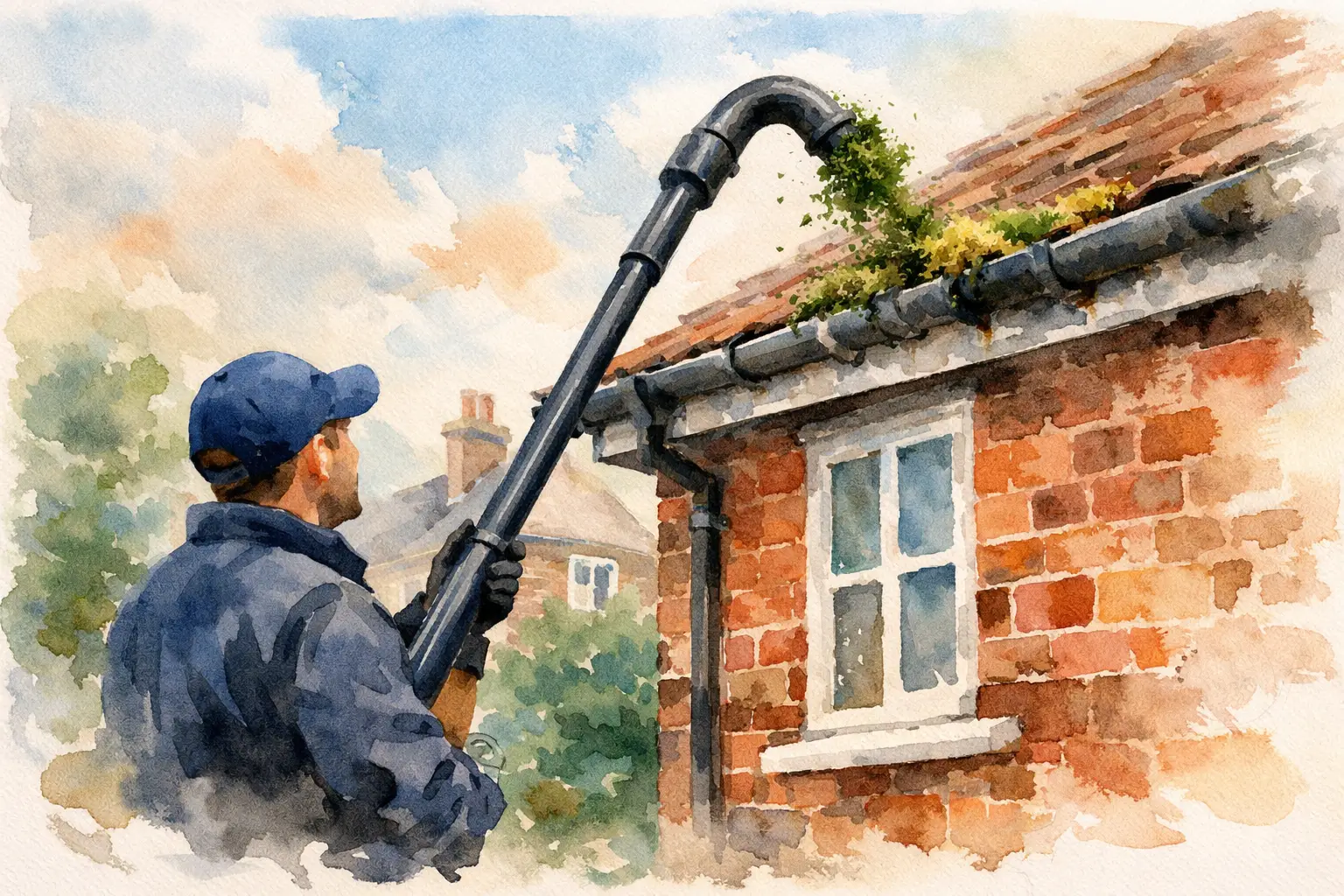
A brown tide mark running down the wall below a gutter is more than an eyesore. Can clogged gutters damage brickwork? Yes. When rainwater cannot flow through the gutter and downpipe properly, it spills over the edge, repeatedly soaking the same part of your wall. Left alone, that can lead to staining, damp, failing mortar and avoidable repair bills.
Brick itself is tough, but a brick wall is not designed to have water poured over it every time it rains. In Neath and across South Wales, regular wet weather makes a clear, working rainwater system a practical part of protecting your home.
Can clogged gutters damage brickwork? Yes, over time
Gutters are there to collect roof water and direct it safely into a downpipe and away from the property. A build-up of moss, leaves, twigs, roof grit and other organic debris stops that process. Water then pools in the gutter until it overflows, often against the fascia, soffit, brickwork or window reveals.
One heavy shower may not cause visible damage. The concern is repeated saturation over weeks, months or several wet seasons. Water can run down the face of the bricks, find its way into small cracks in mortar, and keep the wall damp for longer than it should be.
During colder periods, trapped moisture can freeze and expand. This puts pressure on already weakened mortar joints and the outer face of some bricks. Over time, mortar may become soft, crumbly or missing in places. Older properties and exposed walls tend to be more vulnerable, but no home benefits from constant overflow.
A blockage in a downpipe can be just as damaging as debris in the gutter. The gutter may look reasonably clear from ground level, yet water still backs up and spills because it has nowhere to go. This is why clearing the whole rainwater route matters, not simply removing what can be seen at the gutter edge.
What water overflow can do to a brick wall
The first sign is often darkened brickwork or green growth beneath the gutter line. Algae and moss thrive where walls stay damp, and they can make a property look neglected even before there is a deeper issue.
Persistent water can also leave white, powdery deposits known as efflorescence. These salts are carried to the surface as moisture moves through the masonry. Efflorescence does not always mean serious structural damage, but it is a useful warning that the wall is getting wetter than it should.
The bigger concern is the mortar between bricks. Mortar is often the first part of a wall to show wear because it is more porous than the brick itself. Once joints begin to erode, rain has more routes into the wall. That can lead to localised damp patches indoors, peeling paint, musty smells or damage around internal finishes.
Overflowing water can also affect the area at the base of the wall. If a downpipe is blocked or disconnected, water may repeatedly land beside the property rather than entering a drain. This can saturate the ground, splash dirt onto the wall and, in some cases, contribute to water finding its way into lower-level rooms. The exact risk depends on the age of the property, drainage, ground level and condition of the wall.
Signs your gutters may already be affecting the brickwork
You do not need to wait for a major leak to act. A quick look during or shortly after rain can reveal a lot. Water pouring over the front of the gutter, drips from joints, and a downpipe that stays dry during a shower can all point to a blockage or drainage problem.
On the wall, look for vertical staining below the gutter, green or black organic growth, damp-looking bricks, flaking paint, and mortar joints that appear recessed or loose. Water marks around windows, on soffits or beneath gutter brackets can also indicate that rainwater is escaping where it should not.
Be aware that not every damp patch is caused by gutters. Failed pointing, cracked render, damaged roof coverings, bridging at ground level and plumbing leaks can produce similar symptoms. However, if the mark sits directly beneath an overflowing gutter or blocked downpipe, gutter clearance is a sensible first step before more expensive investigations.
Why small blockages become costly problems
Many gutter issues build gradually. Moss washed from the roof may collect near an outlet, then leaves and silt gather behind it. At first, rainwater still gets through slowly. After a heavier spell of rain, the blockage compacts and the water level rises quickly.
The cost is rarely just the gutter clean. Neglect can mean repointing sections of brickwork, replacing damaged fascia boards, treating internal damp, redecorating and repairing drainage around the property. Clearing gutters regularly is straightforward preventative maintenance, particularly where there are overhanging trees, a mossy roof or a property exposed to driving rain.
There is a balance to strike. Gutters do not always need cleaning after every season, and a clear system should not be disturbed unnecessarily. For many homes, an annual clearance and check is a sensible baseline. Properties surrounded by trees, with lots of roof moss, or those that have previously overflowed may need attention twice a year, commonly in late autumn and spring.
Clearing gutters safely protects more than the wall
It can be tempting to climb a ladder with a bucket when you spot a blockage. That creates a real risk of falls, especially on uneven ground or when gutters are wet. It can also be difficult to see whether the downpipe is clear or whether water is escaping from a joint further along the run.
A professional gutter clearance should remove organic debris from the gutters and downpipes, check for obvious flow issues and identify areas where water is likely to spill onto the building. Using a gutter vac system allows work to be completed from the ground in many cases, avoiding unnecessary ladder work while reaching high gutters effectively.
At McQueen’s Exterior Cleaning, the focus is on removing the blockage before it turns into flooding, water ingress and damp-related damage. A proper clearance is not just about making the gutter look tidy. It is about restoring the route that keeps rainwater away from your brickwork and foundations.
What to do if you can see damage already
Start by stopping the source of the water. Have the gutters and downpipes cleared, then check that rainwater is flowing into the drain rather than down the wall or onto the ground beside it. If a gutter is sagging, leaking at a joint or missing a bracket, it may also need repair or adjustment so water runs towards the outlet.
Once the wall has a chance to dry, inspect the mortar and bricks more closely. Minor surface staining may improve with time, while organic growth can be professionally cleaned where appropriate. Loose or missing mortar, cracked bricks and persistent internal damp need further attention from a suitable building or damp specialist. Cleaning the gutter will prevent more water exposure, but it will not replace mortar that has already failed.
Avoid sealing or painting over a damp wall as a quick fix. Moisture needs an opportunity to dry out, and covering the symptom can hide the cause. Deal with the overflowing gutter first, then make decisions about cleaning, repointing or decoration based on the wall’s condition.
A few handfuls of moss in a gutter can look harmless from the driveway. But if that debris sends every downpour over the same stretch of brickwork, the damage can steadily add up. Keeping the rainwater system clear is one of the simplest ways to give your walls the dry protection they were built to have.
Leave a Reply