
A drip from a gutter joint can look minor from the ground, but repeated overflow in the same place can soak brickwork, staining walls and allowing damp problems to develop. If you are wondering what causes gutter joint leaks, the answer is usually a combination of ageing seals, movement in the guttering and water being held back by debris.
Gutter joints are the connecting points between lengths of gutter, corners, outlets and stop ends. They are designed to carry a steady flow of rainwater towards the downpipe. When that seal or connection fails, water finds the smallest gap and runs down the outside of the system instead.
What Causes Gutter Joint Leaks Most Often?
The most common cause is a worn or damaged rubber seal inside the gutter fitting. Over time, seals become dry, flattened, cracked or displaced. British weather does not help. Years of rain, frost, sunshine and temperature changes make plastic guttering expand and contract, putting pressure on joints that were once watertight.
A joint can also leak because the gutter has shifted out of position. Guttering needs a slight fall towards the downpipe. If brackets are loose, broken or spaced too far apart, the run can sag and hold water. That extra weight places strain on the joints and may cause water to sit against a seal rather than flow away as intended.
Blocked gutters are another frequent cause. Leaves, moss, roof grit and other organic debris slow the flow of water, particularly around outlets and corners. In heavy rain, the gutter can then fill faster than it can drain. Water rises, pushes against the joint and spills through any weak point. The visible leak may be at the joint, but the blockage further along the run is often the underlying problem.
A Leak Is Not Always a Failed Seal
It is easy to assume every dripping joint needs sealant. Sometimes it does, but sealant is not a cure for a gutter that is blocked, poorly supported or wrongly aligned. Applying a bead of sealant over the outside may stop a small drip temporarily, yet it can hide the real issue while water continues to back up elsewhere.
Check when the leak happens. If it drips after rain has stopped, water may be sitting in a sagging section of gutter. If it only pours out during a downpour, the outlet or downpipe may be restricted. If it leaks in almost all wet weather, a degraded seal, cracked fitting or joint that has pulled apart is more likely.
The direction of the drip gives a useful clue too. Water running from the top edge of a joint can indicate overflowing caused by a blockage or insufficient fall. Water escaping from underneath the connection often points to a seal or fitting issue. Both problems deserve attention because they can lead to the same result: water repeatedly landing where it should not.
Debris Adds Weight as Well as Blocking Flow
Wet moss, compacted leaves and silt can become surprisingly heavy. This weight makes gutters bow between brackets and can pull the line away from its intended position. Once the gutter moves, joints can separate by a few millimetres – enough for water to escape.
This is why clearing a gutter is about more than removing what can be seen near the top. The outlet and downpipe need checking as well. A clear-looking gutter can still hold a compacted blockage at the outlet, causing rainwater to build up and force its way out at the nearest joint.
Other Reasons Gutter Joints Start Leaking
Older plastic guttering can become brittle. A connector or corner piece may develop a fine crack that only becomes obvious in rain. Metal gutter systems can corrode at seams or fixings, especially where standing water is regularly present. In either case, replacing the damaged section is usually more dependable than trying to patch a split that is likely to worsen.
Poor installation can also show up years later. Gutter lengths need room to expand and contract within their fittings. If they have been cut too tightly, pushed too far into a joint or fitted without the correct expansion allowance, seasonal movement can disturb the seals. Conversely, a gutter section that has slipped too far out of a connector will leave the seal with little to grip.
Wind and storms can move brackets, dislodge gutter runs or drive branches and debris into the system. Snow and ice can add considerable weight too. After severe weather, it is worth looking for obvious sagging, loose brackets, overflowing corners or water marks on the wall below a gutter line.
Why a Small Gutter Leak Should Not Be Ignored
A leaking joint does not always mean an emergency repair, but it should not be left through another wet season. Rainwater running down external walls can cause staining and encourage algae growth. Where it repeatedly reaches window frames, fascias, soffits or roofline timber, it can contribute to rot and deterioration.
At ground level, water can splash against walls, pool near entrances or saturate soil beside the property. If the downpipe is blocked or disconnected, the volume can be substantial. For landlords, this can quickly become a maintenance issue for tenants. For homeowners, it can mean an avoidable repair bill that began with a simple gutter clearance problem.
There is also the risk of trying to inspect or repair it from a ladder without the right equipment. Wet paving, uneven ground and awkward rooflines make gutter work more hazardous than it first appears. A leak is a reason to check the system, not a reason to take an unnecessary fall.
How to Deal With a Leaking Gutter Joint
Start with a visual check from the ground when it is safe to do so. Look for overflowing water, sagging lengths, gaps at connectors, vegetation growing from the gutter and staining beneath the suspected leak. Do not lean a ladder against the gutter itself, as this can damage the fittings and worsen the problem.
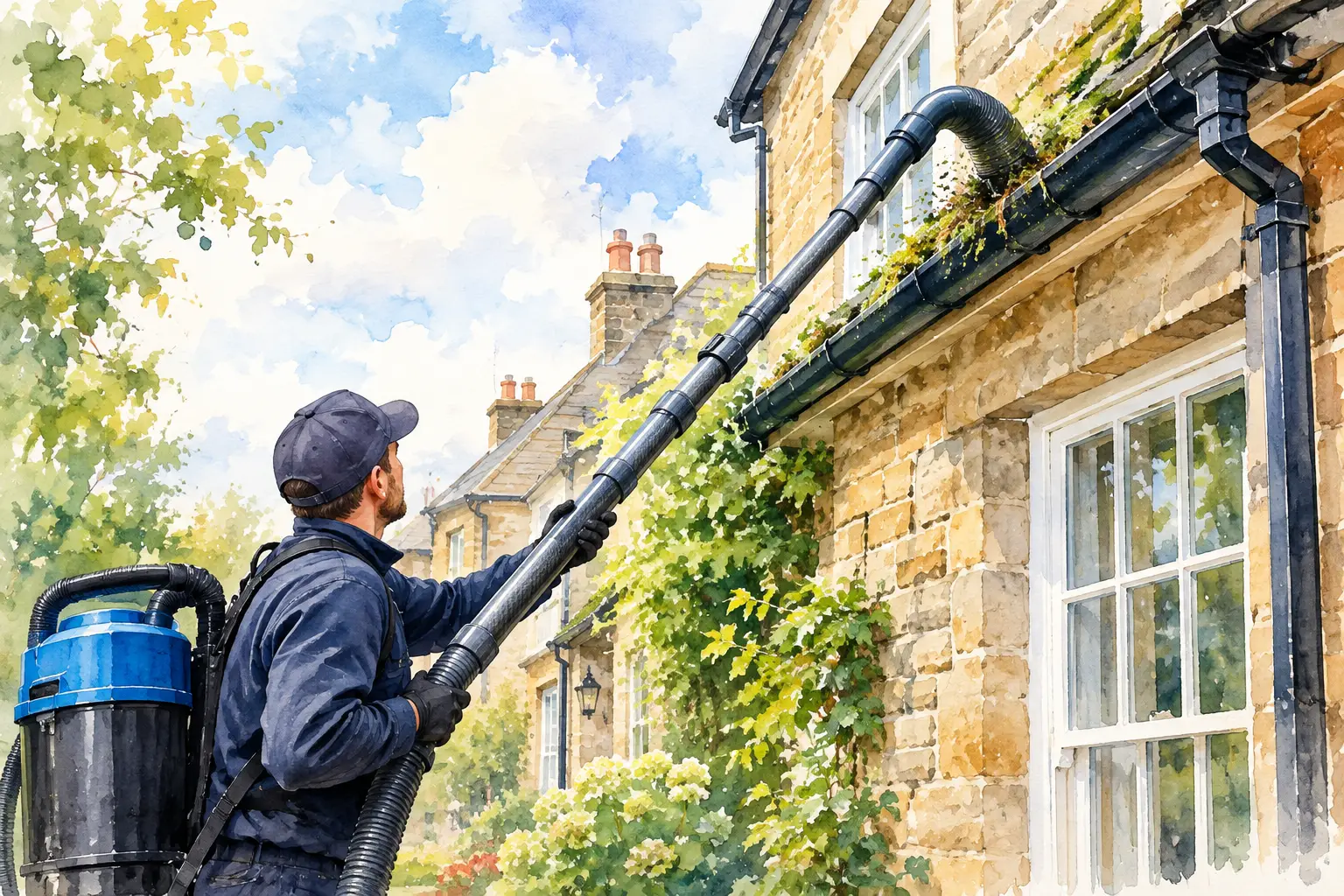
If the system is full of debris, clearing it should come before deciding whether the joint needs repair. Once water can flow freely, it becomes much easier to see whether the joint is genuinely failing. A professional gutter clean using a gutter vac allows debris to be removed from ground level in many situations, avoiding the need for ladders while the condition of the guttering is assessed.
Where a seal has failed, the fitting may need to be opened, cleaned and fitted with a new compatible seal. If the connector is cracked, warped or brittle, replacement is normally the sensible option. Loose or damaged brackets should be secured or replaced, and the gutter fall should be corrected so water travels naturally to the outlet.
Do not assume a large amount of sealant is the answer. Sealant has its place on certain systems and repairs, but a properly seated gutter joint and clear drainage route are what keep the water moving. The right fix depends on the material, age and condition of the existing guttering.
When to Call for Help
Arrange a professional inspection if you can see water running down walls, notice repeated overflowing, suspect a blocked downpipe or cannot safely reach the affected area. It is especially worthwhile after a long period without cleaning, following stormy weather, or before autumn leaf fall makes a small issue worse.
For homes in Neath and the surrounding area, McQueen’s Exterior Cleaning can clear organic debris from gutters and downpipes using specialist gutter vac equipment, helping identify the blockages and build-up that place joints under pressure. If a joint needs a repair beyond cleaning, knowing the system is properly cleared first gives you a much clearer starting point.
Preventing Gutter Joint Leaks
Regular maintenance is the practical way to reduce leaks. Most properties benefit from an annual gutter clearance, while homes beneath trees may need attention more often – commonly before winter and again after heavy leaf fall. The right interval depends on the amount of nearby vegetation, the roof type and how quickly debris collects.
Keep an eye on water behaviour during rainfall. Water should enter the gutter, travel steadily towards the outlet and disappear through the downpipe without overflowing or dripping from joints. A quick check from the ground can catch a developing problem before it has time to damage the wall below.
A gutter joint is a small part of the roofline, but it is responsible for keeping a great deal of water away from your home. Deal with drips early, keep the system clear, and leave high-level checks to someone equipped to carry them out safely.
Leave a Reply