
A damp patch near the ceiling can look like a small decorating problem. It may not be. When rainwater cannot escape through your gutters and downpipes, it can overflow against the building and soak into places it was never meant to reach. Blocked gutters causing mould are often a sign that water has been left to run down walls, behind fascias or into roofline areas for too long.
Mould needs moisture to grow. A blocked gutter does not create mould on its own, but it can provide the repeated wetting that allows damp problems to develop inside or outside the home. Dealing with the blockage early is usually far simpler and less expensive than dealing with damaged plaster, stained ceilings or timber repairs later.
How blocked gutters cause mould at home
Gutters are there to collect rainwater from the roof and direct it safely into the downpipes. When leaves, moss, twigs and roof debris build up, the water level rises until it spills over the edge. Rather than being carried away from the property, water can run down the outside wall or pool around the roofline.
Over time, this constant overflow can saturate brickwork, render, soffits and fascias. In heavy rain, a blocked downpipe can make the problem worse by forcing water back up the gutter. Water may then find its way through cracks in mortar, gaps around window frames, defective flashing or vulnerable areas of the roof.
Not every mould issue is caused by gutters. Condensation, leaking plumbing, poor ventilation and rising damp can all be responsible. But if mould or damp staining appears after wet weather, especially on an external wall or at the top of a room, the rainwater system should be checked promptly.
Signs your gutters may be causing damp and mould
The most obvious sign is water pouring over the front or back of the gutter when it rains. That is not normal, even during a downpour. A working gutter should carry the water towards the downpipe, not send it down the wall.
You may also notice green staining, moss growth or dirty water marks beneath the gutter line. Paint on fascias and exterior woodwork can begin to peel. Render may develop discoloured patches, while brickwork can look darker after rain and take an unusually long time to dry.
Inside, keep an eye out for a musty smell, mould around the upper corners of rooms, peeling wallpaper, bubbling paint or brown marks on ceilings. These signs do not prove that the gutter is the cause, but they are good reason to investigate. The longer moisture remains trapped in a wall or roof space, the greater the chance of damage spreading.
The downpipe is just as important
A clear-looking gutter can still fail if the downpipe is blocked. Water may sit in the gutter with nowhere to go, then overflow at the nearest low point. Sometimes a downpipe blockage is caused by compacted leaves; other times, moss from the roof has formed a dense plug at the bend or bottom of the pipe.
The outlet where the gutter meets the downpipe also needs checking. This is a common place for debris to gather, particularly beneath trees or on properties with older roof coverings. Clearing only the visible section of gutter can leave the real blockage in place.
Why mould from gutter problems should not be ignored
Mould is unpleasant to live with, but the concern goes beyond appearance. It can spoil decoration, leave persistent odours and make rooms feel cold and damp. For people with allergies, asthma or other respiratory conditions, mouldy air can be particularly unwelcome.
There is also the property itself to consider. Repeated water overflow can damage painted surfaces and timber at the roofline. If moisture reaches the roof structure or cavity areas, repairs can become more involved. Landlords should take visible damp and mould seriously too, as tenants need a safe, dry home and the underlying cause needs fixing rather than simply painted over.
The sensible approach is to stop the water at source. Cleaning mould without addressing the overflowing gutter may make the wall look better for a short time, but it will not prevent it returning.
What to do if you suspect blocked gutters causing mould
Start by looking at the property from ground level after rainfall. Check for overflowing water, dripping joints, sagging gutters, stains below the roofline and downpipes that appear not to be flowing. Do not climb a ladder in wet or windy conditions, and do not lean ladders against gutters or fragile plastic downpipes.
If it is safe to do so, move any furniture or stored items away from damp internal walls and improve ventilation in the affected room. Wipe away surface condensation where relevant, but avoid treating visible mould as the only problem. Take photographs of staining and note whether it worsens after rain. This can help identify whether rainwater is involved.
A professional gutter clearance should remove organic debris from the gutter runs and check that downpipes are flowing properly. It should also include an inspection for obvious issues such as loose brackets, misaligned sections, cracked joints or areas where water is overshooting the gutter. Cleaning is preventative maintenance, but damaged parts may still need repair or replacement.
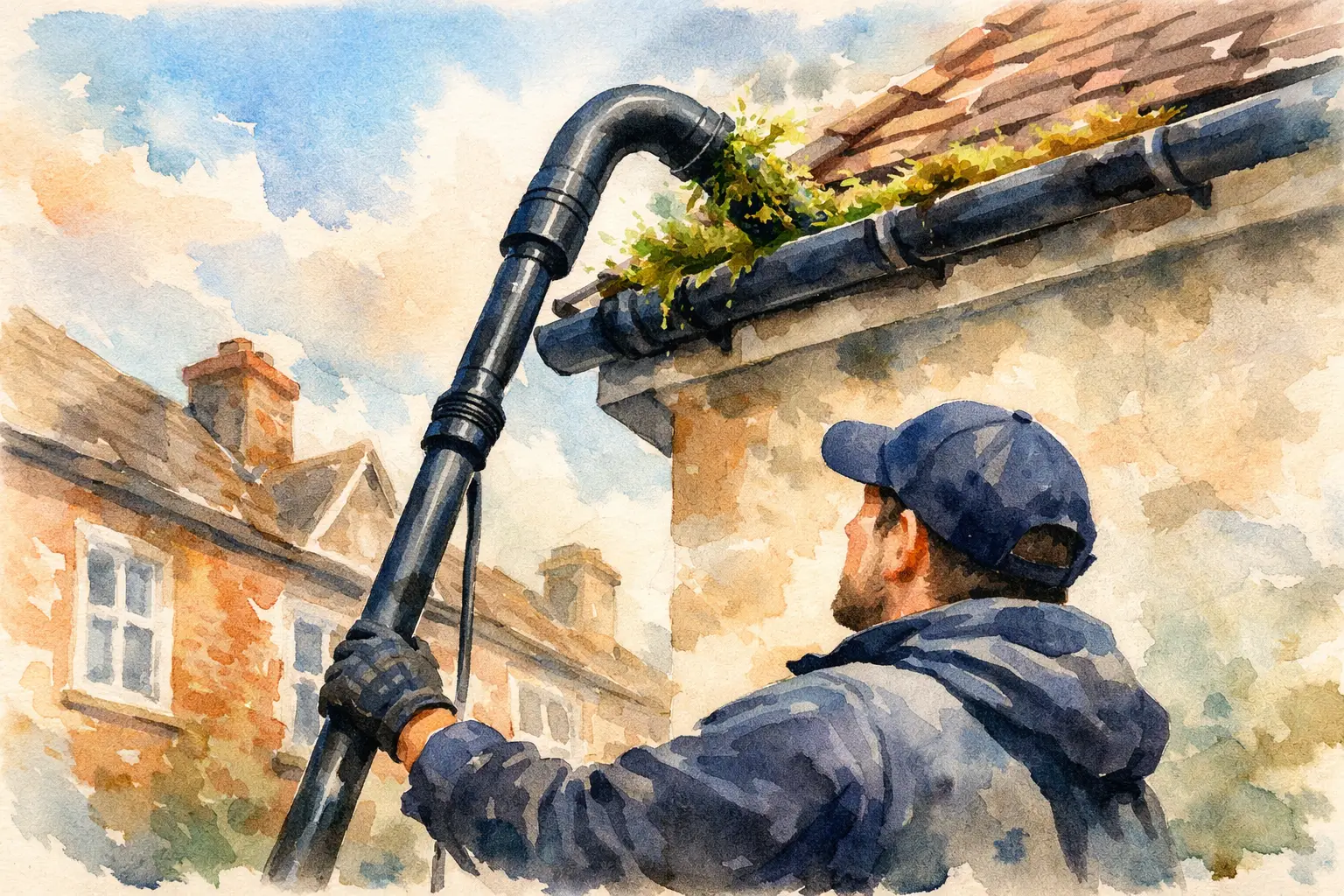
At McQueen’s Exterior Cleaning, gutter vac equipment allows gutters to be cleared from the ground without the unnecessary risk of working from ladders. The aim is straightforward: remove the blockage, check the rainwater route and help keep water away from the building where it belongs.
How often should gutters be cleared?
For many homes, a professional gutter clearance once a year is a sensible baseline. Properties close to trees, with mossy roofs, or exposed to frequent wind and rain may benefit from checks twice a year – commonly in late autumn after leaf fall and again in spring.
There is no single schedule for every property. A bungalow beneath mature trees can collect more debris than a taller house in an open area. Homes with conservatories, extensions or awkward roof valleys may also have sections that fill faster than others. The key is not to wait until water is already coming over the edge.
Roof moss deserves particular attention. As it loosens, it can wash into gutters and downpipes, forming a heavy blockage that ordinary rainfall cannot shift. If moss is regularly landing in the gutter, roof cleaning and gutter maintenance may need to be planned together.
Preventing the problem from returning
Gutter guards can reduce larger leaf debris in some situations, but they are not a fit-and-forget solution. Fine moss, silt and seeds can still collect on top of or beneath them. They also need inspecting, particularly after storms.
Keeping nearby trees sensibly pruned can reduce the amount of leaf fall, although it will not remove the need for clearance. More importantly, arrange regular checks before the wettest months and act quickly if you see an overflow. A small blockage is easier to clear than a gutter full of compacted debris and standing water.
If mould is already present indoors, dry the area thoroughly once the source of water has been addressed. For widespread mould, recurring damp, soft plaster, damaged timber or signs of a roof leak, seek appropriate advice rather than relying on a quick wipe-down. The cause may be more than one issue, particularly in an older property.
A gutter is easy to overlook because most of its work happens above eye level. Keeping it clear is one of the simplest ways to protect walls, rooflines and indoor air from unnecessary moisture. If rain is spilling where it should not, arranging a safe inspection now can spare you a far bigger problem after the next spell of wet weather.
Leave a Reply