Green staining on render, black spots on a roof, and slippery paving are not just cosmetic problems. They are usually signs of moss, algae, lichen or other organic growth taking hold. Soft washing deals with this growth at the source, without relying on the forceful pressure that can damage delicate exterior surfaces.
For homeowners, landlords and occupiers, that means a cleaner-looking property with less risk of chipped render, displaced roof tiles, stripped paintwork or water forced where it should not go. It is a practical option when a surface needs more care than a standard jet wash can provide.
What is soft washing?
Soft washing is a low-pressure cleaning method used to treat organic staining and growth on exterior surfaces. A suitable cleaning solution is applied at controlled pressure, left to work for the required time, and then rinsed where appropriate. Rather than blasting moss or algae away, the treatment breaks it down and helps prevent it returning as quickly.
The key difference is pressure. Jet washing uses high-pressure water to lift dirt from hard, durable surfaces such as some patios and driveways. Soft washing uses much lower pressure, making it more suitable for materials that could be harmed by a powerful water jet.
It is not simply a gentler version of pressure washing. The cleaning solution, correct dilution, dwell time and proper application all matter. Used properly, it can remove the staining you see while treating the spores and growth you cannot always see.
When soft washing is the safer choice
Not every outside surface should be cleaned in the same way. A solid concrete driveway may respond well to jet washing, while rendered walls, painted surfaces, cladding, timber and many roof coverings need a lighter touch. The wrong method can leave marks, remove coatings, force water behind surfaces or loosen already vulnerable materials.
Soft washing is commonly used on render affected by green algae or red staining, painted masonry, uPVC, fascias, soffits, cladding, paths and patios with organic growth. It can also be appropriate for roof cleaning, provided the roof type, condition and access have been checked first.
A roof with cracked tiles, loose pointing, failing flashing or signs of water ingress needs an inspection before any cleaning begins. Cleaning will not repair existing defects, and applying pressure to a compromised roof can make a small issue worse. In those cases, dealing with repairs first is the sensible route.
Roof moss needs more than a quick blast
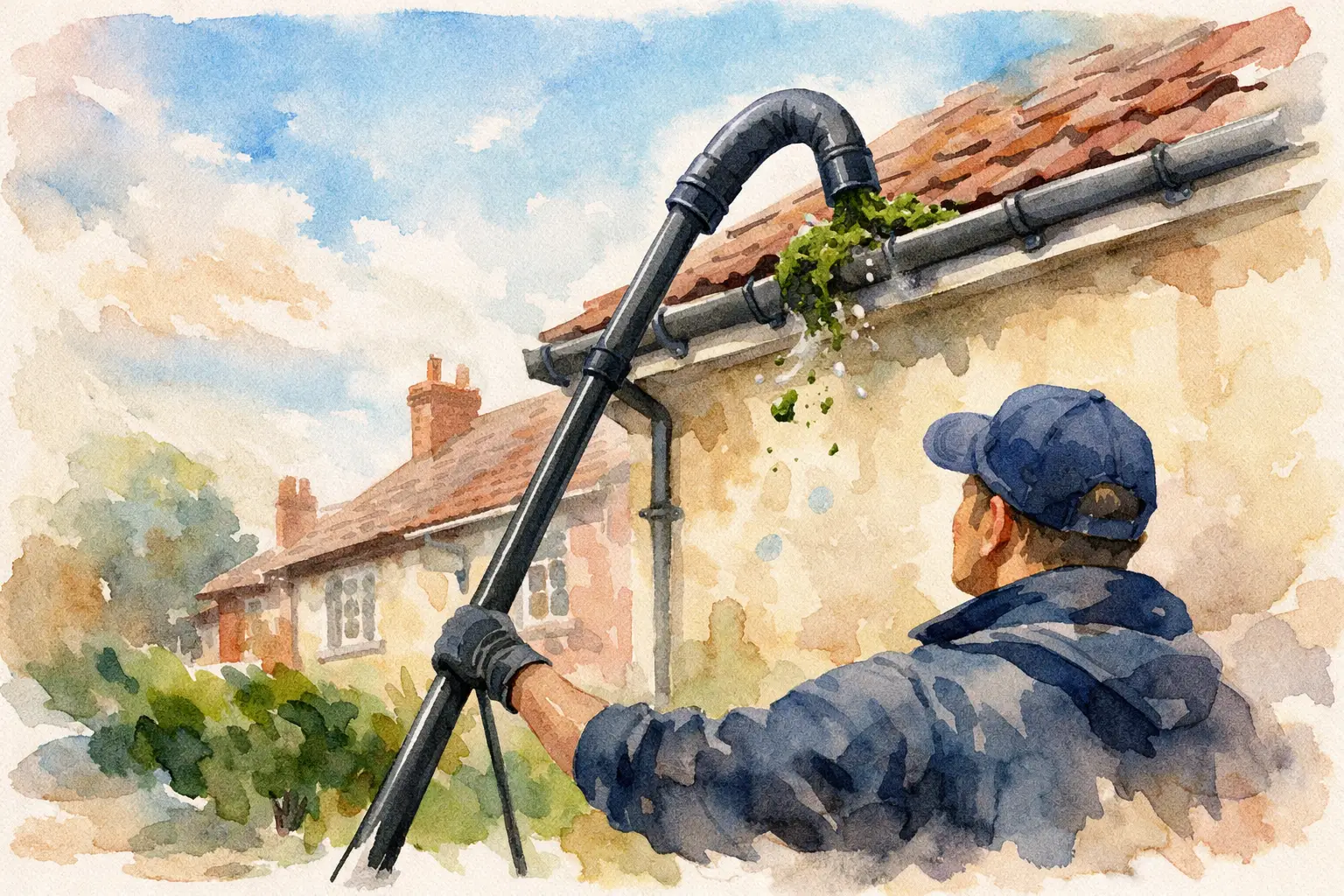
Moss holds moisture against a roof surface and can spread into gaps between tiles. It may also fall into gutters and downpipes, causing blockages that lead to overflowing water. It is tempting to try to remove it with a domestic pressure washer, but this can strip tile coatings, dislodge mortar and send water beneath the tiles.
A professional soft wash treatment is designed to work with the roof rather than against it. Loose debris may need to be removed carefully first, and gutters should be cleared afterwards so rainwater can flow freely. Results are often gradual on a roof, particularly with lichen, because the treatment continues to break down organic matter over time.
That slower result is not a weakness. It is usually safer than aggressive cleaning and reduces the chance of avoidable damage.
Why organic growth should not be ignored
Moss, algae and lichen thrive in damp, shaded areas. In Neath and across South Wales, regular rainfall and mild conditions can give growth plenty of opportunity to return, especially on north-facing walls, roofs beneath trees and paths that receive little sun.
On paving, algae can create a slip hazard. On walls, staining can make a well-kept property look tired and neglected. On roofs and in gutters, accumulated moss can affect drainage and keep materials damp for longer than they should be.
The biggest concern is often what happens after rainwater is unable to drain properly. Blocked gutters can overflow onto walls, saturate brickwork and create damp problems inside the property. Keeping roofs, gutters and downpipes clear works as part of the same preventative maintenance plan.
Soft washing versus jet washing
There is no single best cleaning method for every job. The right choice depends on the material, the type of staining and the condition of the surface.
Jet washing can be effective for durable hardstanding where compacted dirt, surface grime and slippery growth need removing. It gives an immediate result, but it can also disturb jointing sand, mark softer stone and spread dirty water onto nearby walls or doors if used without care.
Soft washing is generally better where organic staining is the main issue or where the surface is more delicate. It treats growth rather than relying on force alone. It may not be the answer for heavy oil stains, loose paint or badly damaged surfaces, and some areas need a combination of careful preparation, treatment and low-pressure rinsing.
A proper assessment prevents the common mistake of choosing jet washing simply because it looks faster. Fast is not much use if it leaves render scarred, tiles damaged or a surface needing repair.
What a careful soft washing service should include
Before treatment, the area should be assessed for surface condition, drainage, nearby plants, pets, outdoor electrics and access. This is especially important around roofs, balconies, conservatories and narrow side passages.
Plants and sensitive areas should be protected and rinsed as needed. The cleaning product must be suitable for the job and applied at the correct strength. More chemical is not automatically better. Over-application can create unnecessary risk, while a weak or rushed treatment may not deal with the growth properly.
The contractor should also consider where runoff will go. Drains, ponds and planted areas all need care. A professional approach means controlling the work area, following product guidance and leaving the property tidy once the job is complete.
At McQueen’s Exterior Cleaning, the focus is on practical protection rather than a surface-level clean. If moss and debris have moved into gutters during roof work, clearing the rainwater system is part of preventing the next problem – overflowing gutters and water running down the property.
How long do soft washing results last?
This depends on the surface and its surroundings. A sunny, open wall may stay clean for much longer than a shaded render wall beneath overhanging trees. Roofs with nearby trees often need more regular attention because leaves, twigs and moss spores continue to collect.
As a general rule, treatment can keep surfaces looking cleaner for a year or more, but there is no fixed timetable that suits every home. Check problem areas after autumn leaf fall and after long wet periods. If green staining is starting to return, early treatment is easier and usually more cost-effective than waiting until growth is established.
Regular gutter clearance also makes a difference. Even a clean roof can create blocked gutters if leaves, moss and organic debris are left to build up in the channels and downpipes.
Can you soft wash a property yourself?
Small, ground-level jobs may appear straightforward, but there are real risks. Roof access and ladder work are dangerous, and incorrect products can damage surfaces, harm plants or leave streaks. Mixing cleaning chemicals is particularly risky and should never be improvised.
A domestic pressure washer is not a substitute for a professional soft washing system. It is easy to use too much pressure, especially around render, seals, window frames and roof tiles. If the area is high up, heavily stained, close to planting or showing signs of damage, professional help is the safer option.
The aim is not just to make an exterior look clean for a weekend. It is to deal with organic growth carefully, keep water flowing where it should and protect the parts of the property that are expensive to put right. A timely inspection and the right cleaning method can save a great deal of hassle later.
Leave a Reply