
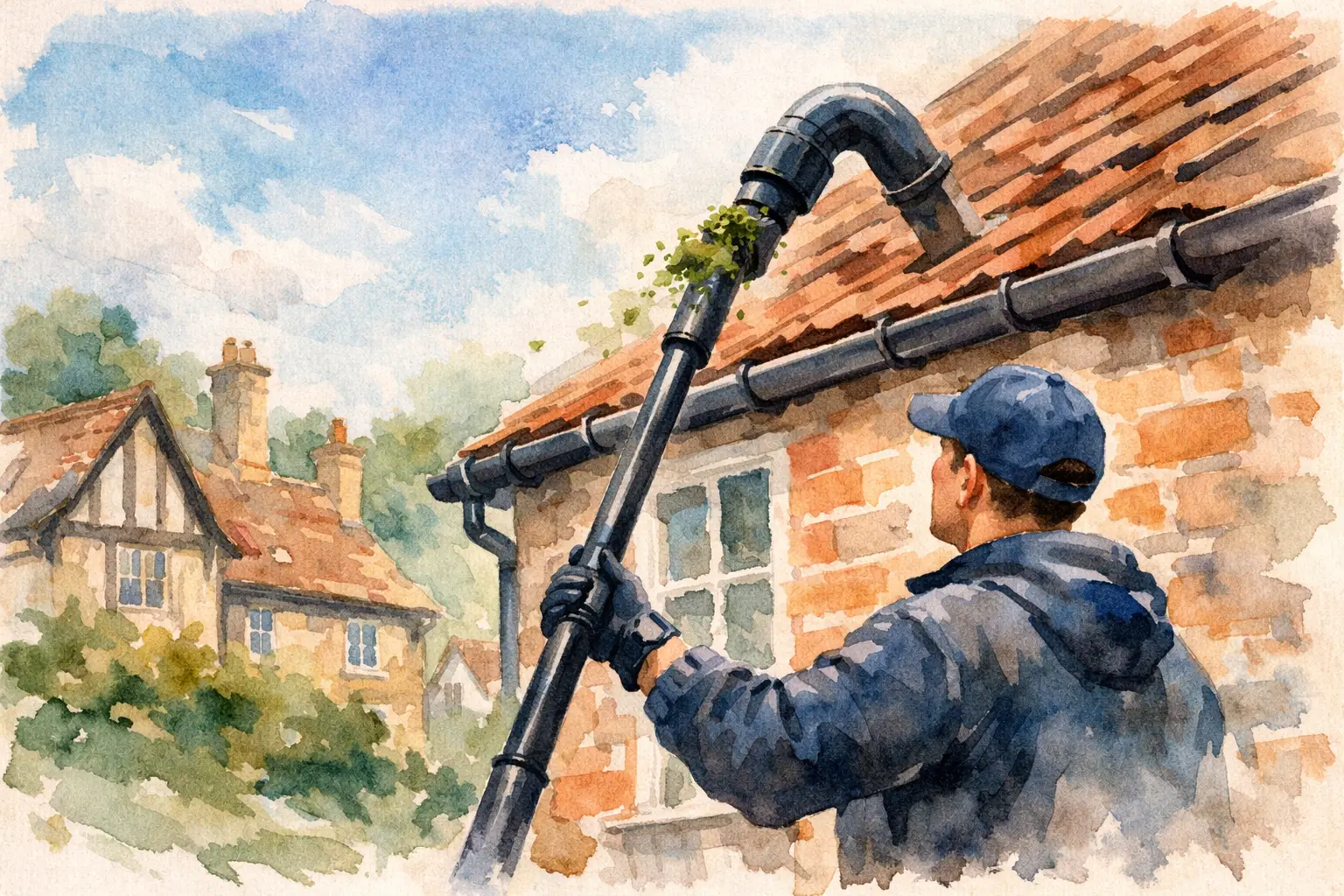
A gutter can look harmless from ground level while holding a thick layer of moss, leaves and roof debris. Then heavy rain arrives, water spills over the edge, and the problem moves quickly from the outside of the house to the walls, roofline and foundations. This home rainwater system guide explains what needs attention, what warning signs to take seriously, and why safe, regular clearance is cheaper than dealing with damp later.
What a home rainwater system actually does
Your rainwater system is more than a line of gutters around the roof. It collects rainfall from the roof, directs it into downpipes, and carries it safely away from the property through drains, gullies or soakaways. When every part is clear and correctly aligned, water should leave the roof without running down external walls or pooling beside the house.
In South Wales, frequent rain, nearby trees and moss growth can put that system under constant pressure. Gutters catch leaves, twigs, roof grit and organic debris. Downpipes can fill from the top or become blocked where they meet the drain. A small obstruction is often enough to make water back up and overflow during a downpour.
The consequences are not always immediate. Repeated overflow can soak brickwork, stain render, rot timber fascias and create damp conditions inside. Water collecting around the base of the building may also affect paths, patios and drainage. Prevention is usually straightforward. Repairing the damage caused by neglected gutters rarely is.
The parts worth checking
A working system depends on several connected parts. The guttering needs a clear channel and the right fall towards each outlet. Gutter outlets, often called running outlets, are the point where water enters the downpipe and are common places for compacted debris to build up.
Downpipes should be clear, firmly fixed and undamaged. If a downpipe has separated at a joint, cracked, or is blocked below ground, the gutter above it can overflow even when it appears clean. At ground level, gullies and drain covers need to accept the flow rather than being buried under silt, leaves or moss.
It is also worth looking at the roof edge. Moss can be attractive to some people, but loose moss is a frequent cause of gutter blockages. It washes down in clumps, settles at outlets and holds water. Roof cleaning is not necessary for every property, but where heavy moss growth is repeatedly filling gutters, dealing with the source can reduce future blockages.
Signs your rainwater system needs attention
You do not need to climb a ladder to spot most issues. Look from the ground after rain and keep an eye on the walls and ground around the property. Arrange an inspection if you notice four or more of the following warning signs:
- Water pouring over a gutter edge or from a joint during rainfall.
- Plants, moss or visible debris growing from the gutter line.
- Damp marks, green staining or peeling paint beneath the roofline.
- A downpipe that drips from a joint, looks misaligned or does not discharge into the gully.
- Puddles forming beside the house after rain has stopped.
Overflow at one point does not always mean the blockage is directly above it. Water can travel along a gutter until it meets a low spot, a blocked outlet or a loose joint. That is why a proper check should cover the full run of guttering, every downpipe and the visible drainage point.
How often should gutters and downpipes be cleared?
For many homes, a professional gutter clearance once or twice a year is a sensible starting point. Autumn is an obvious time because falling leaves can fill gutters quickly. A further check in spring helps clear winter debris and confirms that heavy rain, frost and wind have not shifted fittings.
The right frequency depends on the property. Homes beneath or close to mature trees may need more regular visits. Properties with mossy roofs, flat-roof sections, extensions, conservatories or difficult-to-reach valleys can also gather debris faster. Landlords should be particularly careful, as an unnoticed overflow can become a tenant complaint and a more expensive maintenance issue.
Do not wait solely for an obvious blockage. By the time water is cascading over the gutter, the system may already have been holding standing water for some time. Routine clearance gives you the chance to identify loose brackets, damaged seals and poor drainage before a spell of bad weather exposes them.
Why ladder cleaning is not always the sensible option
Cleaning a low, easily reached gutter may seem like a simple weekend task. In practice, working at height around wet surfaces, uneven ground and awkward rooflines carries real risk. Moving a ladder repeatedly around a property can be dangerous, especially when trying to reach over conservatory roofs, extensions or sloping ground.
There is also the question of what you can actually see. Scooping out a handful of leaves does not prove that the outlet and downpipe are clear. Pushing debris further into a downpipe can make matters worse. A professional clearance using a gutter vacuum allows debris to be removed from ground level, reducing the need for ladders while giving the operative a clearer view of the work.
At McQueen’s Exterior Cleaning, gutter vac equipment is used to remove organic debris safely from gutters and downpipes, with inspection forming part of the job. The aim is not simply to make the gutter look tidy. It is to help water travel where it should and reduce the chance of overflow, flooding and damp.
Simple checks you can make from the ground
Between professional visits, a few safe observations can help you spot a developing issue. Watch the guttering during steady rain from a safe position. Water should run towards the downpipe without spilling from the front or back edge. Once rain eases, check whether the gully is taking water away or whether it remains full.
Look for staining on render, brickwork and fascias. A dark vertical mark below a gutter joint often suggests repeated drips. Green growth on walls or a damp smell near an outside-facing room may have several causes, but defective rainwater drainage should be considered early rather than dismissed.
You can also check that downpipes have not been knocked loose by wind, garden work or accidental impact. Do not attempt to force rods into drains or dismantle high-level fittings unless you know exactly what you are doing. A broken pipe or damaged seal can turn a manageable maintenance job into a repair.
Clearing gutters is only part of protecting the property
A clear gutter cannot compensate for every drainage problem. If water is still pooling around the house after the gutters and downpipes have been cleared, the issue may be a blocked gully, damaged underground drain, poor ground levels or a soakaway that is struggling to cope. These situations need further investigation rather than repeated gutter cleaning alone.
Likewise, leaking joints, sagging gutters and cracked downpipes need repair or replacement. Debris clearance is preventative maintenance, but the system must still be sound enough to carry water away. A thorough inspection helps separate a simple blockage from a fault that needs another type of work.
Pay attention after storms and prolonged wet weather. That is when weak points reveal themselves. A gutter that copes with a light shower may overflow when rainfall is heavier, and a partially blocked downpipe may only show its problem when the roof is shedding a large volume of water.
A practical maintenance routine for peace of mind
Think of gutter care in the same way as servicing a boiler or checking a roof after a storm. It is routine protection for a costly part of the property. Schedule clearance around the seasons, keep an eye on visible warning signs, and act promptly when water goes where it should not.
If your gutters are high, awkward to access or visibly overflowing, leave the ladder in the shed. A safe inspection and professional clearance can remove the immediate blockage and give you a clearer picture of what your rainwater system needs before the next heavy rainfall does the damage for you.
Leave a Reply