
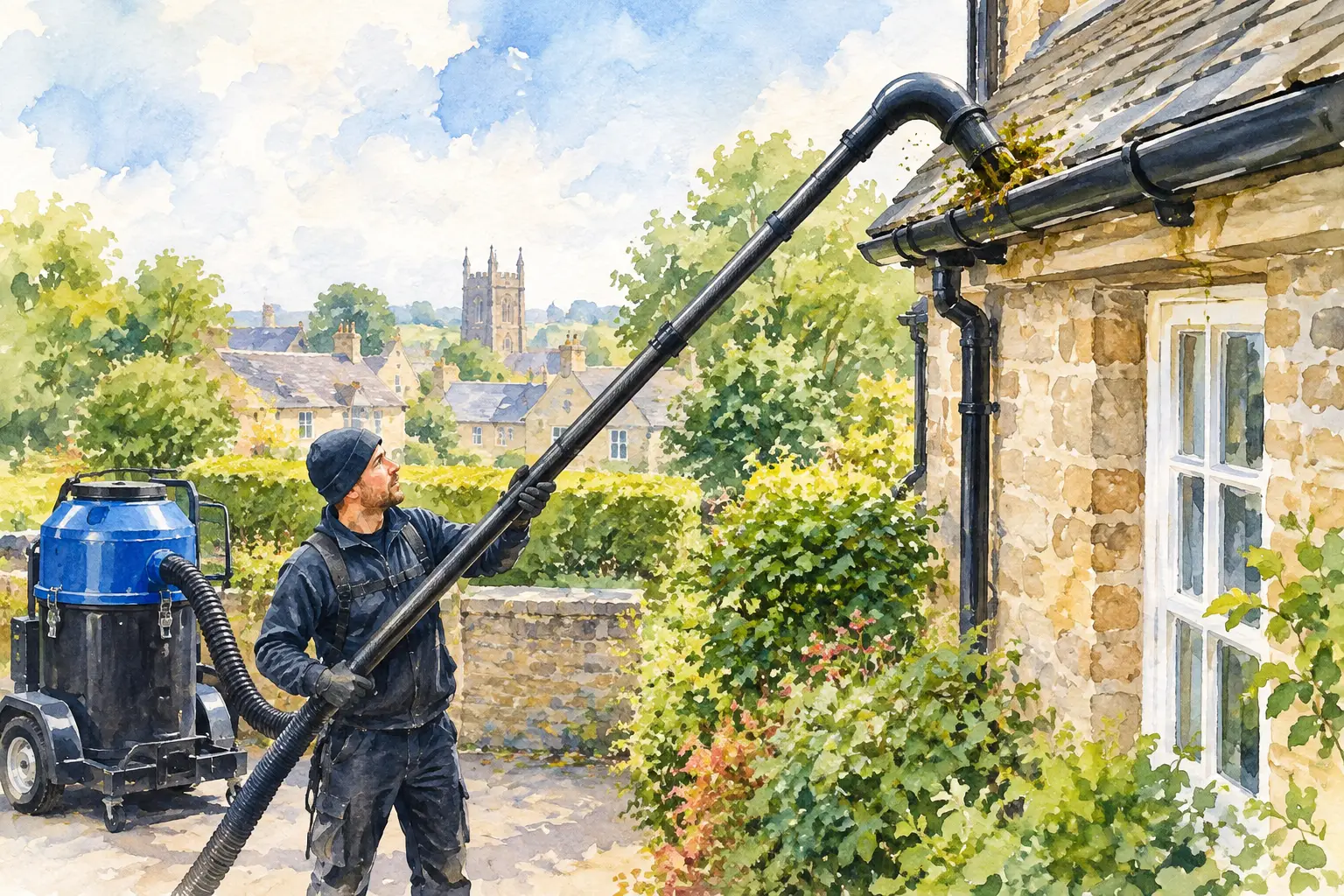
A gutter can look fine from the ground while being packed with wet leaves, moss and silt. That is why homeowners often ask, are gutter vacuums effective? When used properly, the answer is yes. A professional gutter vacuum can remove built-up debris safely from ground level, helping rainwater flow freely before a blockage leads to overflowing gutters, damp walls or water damage.
The key point is that the equipment is only as good as the person using it. Proper gutter clearance is not simply a case of putting a pole up and hoping for the best. It involves checking the gutters, clearing the waste thoroughly and making sure the downpipes can carry water away from the property.
How a gutter vacuum works
A gutter vacuum is a powerful machine connected to long, lightweight poles. From the ground, the operator guides a curved nozzle into the gutter channel. The vacuum lifts out leaves, moss, twigs, soil, roof grit and other organic debris, collecting it in a drum rather than dropping it around the garden.
Modern systems can reach the gutters of many homes without ladders, including awkward areas above conservatories, garages and extensions. A camera fitted to the poles can also show what is inside the gutter and confirm whether the channel has been properly cleared.
This matters because the visible edge of a gutter tells you very little. A thick layer of wet debris often sits at the bottom, where it holds water and stops it reaching the outlet. Left alone, that material can turn into a heavy, compacted blockage that is much harder to remove.
Are gutter vacuums effective for blocked gutters?
For the most common gutter problems, gutter vacuums are highly effective. They are particularly good at removing loose or compacted organic material such as fallen leaves, moss from nearby roofs, seed pods, mud and standing debris. These are the materials most likely to block the gutter outlet and cause rainwater to spill over the sides.
They are also effective because they allow the work to be done at a safe distance. Climbing a ladder with tools, reaching over a roofline and moving repeatedly around a property creates avoidable risks. Wet ground, uneven paving and high winds make DIY gutter cleaning even more hazardous. Ground-based clearance reduces the need to work at height while still reaching the full gutter run.
For homeowners, the practical benefit is prevention. Clear gutters help direct rainwater into the downpipe and away from walls, fascias, soffits and foundations. That reduces the chance of water tracking down external brickwork, entering roof edges or contributing to damp problems indoors.
What a gutter vacuum cannot fix on its own
A vacuum is excellent for clearing debris, but it is not a repair tool. If a gutter is cracked, sagging, badly misaligned or pulling away from the fascia, the vacuum will not correct it. It can clear the blockage so the problem is easier to identify, but damaged sections may need repairing or replacing.
The same applies to downpipes. If a downpipe is blocked deep below ground, disconnected, crushed or feeding into a drainage problem, the gutter may still overflow after the gutter channel has been cleared. A thorough service should include checking that water has a clear route through the outlet and downpipe wherever access allows.
Very heavily compacted material can sometimes need extra attention too. Old gutters that have been neglected for years may contain soil-like debris, rooted vegetation or stubborn moss. A professional can assess this safely and use the right attachment or method rather than forcing the work and risking damage to the guttering.
There is also a difference between clearing a gutter and cleaning its outside surface. A vacuum removes the material inside the channel. It will not remove staining, algae or traffic film from the front of the gutter, fascia boards or soffits. Those jobs require separate exterior cleaning methods.
Why inspection is as important as suction
The best gutter clearance is not based on guesswork. A camera inspection gives a clear view of the work before, during and after clearance. It helps identify where debris has collected, whether the outlet is clear and whether there are signs of a fault that needs attention.
This is especially useful on properties with high roofs, extensions or conservatories where a ladder inspection would be difficult or unsafe. It also provides reassurance that the gutter has been cleared along its length, not just around the easiest areas to reach.
A proper inspection can reveal early warning signs such as standing water, joints that are beginning to leak, loose brackets or plant growth in the gutter. Catching these issues early is usually far less disruptive than waiting for water to come through a ceiling or cause staining on an internal wall.
When gutter vacuuming is the best option
Gutter vacuuming suits most homes where access from the ground is available and the main issue is debris. It is a particularly sensible choice if your property has a conservatory, sloping ground, limited ladder access or gutters above a roof section that would be difficult to reach safely.
It is also useful for landlords and homeowners who want routine maintenance without taking the risk themselves. Gutters are easy to forget because the problem is out of sight. Unfortunately, the first sign is often water pouring over the edge during heavy rain, by which point the blockage has already been there for some time.
In Neath and the surrounding areas, frequent rainfall and nearby trees can make regular gutter checks worthwhile. Moss washed from roofs is another common cause of blockages. It collects in gutter corners and outlets, holds moisture and quickly catches more debris.
How often should gutters be cleared?
Most properties benefit from gutter clearance at least once a year. Homes surrounded by trees, properties with mossy roofs or buildings exposed to wind-blown debris may need it twice yearly, often in late autumn and again after winter.
The right frequency depends on what is above and around your home. A bungalow beneath mature trees can fill up quickly, while a newer house with little tree cover may stay clear for longer. Rather than relying on a fixed rule, watch for warning signs: overflowing water, damp patches near the top of walls, vegetation in gutters, staining below joints or rainwater cascading over the gutter edge.
Do not wait for a visible problem if you can avoid it. Water damage is rarely limited to one small area. Repeated overflow can affect brickwork, paintwork, timber, roof edges and internal finishes over time.
Safety is a real advantage, not a selling point
Many household accidents happen when people try to complete a quick job from a ladder. Gutter cleaning often involves leaning, stretching, carrying tools and working in wet conditions. That is not a good combination, particularly when the ground is soft, uneven or slippery.
A gutter vacuum keeps the operator on the ground for much of the work. It also avoids leaning ladders against gutters, fascias or fragile roof edges. This makes the process safer for the person doing the work and kinder to the property.
That does not mean every job can be completed entirely from ground level. Some properties have access restrictions or defects that need closer examination. The sensible approach is to use the safest suitable method for the particular house, rather than treating one piece of equipment as the answer to every problem.
Choosing a professional gutter clearance service
When arranging gutter cleaning, ask whether the service includes an inspection and a check of the outlets and downpipes, not just debris removal. You want to know that the water has somewhere to go after the gutter has been cleared.
A professional should be clear about what they have found, point out any visible concerns and avoid making promises that a clearance alone will repair damaged guttering. Good maintenance is practical: remove the blockage, identify potential faults and help prevent a much bigger problem later.
McQueen’s Exterior Cleaning uses a gutter vac system to clear organic debris without the usual need for ladders, with a focus on safe access and protecting your property from avoidable water damage. If your gutters have not been checked for a while, arranging clearance before the next spell of heavy rain is a straightforward way to take one worry off the list.
Leave a Reply