A roof covered in moss can make an otherwise well-kept home look tired. More importantly, the mess you can see is often only part of the problem. Roof cleaning before and after is not just about a brighter-looking roof. Done properly, it removes growth and debris that can hold moisture against tiles, clog gutters and send water where it should not go.
For many homeowners, the most striking change is the colour of the roof. Dark staining lifts, moss is removed and the tile surface is visible again. But the worthwhile result is what happens at the edges of the roof too: clear gutters, free-flowing downpipes and less risk of overflowing water soaking walls, fascias and foundations.
What roof cleaning before and after should show
A proper before-and-after result should look clean without looking damaged. The roof should not have broken tiles, stripped surfaces or patchy areas caused by excessive pressure. Moss, lichen, algae and loose organic debris should be removed, while the roof itself is treated with the care its age and material require.
Before cleaning, common signs include green moss around tile overlaps, black algae staining, blocked guttering and small plants growing where they should not be. You may also notice water spilling over the gutter during heavy rain. That is not always a gutter-only issue. Moss and debris washing down from the roof can quickly create another blockage after the gutter has been cleared.
After cleaning, tiles should be free from heavy growth and loose debris. Gutters and downpipes should also be checked and cleared, because there is little benefit in cleaning a roof only to leave the removed material sitting in the rainwater system. Water should have a clear route from the roof to the drain.
The change may be immediate, particularly where thick moss has built up. Some discolouration, especially on older roofs, may remain. That is normal. Cleaning removes biological growth and surface dirt, but it cannot make weathered tiles brand new or reverse years of natural fading.
Why moss is more than a cosmetic problem
Moss holds water. In South Wales, where rain and damp conditions are part of life, that retained moisture can keep roof surfaces wet for longer than they need to be. Over time, moss can work beneath tile edges, lift sections slightly and trap debris in valleys and around chimneys.
It also sheds into the gutter every time it rains or dries out. A small amount may pass through without trouble, but a recurring build-up can block outlets and downpipes. Once water backs up, it can overflow onto brickwork or behind fascias. That is where a relatively simple maintenance job can turn into staining, damp or water ingress.
Not every patch of moss means your roof is failing. Many older roofs have some growth and remain sound. The question is whether the moss is thick, spreading, holding debris or affecting the flow of rainwater. If it is, leaving it alone is rarely the cheaper option in the long run.
The right method depends on the roof
There is no one cleaning method that suits every roof. Tile condition, roof pitch, access, age and the level of contamination all need to be considered before work starts. A cautious approach protects the roof and the person carrying out the work.
For many tiled roofs, manual moss removal followed by a suitable soft wash or treatment is the sensible option. This removes the bulk of the growth without blasting water under tiles. A treatment can then deal with remaining spores and help slow the return of algae, moss and lichen.
High-pressure washing may be appropriate in limited situations, but it is not a default answer for every roof. Used carelessly, it can damage tile coatings, disturb mortar, force water where it does not belong and create a large amount of debris in the gutters. It can also give a roof an overly harsh, uneven appearance.
Older, brittle or damaged tiles need particular care. If there are cracked tiles, loose ridge sections, failing flashing or signs of a leak, those faults should be addressed before cleaning. Cleaning does not repair a roof. It can, however, make existing problems easier to spot once moss and dirt are out of the way.
Safety comes before appearance
Roof work is not a sensible DIY job for most homeowners. Ladders, wet tiles and uneven ground are a poor combination, and stepping on the wrong area can crack a tile or cause a fall. The temptation to hire a pressure washer and make a quick start is understandable, but the risks are real.
A professional service should assess access, use suitable equipment and avoid unnecessary foot traffic across the roof. The surrounding area also needs protecting. Moss and dirty water should not be left across patios, paths, driveways or neighbouring property.
At McQueen’s Exterior Cleaning, the focus is on practical protection, not simply making a roof look cleaner for a photograph. That means considering the gutters and downpipes as part of the same job, then making sure rainwater can move away from the property as intended.
Roof cleaning and gutter clearance go together
A clean roof with blocked gutters is still a water-risk problem. The roof sends rain into the guttering, so both parts need attention. If moss is removed from tiles but gutter outlets are not cleared, the next downpour may simply push debris into a blockage.
Gutter clearance is especially worthwhile after roof cleaning, during autumn leaf fall and before the wetter months. It is also sensible after a period of strong winds, when twigs, leaves and roof debris can collect in places you cannot safely see from the ground.
Signs that your gutters need attention include overflowing water, damp marks below the gutter line, dripping joints, sagging sections and vegetation growing from the channel. You may not see every problem from ground level, which is why inspection matters as much as removal.
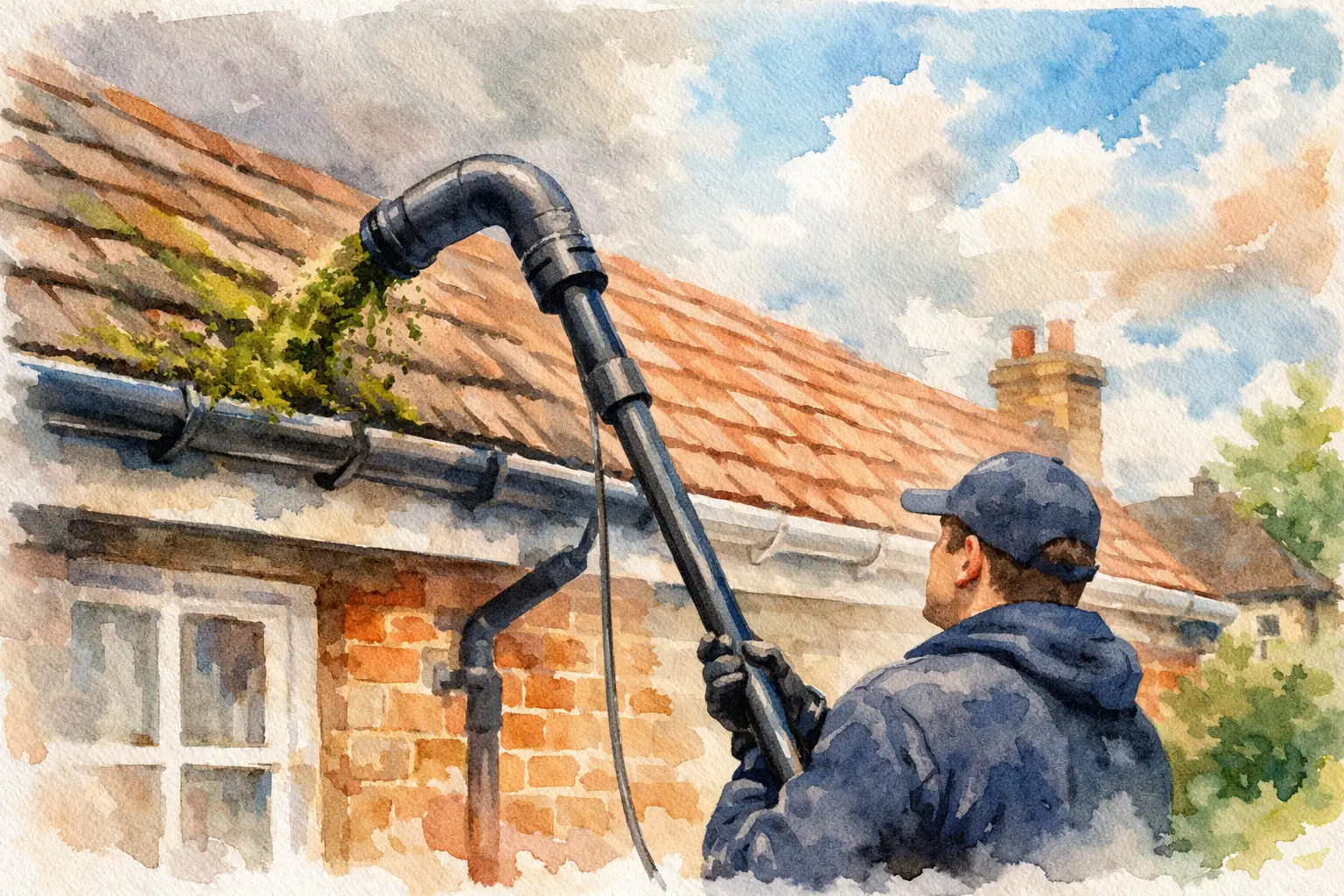
A gutter vac system can clear organic debris from gutters and downpipes without the need to routinely climb ladders. That reduces the personal risk involved while allowing the work to be carried out efficiently. For homeowners, it removes a job that is awkward, dirty and easy to put off until there is already a problem.
How long do roof cleaning results last?
It depends on the property. A roof beneath overhanging trees, surrounded by shade or exposed to frequent moisture will usually regrow moss faster than a roof in an open, sunny position. Nearby trees are a major factor because they drop leaves, seed and small branches onto the roof and into gutters.
As a general guide, a professionally cleaned and treated roof may stay visibly clearer for several years, but gutters should be checked more regularly. Annual gutter clearance is a sensible starting point for many homes. Properties close to mature trees may need attention twice a year.
The aim is not to chase a perfectly spotless roof at all times. It is to prevent heavy growth, clear blockages early and avoid water-related damage. Regular maintenance is normally easier on the property and less disruptive than waiting for moss to become thick or for a gutter to overflow.
When to arrange a professional clean
You do not need to wait until moss is hanging over the gutter or rainwater is running down the wall. Arrange an inspection if you can see thick growth, repeated staining, overflowing gutters or debris collecting in roof valleys. Landlords may also want to include roof and gutter checks as part of routine property maintenance between tenancies.
Spring and early autumn are often practical times to book work, but the right time is whenever a problem is visible or gutters are not coping in rain. Weather conditions and safe access will determine when cleaning can be carried out properly.
Take a look at your roofline after the next spell of rain. If water is overflowing, moss is building up or the gutters look neglected, dealing with it now can help keep a manageable cleaning job from becoming an expensive damp repair later.
Leave a Reply