When rainwater spills over a gutter and runs down the wall instead of through the drain, the problem is often lower down than you think. Downpipe cleaning Port Talbot homes need is not just about removing a visible blockage. It is about keeping rainwater moving safely away from brickwork, doors, patios and foundations before a wet patch becomes a damp problem.
A blocked downpipe can be easy to miss. Gutters may look clear from the ground, yet leaves, moss, roof debris and silt can collect at the bend, the outlet or the bottom of the pipe. Once water cannot escape, every spell of heavy rain puts extra pressure on the whole guttering system.
Why a clear downpipe matters
Your gutters collect rainwater from the roof. The downpipes carry it to the drain or soakaway. If either part is blocked, water takes the easiest route available – over the edge of the gutter, behind the pipe or down the face of the property.
That runoff can soak external walls, stain render, encourage algae on paths and create persistent puddles around the building. Over time, repeated wetting can contribute to damp inside, peeling paint, damaged fascias and problems around window frames. It can also wash soil away near the base of the property.
Port Talbot weather can put gutters and downpipes under real strain. Wind-driven rain, falling leaves and moss from roofs do not need long to build up. A system that copes during a light shower may overflow as soon as a proper downpour arrives.
Signs you may need downpipe cleaning in Port Talbot
The clearest sign is water cascading over the guttering during rain. But it is worth acting before that point, especially if you have trees nearby or have not had the gutters cleared for some time.
Look out for water backing up at the top of the downpipe, damp marks or green growth on the wall beneath it, and mud or debris collecting around the drain at ground level. You may also notice a gurgling sound during rainfall, a downpipe joint dripping, or a patch of paving that stays wet long after the rain has stopped.
A downpipe that appears dry while the gutter above is overflowing can be blocked completely. Equally, water coming out of a joint may mean the pipe is restricted below that point. The water is not disappearing – it is simply finding another way out.
What causes downpipe blockages?
Most blockages begin in the gutter. Leaves and twigs are common, but roof moss is often the bigger issue. Moss holds water, breaks into small pieces and settles into a dense, muddy material that can lodge at the downpipe outlet. Once mixed with grit from the roof, it does not always wash through on its own.
Bird nesting material, old gutter guards, loose mortar and general wind-blown debris can also restrict the flow. At ground level, the gully or drain receiving the water may be blocked too. Clearing the pipe alone will not solve the issue if the water has nowhere to go afterwards.
It depends on the property. A house beneath mature trees may need attention more often than an open, newer property with a clean roof. Homes with a history of roof moss, shaded gutters or awkward drainage should also be checked more regularly.
Why clearing the gutter alone is not enough
It is tempting to remove the debris you can see at the top of the downpipe and assume the job is done. That can improve the flow temporarily, but a plug of compacted moss may still be sitting further down the pipe or at the bottom bend.
A proper clearance should check the gutter channel, the downpipe outlet, the full length of the pipe and the gully below. Water should then be able to travel freely from the roof to the drain. This is the difference between a quick tidy-up and maintenance that helps prevent the next overflow.
At McQueen’s Exterior Cleaning, the focus is on clearing organic debris thoroughly and checking how the rainwater system is performing, not simply making the gutter line look cleaner from the ground.
The safer way to deal with blocked downpipes
Climbing a ladder with tools, buckets and wet debris is a risk many homeowners do not need to take. The ground may be uneven, the ladder can slip, and reaching around guttering makes it easy to overbalance. Rainwater systems are often at roof level for a reason – they are not designed for easy DIY access.
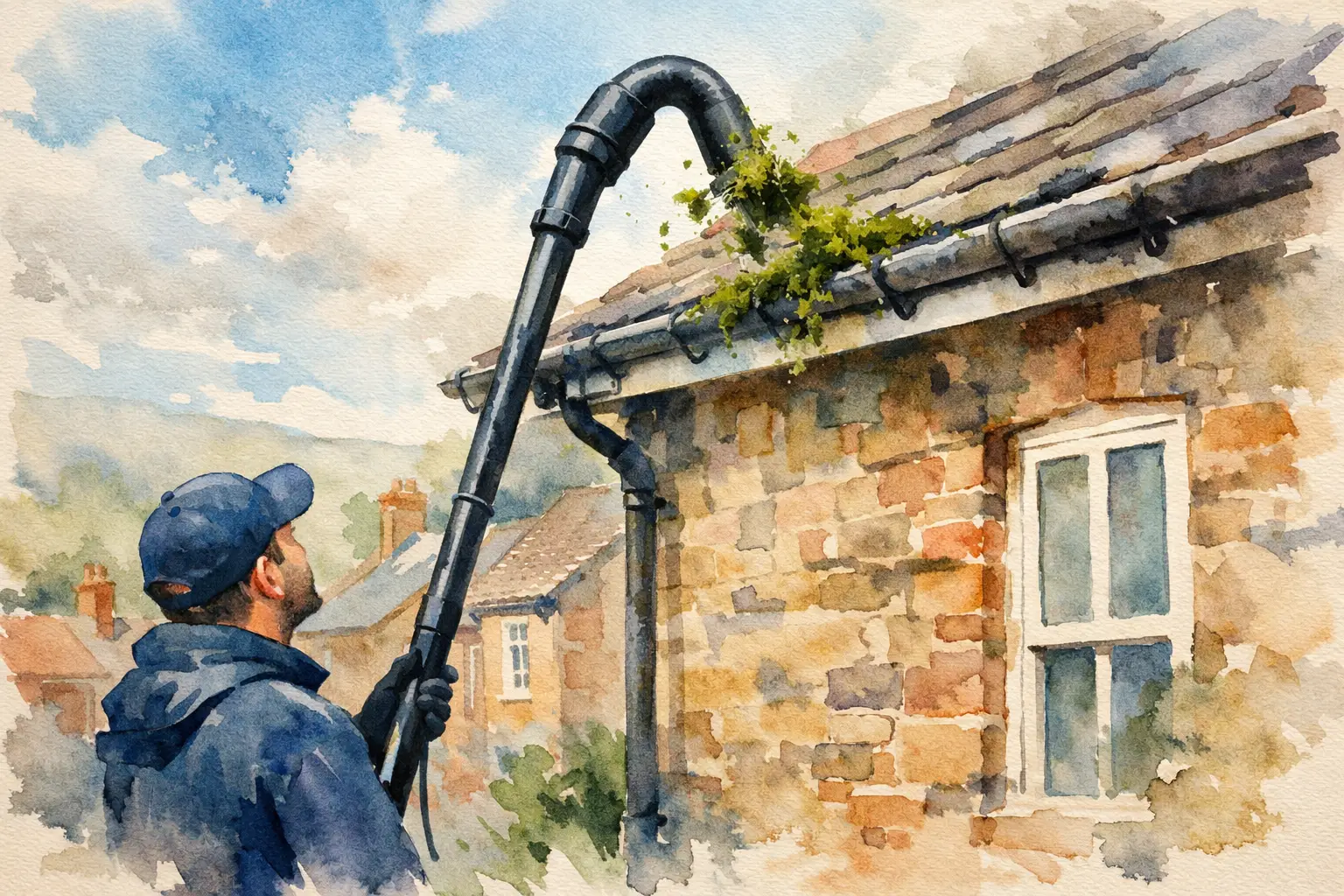
Professional gutter vacuum equipment allows much of the clearance work to be carried out from the ground. It can remove loose leaves, moss and debris from gutters without the unnecessary risk of repeatedly working from ladders. Where further investigation is needed, the system can be inspected so that the cause of the blockage is dealt with properly.
There are occasions when access equipment or a closer inspection is necessary, particularly with damaged pipework, unusual roof lines or severely compacted blockages. A dependable service should explain this clearly rather than promise that every issue can be solved in exactly the same way.
What happens during a professional clearance?
The job starts with checking the gutters, downpipe outlets and visible pipework for obvious signs of blockage or damage. Debris is then removed from the guttering using suitable equipment, with particular attention paid to the points where water enters the downpipes.
The downpipes and ground-level gullies are assessed to make sure the route is clear. If a pipe is blocked, the aim is to clear the obstruction safely and confirm that water can drain away as it should. Any visible issues such as loose clips, split joints or a pipe that has come away from the wall can then be identified.
This approach matters because cleaning cannot repair broken guttering. If a downpipe is cracked, disconnected or draining into a blocked gully, you need to know. Finding these problems early is usually far less costly than waiting for water to enter the property.
How often should downpipes be checked?
For most homes, an annual gutter and downpipe clearance is a sensible starting point. Many properties benefit from a check in late autumn, after the main leaf fall, or before the wetter winter months. If your home is surrounded by trees, has heavy moss growth on the roof, or has overflowed before, twice-yearly maintenance may be the safer option.
Landlords should be especially careful. A blocked rainwater system can affect tenants, create slippery access routes and lead to preventable maintenance issues. Regular clearance provides a practical way to look after the building rather than waiting for a complaint after heavy rain.
Do not wait for a leak indoors before arranging work. By then, water may have been overflowing for weeks or months, particularly if the affected wall is not visible from the main entrance.
Protecting the property between visits
You do not need to climb up and inspect the gutters yourself. A quick look from ground level after heavy rainfall can tell you a lot. Check whether water is running neatly through the downpipe, whether the gully is taking the water away, and whether there are fresh marks on the wall.
Keep an eye on sections close to trees and on downpipes that discharge near doors, patios or paths. Overflowing water in these areas can cause more than damp – it can leave surfaces slippery when the weather turns cold.
If you spot a problem, arrange a clearance rather than trying to force rods or garden tools into the pipe from the ground. This can compact debris further, damage joints or push the blockage into the drain.
A clear downpipe is a small part of the home, but it does a big job whenever it rains. Keeping it flowing gives water one safe route away from your property – and gives you one less thing to worry about when the next heavy shower arrives.
Leave a Reply