
Rainwater should disappear into your gutters, downpipes and drains without you giving it a second thought. When it spills over the edge of the roof instead, it can soak brickwork, run down walls and collect around the base of your home. For property owners in Neath, regular gutter clearance is a straightforward way to prevent a small blockage becoming an expensive damp or water-ingress problem.
Leaves, moss, twigs and roof debris do not stay harmlessly in a gutter for long. Once wet material builds up, water cannot move freely towards the downpipe. Heavy rain then finds the quickest route out, often over the front or back of the guttering and onto parts of the property that were never designed to handle it.
Why Gutter Cleaning in Neath Matters
South Wales weather gives gutters plenty to deal with. Persistent rain, wind-blown leaves and moss washed down from roofs can quickly create a blockage, particularly around bends, outlets and downpipe entrances. Even a gutter that looks clear from ground level may be holding a compacted layer of debris beneath the surface.
Overflowing gutters can cause more than an annoying drip. Water repeatedly running down external walls can leave staining, contribute to damp patches and put pressure on fascias, soffits and gutter brackets. If water pools near the property, it can also affect paths, entrances and ground-level drainage.
The longer the problem is left, the more likely it is that the guttering will become heavy with wet debris. That extra weight can cause sections to sag or pull away from the roofline. Clearing the system before this happens is usually far simpler and less costly than repairing damaged fittings or investigating internal damp.
The Signs Your Gutters Need Clearing
A clear overflow during rainfall is the most obvious warning sign, but it is not the only one. Look for green growth in the gutter line, plants sprouting from the roof edge, visible moss, or dark marks running down the wall below the gutter. These all suggest that water is not draining as it should.
You may also notice water pouring from the joints between gutter sections rather than from the downpipe outlet. This does not always mean the joint itself has failed. A blockage further along can force water backwards until it escapes at the weakest point.
Damp or peeling paint inside an upstairs room can be another reason to check the outside of the property. It is not always caused by guttering, and a proper assessment may be needed, but an overflowing gutter above the affected area should never be ignored. The same applies to wet patches around doors, patios and pathways after rain.
Why Ladders Are Not the Answer for Most Homes
Clearing a gutter can look like a quick weekend job. In reality, working at height on uneven ground, wet paving or near a sloping roof carries a real risk of falls. Reaching, carrying tools and trying to balance while removing heavy debris makes the job less safe still.
A professional gutter vac system allows debris to be removed from ground level in many cases, without the need to place a ladder against the property. This reduces risk to the person carrying out the work and avoids unnecessary contact with gutters, walls and roof edges. Camera inspection equipment can also help confirm what has been cleared and identify areas that need attention.
There are occasions where access is more complicated, such as awkward extensions, conservatories or very high rooflines. The right approach depends on the property. The important point is that safety and a clear view of the whole rainwater system should come before simply scooping out the visible debris.
A Proper Gutter Clearance Includes the Downpipes
A gutter is only doing half its job if the downpipe is blocked. Water may travel along the gutter correctly but stop at the outlet, where wet leaves and moss often gather into a tight plug. From there, water backs up and spills over during the next heavy shower.
Professional clearance should focus on the full route rainwater takes: the gutters, outlets and downpipes. The system should be inspected for obvious issues such as loose joints, misaligned sections or damaged brackets. Cleaning cannot repair broken guttering, but spotting a fault early gives you the chance to deal with it before it causes further damage.
At McQueen’s Exterior Cleaning, the aim is not just to make guttering look tidier. It is to remove the debris that is stopping water from draining properly and help protect the property from avoidable flooding and damp.
How Often Should Gutters Be Cleaned?
For many homes, gutter clearance once or twice a year is sensible preventative maintenance. Autumn is a common time to book because falling leaves quickly fill gutters, while a spring check can remove winter debris and moss before wetter weather exposes a blockage.
Some properties need more frequent attention. Homes close to mature trees, woodland, busy roads or open windy areas often collect debris faster. Roofs with heavy moss growth can also send material into the gutters whenever it rains. Landlords may want scheduled checks between tenancies or as part of a regular maintenance plan, especially where tenants are unlikely to spot external problems early.
It depends on the surroundings and the condition of the roof, rather than a fixed calendar date. If your gutters have overflowed before, or if you can see moss regularly dropping from the roofline, waiting a full year may be too long.
Do Not Ignore Moss on the Roof
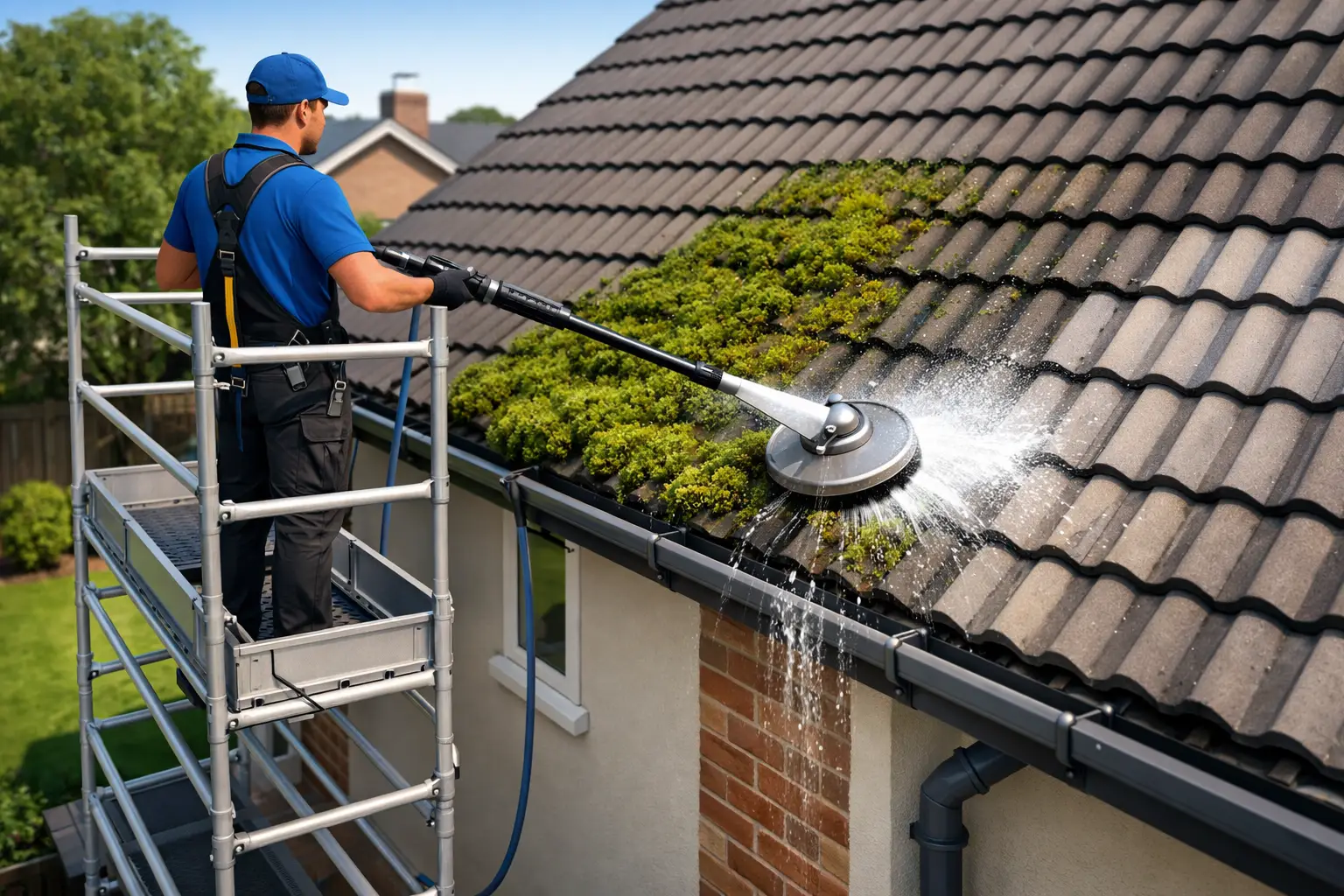
Moss can hold moisture against roof surfaces and gradually wash into gutters. A handful of moss may not seem significant, but after repeated rainfall it becomes a wet, dense material that blocks outlets and downpipes. This is why gutter clearance and roof cleaning are often connected.
Roof cleaning is not suitable for every roof or every condition. The method needs to suit the materials, age and level of growth. Aggressive cleaning can cause damage, so the condition should be assessed first. Where appropriate, careful moss removal or soft washing can reduce the amount of debris reaching the guttering and help keep the exterior looking well maintained.
What to Expect From a Professional Visit
A good service starts with a look at the property and the likely problem areas. Gutters around extensions, valleys, dormers and conservatories often need particular attention because they collect debris differently from a simple straight run.
The debris is then removed using suitable equipment, with the gutters and outlets checked as the work progresses. A visual inspection helps show whether water should be able to flow freely and whether there are signs of damaged or poorly aligned guttering. You should be told plainly if a repair, replacement part or further drainage work may be needed.
The result should be practical: gutters that are clear of organic debris and better able to direct rainwater away from the building. It is not a guarantee that old, damaged guttering will perform like new, but it removes one of the most common causes of overflow.
Protect the Parts of Your Home You Cannot Easily See
Gutters are easy to overlook because they sit above eye level. Yet they protect walls, windows, fascias, foundations and entrances every time it rains. A small amount of planned maintenance can prevent water from repeatedly reaching places where it does not belong.
If you have noticed overflowing water, moss in the gutter line or damp patches after heavy rain, arrange a professional check rather than risking a ladder. Clearing the blockage now gives your home a better chance of staying dry when the next spell of wet weather arrives.
Leave a Reply