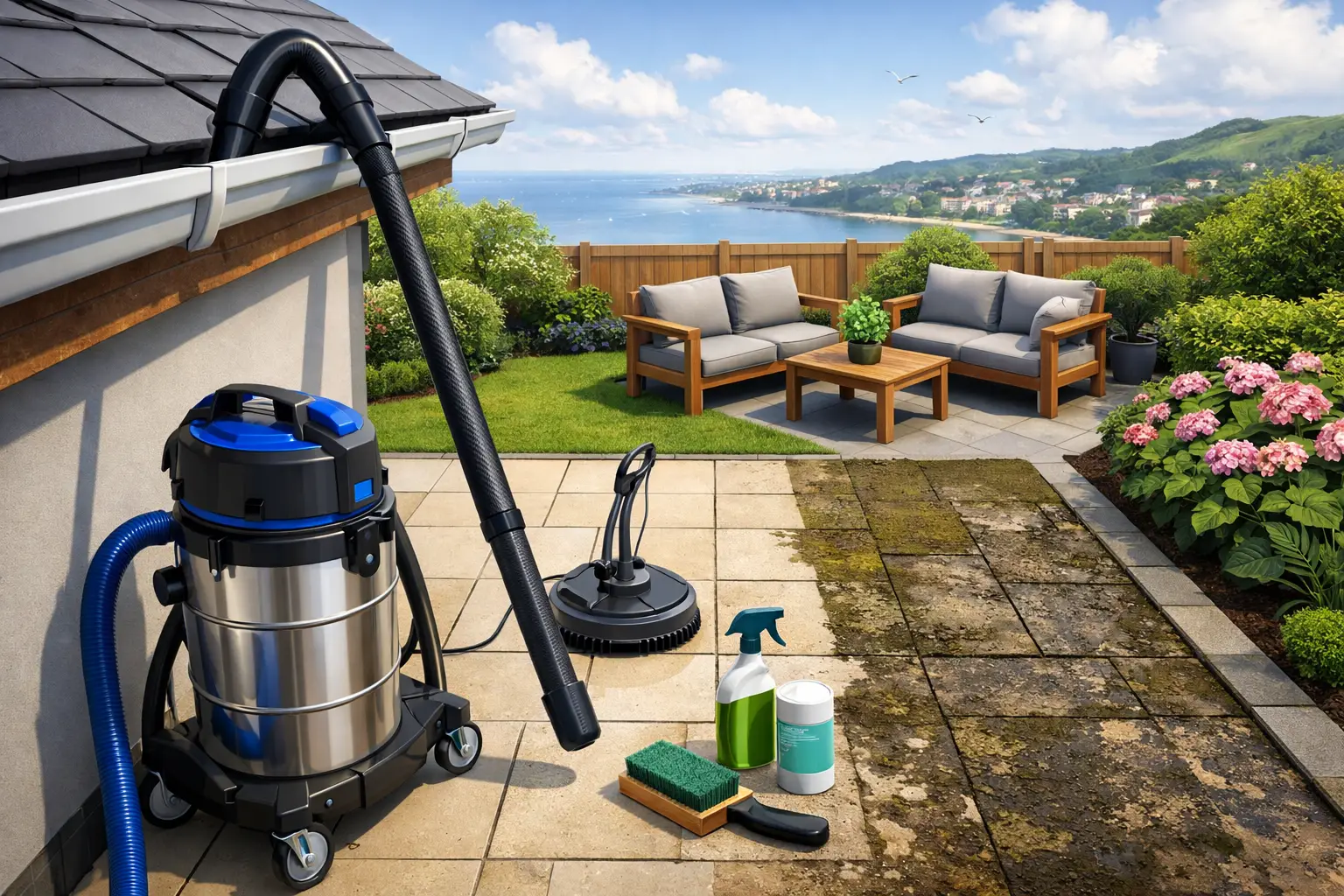
A patio can look tired long before it is actually worn out. Green algae, black spotting, muddy run-off and slippery paving are common problems around Swansea, particularly after wet weather. The best patio cleaners Swansea homeowners choose do more than blast the surface with water. They assess the paving, use the right cleaning method, protect nearby areas and leave the space safer to use.
For many households, the main concern is not appearance alone. A slippery patio by a back door, steps or garden path can quickly become a safety issue. Regular professional cleaning removes the build-up that makes paving hazardous while helping to keep the outdoor area presentable and easier to maintain.
What makes the best patio cleaners in Swansea?
A good patio cleaning service starts by looking at the condition of the surface. Not every patio should be treated in the same way. Block paving, concrete slabs, natural stone, porcelain and resin-bound surfaces all react differently to pressure, detergents and brushing.
High pressure can be very effective on durable concrete and heavily soiled paving, but it must be used with care. Too much pressure, held too close to the surface, can mark softer stone, damage pointing or disturb the jointing sand between blocks. A professional should adjust the approach to suit the patio rather than using one setting for every job.
The best patio cleaners Swansea residents can book will also be clear about what can realistically be achieved. Organic growth, surface dirt and many stains can be removed or greatly improved. Deep oil marks, rust staining, permanent discolouration and worn paving may need a more specialist treatment, and some marks may not disappear completely. Straight answers matter more than promises that sound too good to be true.
Why patios become green and slippery
Our local weather gives algae and moss exactly what they need: moisture, shade and plenty of organic debris. Patios beneath trees, beside fences or against north-facing walls often stay damp for longer. Leaves, soil and pollen settle in the joints, hold moisture and create a surface where growth can take hold.
Once algae builds up, it can make slabs dangerously slippery even when the patio does not look especially dirty. This is particularly common on smooth paving, entrance paths and steps. Jet washing removes visible grime, but the right follow-up treatment can help deal with remaining spores and slow down regrowth.
Poor drainage can make the problem worse. If water regularly pools on the patio, there may be blocked channels, uneven slabs, overflowing gutters or downpipes discharging too close to the area. Cleaning the paving is worthwhile, but identifying the cause of repeated water run-off helps prevent the same problem returning quickly.
The right cleaning method depends on the surface
Jet washing for durable, heavily soiled paving
Jet washing is often the most effective choice for standard concrete slabs, block paving and hard-wearing paths with thick moss, algae or ingrained dirt. It gives an immediate improvement and can restore the original colour hidden beneath the surface film.
However, proper technique is essential. The operator should work methodically, avoid driving dirt onto walls and doors, and take care around loose pointing, damaged slabs and drainage gullies. A patio may look clean on the day, but rushed work can leave stripes, scattered debris and washed-out joints.
Soft washing for delicate or lightly soiled areas
Soft washing uses lower pressure alongside suitable cleaning solutions. It can be a better option for more delicate surfaces or areas where pressure washing may cause damage. It is also useful for treating organic growth on walls, rendered surfaces and surrounding areas that need a gentler approach.
The trade-off is that soft washing may not provide the same instant visual change on deeply ingrained dirt as a full pressure clean. In many cases, the best result comes from a controlled clean followed by a treatment chosen for the surface and level of growth.
Re-sanding and aftercare for block paving
When block paving is pressure washed, some jointing sand can be removed. This is normal, but it should be addressed once the surface is dry. Re-sanding helps stabilise the blocks and discourages weed growth between joints.
Not every patio needs sealing. Sealants can alter the look of the surface and require proper preparation, so they are not a quick fix for every property. If you are considering sealing, ask whether your paving type is suitable and whether the patio is clean, dry and sound enough for it.
Questions worth asking before booking
You do not need to be an exterior cleaning expert to choose a reliable service. A few practical questions will tell you a great deal about how the work will be carried out.
Ask whether the cleaner has experience with your type of paving and whether they will inspect it before starting. It is also sensible to ask how they will protect doors, walls, plants, drains and nearby windows from splashback and run-off. A professional should be comfortable explaining their process in plain language.
Check whether the quote includes moving ordinary patio furniture, clearing loose debris, treating algae and cleaning up afterwards. These details can vary between jobs. It is better to know what is included before work begins than to assume every part of the area will be covered.
Insurance matters too. Exterior cleaning involves powerful equipment, water and potentially slippery working areas. A properly insured service gives homeowners greater reassurance if something unexpected happens.
Signs your patio needs professional cleaning
There is no need to wait until the paving is completely green. Early cleaning is usually quicker, easier and kinder to the surface. A professional clean is worth considering when you notice:
- algae or moss creating a slippery surface
- black spots or grime that will not shift with ordinary brushing
- weeds growing through block paving joints
- muddy splashback staining walls, doors or fencing
- standing water, blocked channels or dirt collecting around drains
If the issue is mainly a few leaves and light dust, regular sweeping and a garden hose may be enough. But when growth has established itself, household products and occasional scrubbing often only improve the surface for a short time. Professional equipment and the correct treatment give a more even, longer-lasting result.
Do not overlook gutters and drainage
A dirty patio is sometimes a visible clue that water is not being managed properly elsewhere on the property. Overflowing gutters can spill dirty water onto paths, patios and walls. Blocked downpipes can cause the same issue, leaving repeated staining and damp patches where rainwater should be directed safely away.
This is why it helps to take a wider view of exterior maintenance. If a patio keeps becoming dirty in one area, look above it as well as below it. Clearing gutters and downpipes, checking drainage and keeping gullies free of debris can reduce the amount of water and organic matter reaching the paving.
McQueen’s Exterior Cleaning provides jet washing alongside gutter clearance and exterior cleaning services, helping property owners deal with both the visible mess and the maintenance issues that can contribute to it.
How often should a patio be cleaned?
For most homes, an annual professional clean is a sensible starting point. A spring clean prepares the patio for warmer weather, while an autumn or winter clean can remove leaf debris and algae before it becomes a slip hazard.
Some properties need more frequent attention. Shaded gardens, homes close to trees, rental properties, busy entrances and patios that receive roof run-off may benefit from a clean every six months. The right interval depends on the surface, the amount of shade and how quickly growth returns.
Between visits, simple maintenance makes a real difference. Sweep leaves before they break down, keep drains and channels clear, trim back overhanging vegetation where practical, and deal with small weed growth before roots spread. These small jobs help keep the patio safer and make the next professional clean more effective.
A cleaner patio should also be a safer one
The cheapest quote is not always the best value if it leaves damaged joints, missed edges or a patio that quickly turns green again. Look for a service that treats the property with care, explains the work clearly and focuses on a result that lasts beyond the first clean.
A well-maintained patio gives you a safer route through the garden, a better space for family and visitors, and one less exterior maintenance job to worry about when the wet weather arrives.
Leave a Reply