
A guide to fascia and soffit protection starts with one simple fact: these boards are only as well protected as the gutters and roof above them. When rainwater cannot flow away properly, it spills behind the gutter, soaks the roofline and creates the conditions for staining, rot, damp and costly repairs.
Fascias and soffits can be easy to overlook because they sit high up around the edge of the roof. Yet they do an important job. The fascia supports the guttering, while the soffit closes the gap beneath the roof edge and helps protect the roof space. Keeping both in good condition is less about cosmetic cleaning and more about stopping water from reaching places it should not.
What puts fascias and soffits at risk?
The most common problem is blocked guttering. Leaves, moss, twigs and roof debris build up in the gutter or downpipe, especially after autumn and periods of high wind. Water then backs up and can overflow over the front of the gutter or, more concerningly, behind it.
Overflowing water repeatedly hitting the fascia can cause timber to soften and rot. On uPVC boards, it can leave dirty streaks, algae growth and staining. The board itself may be more resistant to water, but the fixings, joints, gutter brackets and timber behind it can still suffer if the problem is allowed to continue.
A blocked downpipe causes similar trouble. A gutter may look clear from ground level, but if water cannot escape through the downpipe it will fill quickly during heavy rain. In Neath and across South Wales, regular wet weather makes this a problem worth dealing with before a small blockage becomes an internal damp issue.
Other causes include slipped roof tiles, damaged flashing, leaking gutter joints and gutters that have started to sag. These are not always cleaning issues, but clearing the system and checking how water moves through it makes faults much easier to spot.
Guide to fascia and soffit protection: start with water flow
The best protection is straightforward: keep rainwater moving from the roof, through the gutter, down the downpipe and safely away from the property. That means checking the whole system, not simply removing the visible leaves from one section of gutter.
A proper inspection should look for standing water, blocked outlets, vegetation growing from the gutter, loose brackets and water marks beneath joints. It should also check whether the downpipe is flowing freely. If a downpipe is blocked underground, clearing the gutter alone may not solve the issue.
Gutters should sit at the correct fall so water travels towards the outlet. If water pools in the middle or at the opposite end, the gutter may be misaligned or sagging. Clearing it still helps, but adjustment or repair may also be needed. This is one of the reasons preventative maintenance is more useful than waiting until water is pouring over the edge.
Keep debris from sitting against the roofline
Wet leaves and moss hold moisture. When they sit in a gutter for months, they create a heavy, compacted blockage that is much harder for rainwater to pass through. The added weight can also strain brackets and pull gutters away from the fascia.
Moss falling from a roof is a frequent cause of repeat gutter blockages. A roof does not need to be visibly covered in moss for this to happen. Small pieces can wash down during rain and collect around outlets, where they quickly form a blockage with leaves and dirt.
If your gutters are regularly filling with roof debris, they may need more frequent clearance than a neighbouring property with fewer trees or a cleaner roof. There is no single schedule that suits every home.
Signs your roofline needs attention
You do not need to climb a ladder to notice early warning signs. In fact, climbing up to inspect gutters without the right equipment is a risk not worth taking. Look from the ground after rainfall, or use safe views from upstairs windows where possible.
Pay attention to these signs:
- Water overflowing from the gutter during rain, particularly from one section.
- Green growth, grass or small plants visible in the gutter line.
- Dark staining, peeling paint or marks running down fascias and exterior walls.
- Gutters that bow, sag or appear to be pulling away from the roofline.
- Drips from gutter joints long after rainfall has stopped.
- Damp patches on internal walls or ceilings near the upper floors.
One sign does not automatically mean major damage. For example, a drip at a joint may be a simple seal issue. But repeated overflow or staining should not be ignored, as the water may already be reaching the timber or wall behind the guttering.
Check soffit ventilation without blocking it
Many soffits have vents to allow air into the roof space. This ventilation helps manage moisture and reduces the chance of condensation building up in the loft. It is important not to cover, seal or paint over these vents when carrying out roofline work.
Cobwebs, insects and surface dirt can collect around soffit vents, but ventilation openings should remain clear. If birds or pests are entering the roof space, the right answer may be suitable protection around the entry point, not simply blocking all ventilation. The details depend on the roof design, so it is sensible to get advice if there is an ongoing pest issue.
Cleaning protects the roofline, but it does not replace repairs
Gutter clearance is one of the most effective ways to protect fascias and soffits, but it cannot repair rotten timber, a failed gutter joint or a damaged roof. Once the gutter is clear, any defects are easier to identify and deal with promptly.
Timber fascias need particular attention. Soft areas, flaking paint and visible cracking can indicate that water has been getting in for some time. Painting over damp or decayed timber may improve the appearance briefly, but it will not stop the underlying damage. The affected section may need repair or replacement before it is redecorated.
uPVC fascias and soffits generally need less maintenance, although they still benefit from gentle cleaning to remove algae and traffic film. Harsh abrasive cleaning can scratch surfaces, and aggressive pressure washing around joins, vents or roof edges can force water where it does not belong. The right method depends on the material and condition of the roofline.
How often should gutters be cleared?
For many homes, gutter clearance once or twice a year is sensible. A check in late autumn is useful after leaves have fallen, while another check in spring can clear winter debris and show up any damage caused by storms.
However, frequency depends on the property. Homes beneath trees, properties with mossy roofs, older guttering and buildings exposed to wind-driven debris may need more regular attention. Landlords should also consider inspections between tenancies, particularly if a property has been empty or has not been checked through a wet season.
The key is not to wait for an obvious blockage. By the time water is overflowing, it may already have been running behind the gutter for several heavy downpours.
Put safety before a quick DIY fix
Gutter work is often treated as a simple weekend job, but ladders, uneven ground and wet surfaces create a real fall risk. Reaching sideways from a ladder to clear a gutter also makes it easier to lose balance or damage the gutter itself.
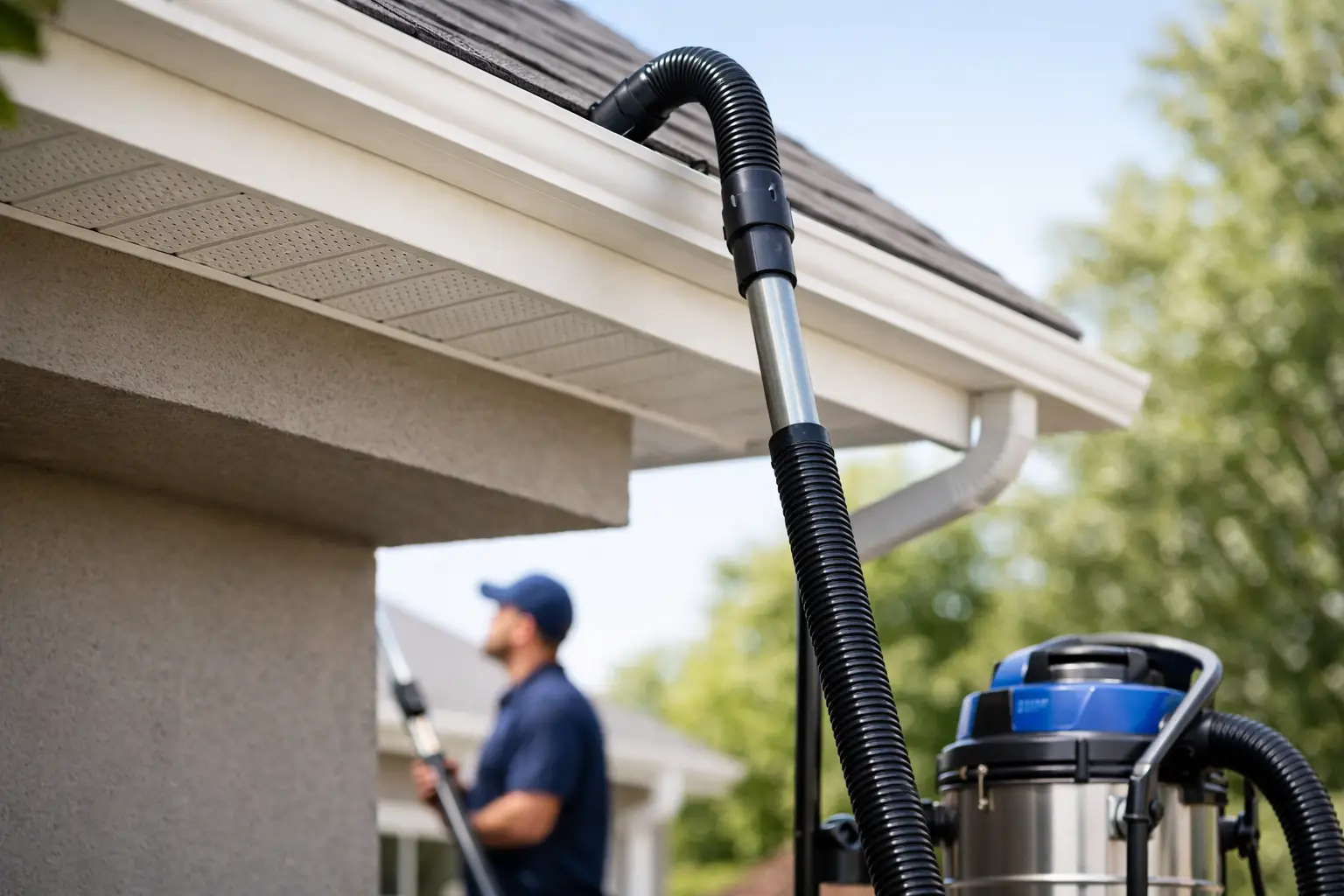
Professional gutter vacuum systems allow debris to be removed from ground level in many cases, avoiding unnecessary ladder work. They can clear organic matter from gutters and downpipes while allowing the condition of the system to be assessed safely. At McQueen’s Exterior Cleaning, the focus is on removing the blockage and helping homeowners spot the water risks that lead to avoidable damage.
If a gutter is visibly loose, the fascia feels soft, or water is entering the property, do not try to force a repair from a ladder. Keep clear of the area and arrange a suitable inspection. A small issue dealt with early is usually far easier to manage than a failed section of roofline after a winter of overflowing water.
A clean gutter may not be the most noticeable improvement to a home, but it gives rainwater somewhere safe to go. That simple bit of maintenance helps keep fascias, soffits, walls and roof spaces dry when the weather turns.
Leave a Reply