A gutter can look harmless from ground level, even when it is holding wet leaves, moss, soil and standing water. That is why the choice between professional vs DIY gutter cleaning is not simply about saving money. It is about whether the job can be done safely, whether the blockage is fully cleared, and whether your home is protected when the next spell of heavy rain arrives.
For many homeowners, cleaning gutters yourself is possible in the right circumstances. For others, especially where access is awkward, the ground is uneven or the guttering is high, a professional service is the safer and more practical option. The right choice depends on your property, your equipment and the condition of the rainwater system.
What DIY gutter cleaning involves
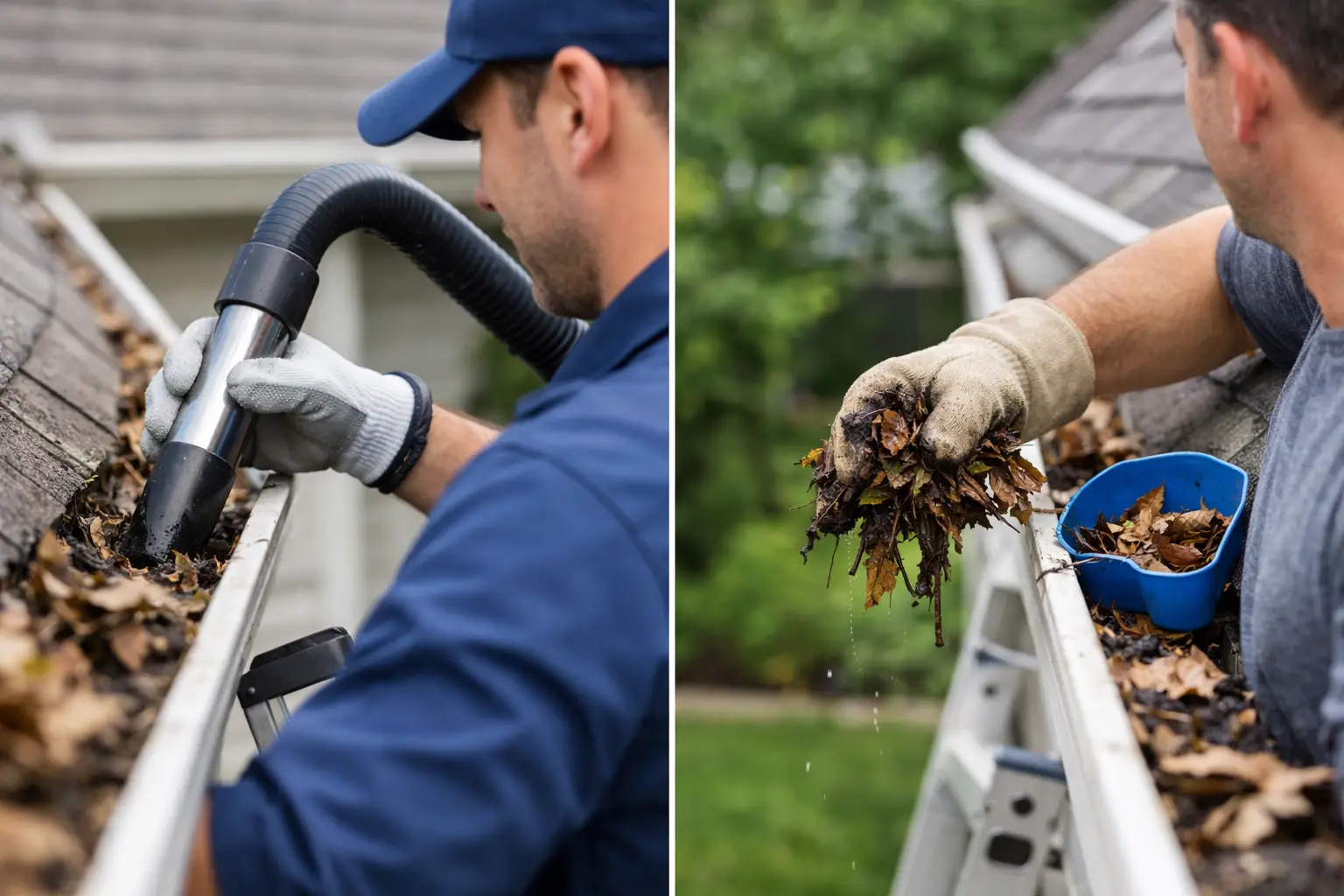
DIY gutter cleaning usually means working from a ladder, removing visible debris by hand or with a small scoop, then flushing the gutter with a hose. On a low, straightforward property with firm, level ground, this may deal with a light build-up of dry leaves.
The problem is that blocked gutters are rarely as simple as they first appear. Debris often compacts around the outlet, where the gutter meets the downpipe. Moss from the roof can form a dense plug, while silt settles beneath leaves and is easy to miss. A gutter may look clear along its length but still overflow because the downpipe is partially blocked.
There is also the question of frequency. If nearby trees shed heavily, or the roof produces moss, a one-off clean may not be enough. Homeowners who take the DIY route need to be comfortable checking the system regularly, particularly after autumn leaf fall and before long periods of wet weather.
The main risk is not the debris
The biggest concern with DIY gutter cleaning is ladder safety. Reaching, leaning sideways or repeatedly moving a ladder while carrying tools can turn a routine maintenance task into a serious risk. Wet paving, soft ground and sloping driveways make matters worse.
Even a low fall can cause an injury that costs far more than a gutter clearance. It is not worth taking chances just to remove a handful of leaves. If you cannot work comfortably from a stable position without overreaching, the job is not suitable for DIY.
Professional vs DIY gutter cleaning: the real differences
The clearest difference is the method. A professional gutter cleaner using a gutter vac can remove debris from ground level, without placing ladders against the property for the cleaning work. The system uses powerful suction and long poles to lift out leaves, moss and compacted organic debris.
That approach reduces the risk of falls and can be particularly useful on taller homes, extensions, conservatories and areas where a ladder cannot be positioned safely. It also avoids unnecessary pressure on guttering, fascias and roof edges.
Professional cleaning is not only about having stronger equipment. It is about checking the whole route water needs to take. Gutters, outlets and downpipes must work together. Clearing one visible section is of little use if water is still backing up at the downpipe or running over a hidden obstruction.
A proper service should focus on the condition of the system, not just making the gutter line look tidy. The aim is to allow rainwater to flow away as it should, reducing the chance of overflow soaking walls, windows, foundations and paths below.
Cost: short-term saving versus preventable damage
DIY cleaning can appear cheaper because you are only paying for basic tools and your own time. If you already own a suitable ladder and the property is easy to access, that may be true for a simple, low-risk clean.
However, the true cost should include the risks. You may need a ladder, stabiliser, gloves, gutter scoop, hose attachment and a safe way to dispose of waste. More importantly, a missed blockage can lead to overflowing water. Over time, that can contribute to damp patches, peeling paint, staining, damaged brickwork and water ingress around weak points in the property.
Professional gutter cleaning is a maintenance cost, but it is often a sensible one. It helps prevent minor debris build-up becoming a problem that needs damp repairs, roofline work or internal decorating. For landlords, it can also be a straightforward way to protect a property between tenancies and reduce avoidable maintenance calls.
The best value is not always the lowest price on the day. It is the option that clears the system properly and helps prevent a more expensive issue later.
When DIY can make sense
There are situations where DIY cleaning is reasonable. A bungalow with accessible gutters, dry conditions, level ground and only a light layer of loose leaves may be manageable for a capable person who understands ladder safety.
It can also work for routine checks from the ground. You can look for plants growing from gutters, water marks below the gutter line, overflowing during rain and downpipes that appear to discharge poorly. These signs do not require climbing a ladder, but they can tell you that clearance is needed.
DIY is less suitable if you are unsure about heights, have limited mobility, are working alone, or need to stretch to reach the gutter. It is also best avoided where the guttering runs above a conservatory, garage roof, extension or uneven garden area. These are precisely the situations where homeowners are tempted to improvise, and where accidents happen.
When a professional gutter vac service is the better choice
A professional service is normally the safer choice for two-storey homes, difficult access, heavy moss build-up or gutters that have not been cleared for some time. It is also a sensible option if you have noticed water spilling over the edge during rain, damp marks on external walls, or a downpipe that is not flowing freely.
A gutter vac is well suited to properties in and around Neath where wet weather, mature trees and roof moss can quickly create a build-up. The cleaning can be carried out from the ground, which gives homeowners reassurance without the disruption and risk of ladder work.
At McQueen’s Exterior Cleaning, the focus is on removing organic debris and helping rainwater systems do their job before blocked gutters lead to flooding or damp-related damage. That practical preventative approach matters because gutters are easy to forget until water starts coming into places it should not.
Do not overlook downpipes and outlets
Gutters get most of the attention because they are visible from outside, but downpipes are just as important. Water can only leave the gutter if it can pass freely through the outlet and down the pipe.
A downpipe blockage may show up as water overflowing at one particular corner of the house. Sometimes the obstruction is close to the top, caused by leaves and moss collecting at the outlet. In other cases, debris has travelled further down and compacted inside the pipe.
Trying to force a blockage through with a hose can work on loose debris, but it can also create a mess or fail to shift a compacted plug. If water is repeatedly overflowing, it is better to have the cause identified and dealt with properly than keep hoping the next rain shower will clear it.
How often should gutters be cleaned?
Most homes benefit from gutter clearance at least once a year. Properties beneath trees, homes with mossy roofs and buildings exposed to frequent wind-blown debris may need attention twice yearly. Autumn is an obvious time after leaves fall, but spring checks are useful too, especially after winter storms.
There is no fixed rule that suits every property. A newer home with little tree cover may stay clear for longer, while a property beside mature trees can block quickly. The sensible approach is to base the schedule on what reaches your roof and gutters, rather than waiting for an overflow to tell you there is a problem.
If you are deciding between doing it yourself and booking help, start with an honest assessment of access and safety. A clear gutter is useful. A clear gutter achieved without a ladder accident, missed blockage or damaged property is better. Before the next heavy rainfall, give your gutters a check from the ground and arrange safe clearance if there is any doubt.
Leave a Reply