
Water marks appearing low on an internal wall are rarely just a decorating problem. They can be a sign that rainwater is collecting against the outside of your property, finding its way through the building fabric and keeping the lower walls damp. This guide to preventing foundation damp explains where that water usually comes from, what you can check safely, and when a professional gutter clear-out is the sensible next step.
In many homes, the problem starts above ground. A blocked gutter overflows, a downpipe cannot carry water away, or a drain is overwhelmed during heavy rain. Water then repeatedly runs down the wall or pools at the base of the building. Left alone, this can lead to penetrating damp, staining, damaged render, moss growth and, in more serious cases, deterioration of brickwork or timber.
What does foundation damp mean?
People often use the term foundation damp to describe dampness around the base of a property. It is not always one single fault. The cause could be rainwater entering from outside, poor drainage around the house, a damaged damp-proof course, or genuine rising damp. These issues can look similar indoors, which is why it pays to look first at how water is being managed outside.
Penetrating damp is commonly worse after prolonged rain and may appear in patches on an external-facing wall. Rising damp usually starts at ground level and moves upwards, although a proper diagnosis is needed before assuming this is the cause. Condensation, meanwhile, is more likely to affect colder rooms and surfaces, particularly in winter.
The practical point is simple: no repair inside will last if rainwater is continually spilling onto the wall or soaking the ground beside it.
Start at the roofline: gutters and downpipes
Gutters are designed to catch a large volume of water and send it safely into the drainage system. When leaves, moss, twigs and roof debris build up, that route is blocked. Water may pour over the gutter edge, run behind it towards the fascia, or force its way down the wall below.
A single overflow might not cause visible damage. Repeated soaking is different. Brick, mortar and render can absorb moisture over time, especially where there are cracks, worn pointing or a wall exposed to driving rain. The lower part of the wall is particularly vulnerable because it also receives splashback from the ground.
Check gutters from ground level after rainfall if you can do so safely. Look for a steady waterfall from one section, water staining beneath the gutter line, sagging gutters, plants growing from the channel, or a downpipe that is overflowing at the top. Do not climb a ladder to investigate if you are not confident and properly equipped. Wet ground, uneven surfaces and awkward rooflines make gutter work riskier than it looks.
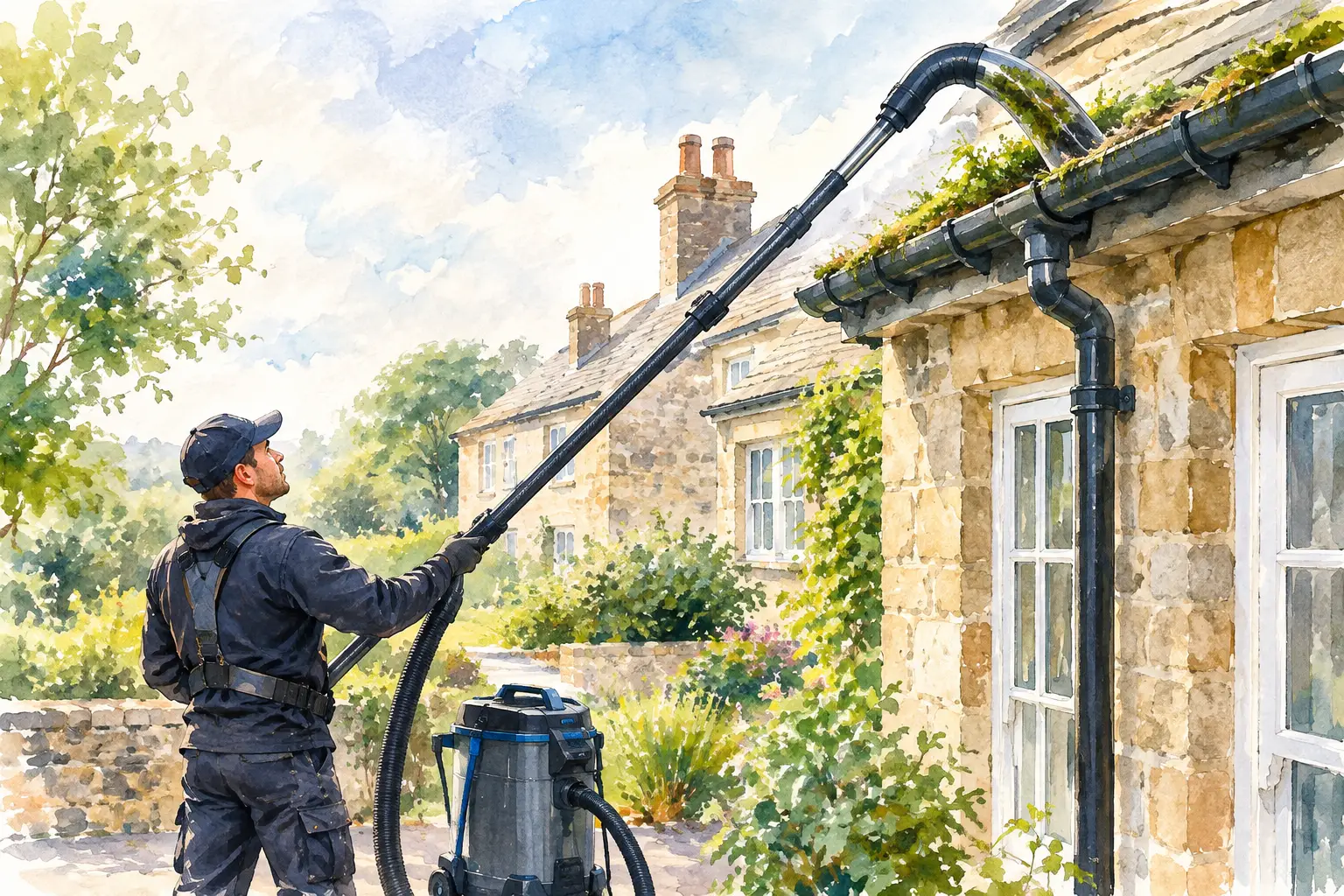
A professional gutter vacuum clean allows debris to be removed from ground level in many situations. It also gives the operator a chance to inspect the system for blockages, loose fittings and obvious drainage issues. McQueen’s Exterior Cleaning provides this type of safety-led gutter clearance for homeowners who want the job handled without the danger of climbing ladders.
Make sure water is leaving the property
Clearing a gutter is only half the job if the downpipe or drain below it is blocked. During heavy rain, watch where water goes once it reaches the bottom of the downpipe. It should enter a gully, drain or suitable soakaway without backing up across the surface.
If a gully is full of silt, leaves or moss, water can spill over and sit against the external wall. Clear loose debris only where it is safe to reach from ground level. If the drain remains slow, smells unpleasant or repeatedly backs up, it may need further investigation rather than another quick clear-out.
The ground around the property also matters. Paths, patios and flowerbeds should generally fall away from the walls, not towards them. A surface that slopes towards the house directs every shower towards the foundations. Standing water after rain is a warning sign, particularly if it stays there for more than a day.
Keep soil, bark and gravel below the damp-proof course where possible. This is often a visible horizontal line in the brickwork, usually close to ground level. Covering or bridging it with raised soil, paving or decking can allow moisture to bypass its protective function. Avoid making changes without checking the construction first, especially on older properties where the damp-proof course may be less obvious.
Check the areas that are easy to overlook
Rainwater problems are not always caused by a completely blocked gutter. A small leak at a gutter joint, a cracked downpipe, or a missing clip can send water onto the same area of wall every time it rains. Over months, that is enough to create damp patches internally.
Pay attention to roof valleys, where two slopes meet, as they carry a high volume of water. Debris collecting here can overflow into gutters quickly. Conservatory roofs, extensions and flat roofs also need regular checks because leaves often gather where one roof joins another.
External walls deserve a close look from ground level. Crumbling mortar, cracks in render, broken sealant around pipes and damaged air bricks can all provide a route for water. Air bricks should not be covered with soil, leaves or stored items. They help ventilate the space below suspended floors, and blocked ventilation can contribute to damp and musty smells indoors.
If you have a cellar, garage or ground-floor cupboard against an external wall, inspect it after heavy rain. A damp smell, flaking paint, darkened plaster or a white powdery deposit on masonry can indicate moisture is getting in. Take photographs and note when it happens. This can make it far easier to identify whether the issue is linked to rainfall, a leak or condensation.
Prevention works best as a routine
There is no single cleaning schedule that suits every home. Properties beneath mature trees, near woodland, or exposed to windblown debris often need gutters cleared more often than homes on open streets. Autumn is the obvious high-risk period, but spring checks are useful too, particularly after winter storms and moss shedding from roofs.
As a sensible baseline, arrange a gutter inspection and clearance at least once a year. Consider twice-yearly maintenance if trees overhang the roof, gutters have overflowed before, or the property has a history of damp around external walls. A clear system before a period of heavy rain is far cheaper and less disruptive than dealing with water ingress afterwards.
Do not rely only on whether you can see leaves in the gutter. Fine moss, grit and compacted organic debris can sit inside downpipes and gullies out of sight. The first sign may be water spilling over during a downpour, by which point the wall and ground are already being soaked.
When to get a damp problem checked
Gutter maintenance can prevent many rainwater-related damp issues, but it cannot solve every cause. Seek advice from an appropriate damp or building professional if a damp patch remains after gutters and drainage have been repaired, if plaster is crumbling, if timber feels soft, or if you see signs of mould spreading indoors.
It is also worth acting quickly where water is entering near electrical fittings, where a ceiling is stained, or where rainwater is running into a neighbour’s property. These are not jobs to postpone until the weather improves.
The best protection is usually unglamorous: keep gutters clear, make sure downpipes discharge properly, and deal with small faults before they become repeated soaking. A dry wall starts with controlled rainwater, and a regular exterior check gives you a far better chance of keeping damp outside where it belongs.
Leave a Reply