
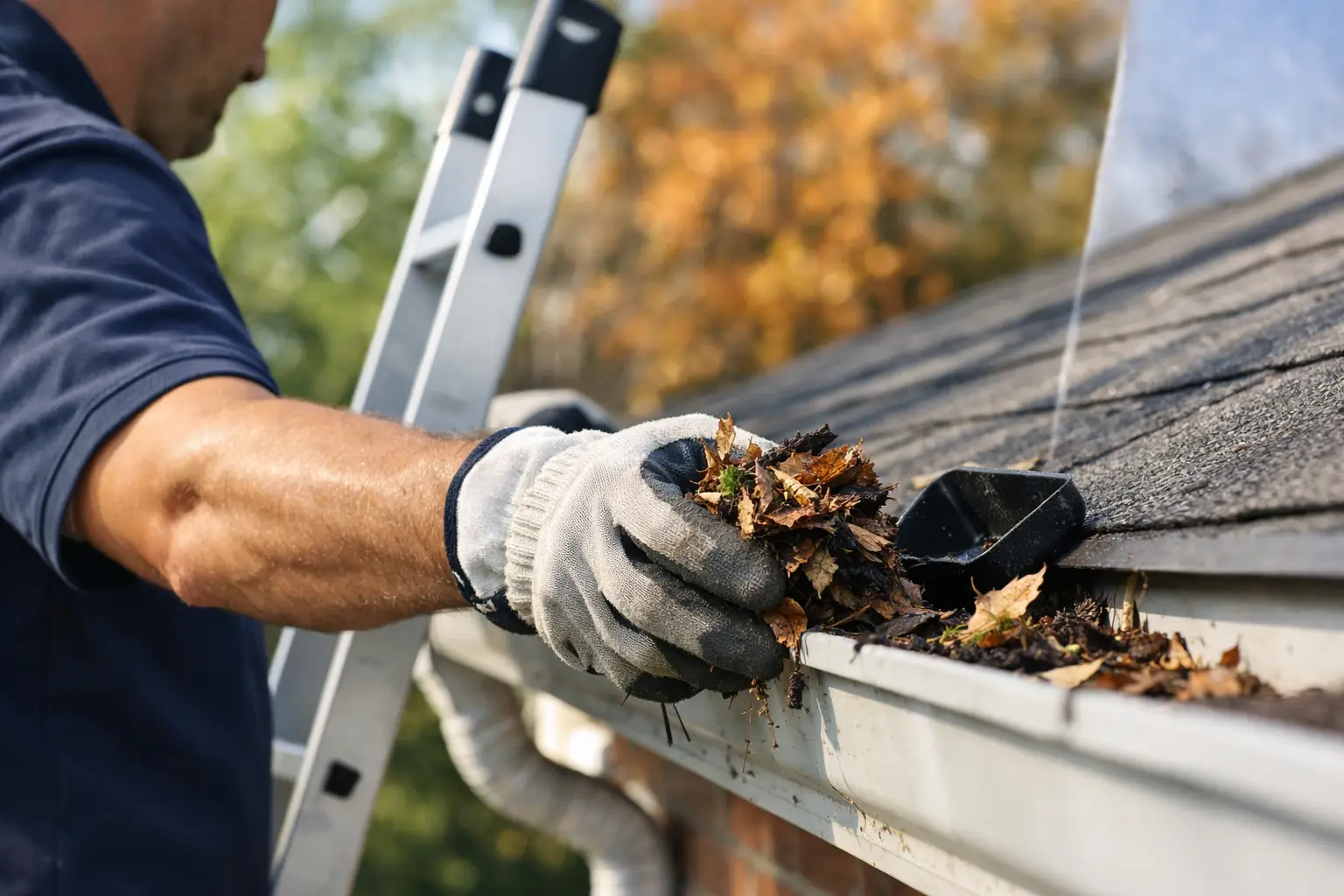
A gutter can look clear from the ground while a wet layer of leaves, moss and roof grit is quietly stopping water from reaching the downpipe. The best time for gutter clearing is usually before that blockage meets a spell of heavy rain. For most homes, that means a planned clean in late autumn, followed by a check in spring.
Waiting until water is pouring over the edge is rarely the cheaper option. Overflowing gutters can soak brickwork, stain walls, flood paths and patios, and send water where it should never be – towards your roofline, windows and foundations. Regular clearance is simple preventative maintenance that helps keep a small problem from becoming a damp, repair or insurance headache.
The best time for gutter clearing is late autumn
Late autumn is the main gutter-clearing season in the UK. By then, most deciduous trees have shed their leaves, so you can remove the bulk of the debris in one visit rather than clearing the same gutter repeatedly throughout October and November.
This timing gives your rainwater system the best chance of coping with winter. In Neath and across South Wales, winter often brings persistent rain, wind and sudden downpours. A gutter already full of leaves and moss can overflow quickly when that weather arrives.
A late-autumn clearance should remove leaves, twigs, moss and the fine sludge that settles at the base of the gutter. It should also include checking that downpipes are flowing properly. Clearing the gutter channel alone will not solve the problem if a downpipe is blocked further down.
There is one exception. If your property sits beneath mature trees, do not wait for every last leaf to fall. An earlier clean in mid-autumn may be sensible, with another check after the trees are bare. This is particularly useful for homes with overhanging branches, valleys on the roof or conservatories where leaves tend to gather.
Why a spring gutter check is worth doing
Spring is the second best time to clear or inspect gutters. Winter storms can blow in fresh debris, loosen moss from the roof and expose problems that were not obvious earlier in the year. A spring check makes sure rainwater can move freely before the wetter periods that often arrive through spring and early summer.
It is also a good opportunity to spot small maintenance issues. Brackets can work loose, joints may drip, and downpipe outlets can become clogged with moss or grit. Catching these early is far easier than waiting until water has been repeatedly running down an outside wall.
For many homes, a professional clearance in late autumn and a visual inspection in spring is a sensible routine. Properties in open areas with little tree cover may only need one thorough annual clean. Homes close to woodland, large gardens or heavily mossed roofs may need attention twice a year, or more often after severe weather.
Do not wait for the calendar if you see these signs
Seasonal planning is useful, but gutters do not always fail to a timetable. If you notice warning signs, it is better to arrange clearance before the next heavy rainfall.
Look out for water spilling over the gutter edge during rain, damp patches or green staining on external walls, and water collecting near the base of the property. Plants growing from the gutter are an obvious sign of built-up compost-like debris, but a blockage can be just as serious when nothing is visible from below.
Other clues include a downpipe that does not appear to discharge during rain, sagging guttering, drips from joints, or birds regularly pecking at one section. Birds often find the insects and organic material that collect in neglected gutters.
Inside the home, peeling paint near upstairs ceilings, musty smells and damp around window reveals can have several causes. Gutters are not always to blame, but uncontrolled rainwater is one of the first things worth checking. The longer a blocked system is left, the more chance moisture has to affect the building fabric.
The right frequency depends on your property
There is no single schedule that suits every house. The amount of tree cover is usually the biggest factor, but roof condition and the shape of the building matter too.
A newer property with a clear roof and no nearby trees may be fine with an annual clean. A house below overhanging branches can fill with leaves surprisingly quickly. Moss on a roof also changes the picture. Rain carries loosened moss into gutters, where it can form a dense blockage around the downpipe outlet.
Flat roofs, extensions, garages and conservatories deserve attention as well. Their gutters are often lower and easier to overlook, yet they can overflow onto doors, fascias and paving. If water is regularly splashing against the house or pooling beside it, the drainage route needs checking.
Landlords should be especially careful about routine inspections. A blocked gutter can develop into a tenant complaint after heavy rain, but by that stage there may already be staining, leaks or damage to external finishes. Planned maintenance is more predictable than arranging an urgent visit during bad weather.
Why winter is not always the ideal time
Gutters can be cleared in winter when needed, particularly if they are overflowing. However, it is usually better not to leave routine work until then. Wet leaves are heavier, conditions can be slippery, and poor weather can make access more difficult.
There is also the risk that the first serious storm arrives before the work is booked in. By clearing gutters in late autumn, you avoid relying on a dry day in the middle of winter and give the system a better chance of doing its job when rainfall is at its heaviest.
That said, a blockage is a blockage whatever the month. If water is overflowing now, arrange a professional check rather than waiting for spring. Preventing further water exposure matters more than following an ideal timetable.
Leave the ladders out of it
Gutter clearing looks straightforward until you are balancing on a ladder, reaching over a roof edge and trying to handle wet debris at the same time. Falls from ladders cause serious injuries every year, and uneven ground, wet paving and awkward access all add to the risk.
A professional gutter vac system removes debris from ground level in many situations. This avoids unnecessary ladder work while allowing the gutter and downpipes to be cleared properly. A good service should also inspect the system as work is carried out, rather than simply removing what is easy to reach.
At McQueen’s Exterior Cleaning, the focus is on clearing organic debris safely and helping homeowners avoid the water damage that neglected gutters can cause. For properties in Neath, Swansea, Port Talbot and nearby areas, planned seasonal maintenance is often the simplest way to protect the home without taking risks yourself.
Plan clearance before the rain tests your gutters
Book late-autumn gutter clearing as part of your seasonal property maintenance, then keep an eye on the system after winter and after major storms. If trees, moss or visible overflow are part of the picture, increase the frequency rather than hoping the next downpour will pass without trouble.
A clear gutter is not something you notice on a dry day. Its value shows when the rain starts, the downpipes run freely and the water stays where it belongs – safely away from your home.
Leave a Reply